


Felix Gold (ASX:FXG) has achieved 89.2% antimony-bearing minerals in samples from the Treasure Creek Antimony Project in Alaska, with flotation concentrates exceeding grades required for the US military.
In reporting a detailed mineralogy, flotation, and leach test results from recent metallurgical testwork of the previously reported massive stibnite veins at the Treasure Creek NW Array prospect, two pathways have been independently validated, with a third identified, providing optionality in design, speed, and integration.
All three pathways utilise proven, non-proprietary technologies. Felix says its competitive advantage comes from ore quality, not novel processing. The company notes, however, that no feasibility study has been completed; production scenarios are conceptual only and subject to completion of appropriate technical studies, feasibility work, permitting, and board approval.
In the first pathway, flotation has been validated as an option. Single-pass concentrate at 74% Sb exceeds military specification (MIL-A-22131: 70% minimum) using standard flotation with commodity reagents.
The global-standard technology for processing sulphide minerals using bubbles and low-cost commodity reagents (xanthates, MIBC) is readily available from global suppliers. Felix says its advantage of achieving 74% Sb in a single pass for this sample is ‘exceptional’ as most deposits require multiple complex stages to remove impurities. Clean ore enables a simple, low-cost circuit.
Direct leach pathway has also been validated – 98% extraction via commercially proven hydrometallurgical process, which Felix notes is potentially a faster route than conventional smelting.
Often unviable elsewhere because impurities (especially arsenic) contaminate solutions. Felix says its clean mineralogy unlocks this pathway, enabling such high extraction and bypassing high-capex smelting.
Pre-concentration / DSO has also been identified as a valid pathway. High-density stibnite ore ideal for XRT ore sorting with testwork planned to confirm a simple pathway dramatically reducing processing costs.
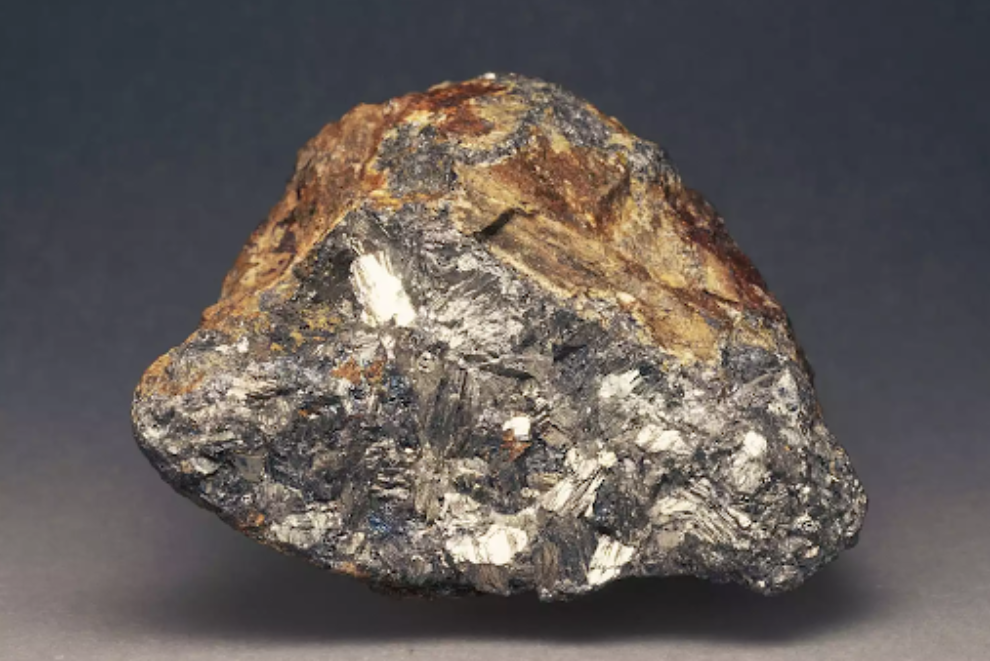
The company can reject a large percentage of waste before processing, dramatically reducing plant size and cutting capex, power, water, and reagent costs. This creates potential for direct shipping ore (DSO). Felix notes that XRT ore sorting is conceptual at this stage and no testwork has been completed yet.
Felix says clean mineralogy drives optionality – no sulphosalts or deleterious minerals means all pathways remain “exceptionally simple”.
Flotation testwork shows an unusually clean mineralogy with minimal waste and no deleterious minerals that are typical of global antimony deposits. Arsenic <0.1%; lead, copper, zinc below detection limits; no sulphosalts or copper–arsenic complexes.
The company adds that military-grade production has been confirmed. Flotation concentrates exceed US military specification (MIL-A-22131) and the “ultra-low impurity profile” enables semiconductor-grade potential (99.99%+).

Felix Gold Executive Director Joe Webb says what these results show is a level of natural purity not seen in modern critical-mineral systems. When mineralisation is composed almost entirely of antimony minerals with virtually no impurities, the metallurgy becomes exceptionally clean and predictable.
“When you start with ore that is already this pure, everything changes — the mining footprint, the processing simplicity, reduced capital requirements, and the speed at which you can produce high-grade material,” Webb says from his new base in the US.
“It’s a geological outlier, and it gives the United States a domestic antimony source that is fundamentally different from anything available today. From a strategic perspective, that matters. Antimony sits at the centre of military energetics, semiconductors, and advanced materials, yet the U.S. relies almost entirely on foreign sources.
“A high-purity US antimony system with proven military-grade metallurgy provides a genuine pathway to supply chain resilience at a time when it is urgently needed. Our fast-tracked, responsible development approach positions Treasure Creek at the forefront of new US antimony supply chains.”
“Our fast-tracked, responsible development approach positions Treasure Creek at the forefront of new US antimony supply chains”
Webb adds that ore supply is the real bottleneck in establishing domestic production, and we are moving quickly – with stockpiling expected to commence imminently – to unlock the materials America needs.
He says these results matter for a number of reasons. For one, the US is nearly 100% import-dependent on antimony, with no active domestic mines for over 30 years. Treasure Creek offers a domestic source with proven pathways to military-grade production, Webb adds.
Ultra-low impurities means Felix can use standard, simple processing to achieve what other deposits cannot. This typically translates to a cleaner process, faster permitting, and accelerated production timelines.
The three validated pathways provide flexibility to optimise for speed, capital efficiency, or product specifications, reducing technical and financial risk, Webb continues.
Antimony plays a key role in the US defence sector, though supply remains scattered.
China accounts for almost half of the global supply of the critical mineral, making up to 90% along with Russia and Tajikistan, creating supply risks for Western nations due to export restrictions. Mining.com.au reports the US domestic supply of antimony to be virtually non-existent.
Earlier this month, China partially eased restrictions by opening limited civilian exports of key critical minerals, though leaving the US out-of-reach of minerals required for the defence sector.
Antimony is used as a hardening agent in ammunition and alloys required for military uses, while also crucial for its flame-retardant properties.
Felix Gold is a gold and critical minerals explorer focused on developing the Tintina gold province of Alaska in the US.
Write to Maddison Elliott at Mining.com.au
Images: Felix Gold