



Antimony has gone from niche to indispensable in short order. Driven by China’s export ban, recent structural supply constraints, and rising critical minerals policy urgency in the US, antimony is now a red-hot commodity.
However, US domestic supply is virtually non-existent – smelting capacity is constrained globally, even for companies like United States Antimony Corporation (NYSE:UAMY) that have limited output and depend on securing both raw supply and energy inputs.
In late September, United States Antimony Corporation (USAC) secured a five-year contract worth up to US$245 million from the US Defense Logistics Agency (DLA) to supply antimony metal ingots for the national defence stockpile.
The Pentagon contract wins, subsidies, and procurement guarantees are all signs that antimony is increasingly being treated as strategic, not speculative.
News of the DLA deal sent USAC’s shares soaring 17.8% in New York trading upon the announcement, pushing the company’s market capitalisation to about US$975 million at the time.
The company is actively working to expand its feedstock base, sourcing ore globally while advancing projects domestically. It has started mining in Alaska, with results so far showing ‘high-grade’ deposits the company believes will contribute to the US supply chain.
Presently, about 90% of global antimony production is controlled by China, Russia, and Tajikistan, which is creating significant supply risks for Western nations such as Australia, Canada, and the US.
In this environment, the question for junior and mid-tier miners remains: who can produce high-grade, clean concentrate quickly, with minimal technical and logistical hurdles, to serve both defence and industrial end-users?
In a mining landscape often crowded with gold hopefuls and lithium dreamers, there are a number of companies vying to be rewriting the critical minerals playbook and prove to have one of the most important antimony discoveries in decades.

Fast mover
Felix Gold (ASX:FXG) in this regard is staking a claim there. One of the more advanced antimony plays, Felix has vaulted from prospective junior to one of the most watched names in the Western antimony race.
Investors are monitoring whether Felix can convert ‘ultra-high, military grades’ into commercial profitability before competitors and bottlenecks blunt the prize.
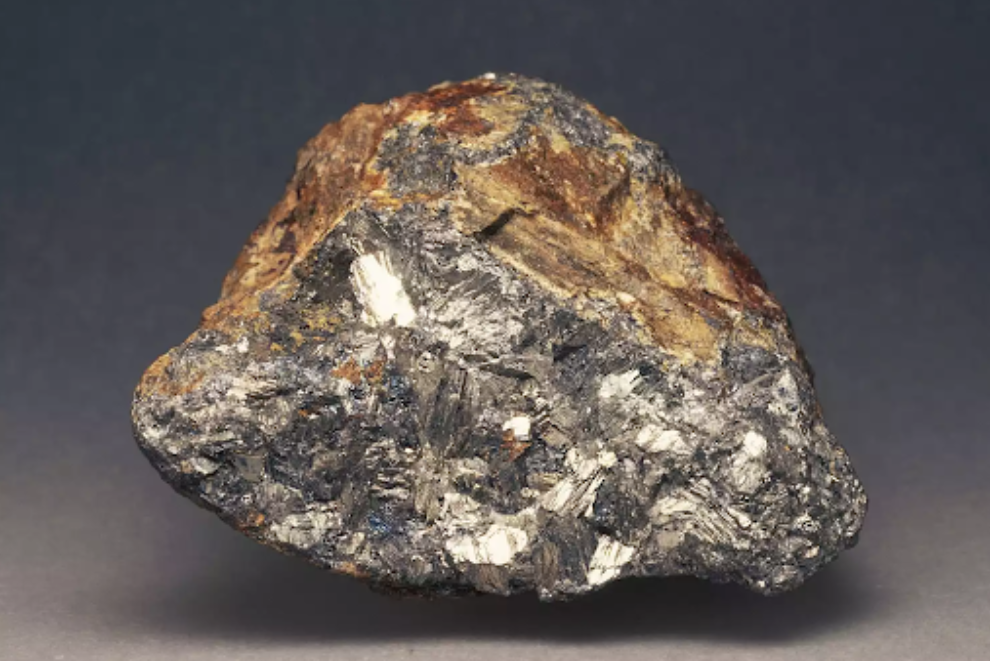
As Executive Director Joseph Webb explains to Mining.com.au, Felix’s case is as straightforward as it is stark. Recent results show ‘exceptionally high’, near-surface stibnite at its Treasure Creek Project in Alaska. These include trench results such as 3m @ 50.26% Sb and multiple surface rock chips in the 50% to 60% Sb range – grades Webb says already meet military-grade specifications.
On 7 October 2025, Felix reported results that continue to validate the quality of its antimony discovery at Treasure Creek, intersecting 5.87m at 4.34% antimony from 54m depth – including ultra-high-grade intervals up to 38% – confirming the down-dip extension of its surface mineralisation with estimated true widths of 4m to 5m.
Webb, who is now based in the US, says the strategic timing couldn’t be more relevant. With China’s export ban creating acute supply shortages and antimony prices reaching US$60,000 per tonne, the US Government has issued emergency declarations and mobilised unprecedented funding for domestic production.
Within this context, Felix is targeting near-term, low-capex concentrate production using a deliberately simple flow sheet (excavator, hand-sorting, bagging) and has flagged plans for a modular smelter sized around 5,000tpa in the initial phase.
It has now lodged a permit amendment for a 1,600-tonne bulk sample targeting zones that metallurgical testing shows contain over 80% stibnite direct from the ground.

Antimony arms race
Webb notes that policy and demand dynamics are playing to Felix’s strengths. The US is rapidly moving to shore up domestic refining. The aforementioned news of USAC securing a DLA contract is underpinning immediate demand for refined antimony and signalling America’s willingness to use procurement to de-risk domestic supply.
Amid this backdrop, Felix’s Executive Director notes while antimony is one of the hottest commodities in the market, given the Chinese export ban, there’s a structural issue at play as well. For one, USAC is the only smelter in America – and it doesn’t have a huge capacity.
“The trouble that they’ve got is all supply. So the significance of this (USAC and DLA) deal for (Felix) is the US Government has signalled it is stepping in and providing direct support for antimony. And you’ve seen what happened with MP Materials and other things,” Webb explains to this news service.
What he’s referring to is MP Materials’ Mountain Pass Mine, which hosts one of the world’s richest rare earth deposits and produced 42,400 million tonnes of contained total rare earth oxides in 2021.
In July 2025, the US Department of War made a US$400 million investment in MP Materials and provided a US$150 million loan. The department has also underwritten pricing for certain rare earth minerals for 10 years to expand the Mountain Pass facility’s heavy rare earth separation capabilities as America seeks to build a domestic supply chain for rare earth magnets.
Webb lays bare the reality facing would-be competitors in the antimony space. While prices have surged to record highs, there is virtually no new materially significant ore supply coming online anywhere in the world.
“We dig this stuff out of the ground and it’s the highest-grade concentrate ever seen, straight out of the rock. Nobody else can do that”
He says even with three years of record prices, there hasn’t been many drill intercepts of substance on the TSX or ASX. The contrast is stark, says Webb, where rivals in Canada and Australia struggle to tease out 0.1% to 0.3% intercepts at depth.
All the while Felix is reporting near-surface hits of 15m at 5% Sb and rock chips grading up to 60% Sb – material so clean it already meets US military specifications.
“Mother Earth has done the work for us,” Webb explains to Mining.com.au.
“We dig this stuff out of the ground and it’s the highest-grade concentrate ever seen, straight out of the rock. Nobody else can do that.”
Webb reiterates that purity and scale matter. While United States Antimony has ambitions to lift its smelting capacity and has an ambitious goal of reaching 500 tonnes monthly production by year-end 2025, the company, in his view, has no clear supply pipeline.
Hat up: Competitive landscape
There are a growing number of antimony plays laying claim to high-grade deposits, although they are at varying stages of development.
Locksley Resources (ASX:LKY) achieved a final floatation concentrate grade of 68.1% antimony from multiple metallurgical testwork programs of surface samples collected at the Desert Antimony Mine prospect within the Mojave Project in California.
The company describes the ‘high-grade’ results as evidence that Mojave holds the “potential to deliver feedstock superior to current market supply streams and prospects”.
Concentrate returned at 95% of technical maximum stibnite grade of 71.68%, revealing minimal impurities and exceeding the marketable sales requirement of a minimum 55% grade.
Locksley will streamline mineralogical testwork to determine the stibnite deportment for further ore characteristic understanding and sample collection from underground work at Desert Antimony to expand the program.
As reported by Mining.com.au, Locksley has expanded the DeepSolv program to test a range of antimony feedstocks in different processing stages from multiple sources to strengthen US domestic supply of antimony.
Then on 7 October, Bryah Resources (ASX:BYH) reported results of analysis of boulder samples retrieved during the recent field reconnaissance visit to the Golden Pike Gold and Antimony Project. These include the highest-grade sample yet retrieved from the Bond Road antimony occurrence, grading 57% Sb. Rock chip samples collected from boulders at the prospect also yielded antimony values of 27.6%.
CEO Greg Hill says Bryah is excited to be able to easily reach the Bond Road antimony occurrence and recover stibnite rich rock samples from multiple locations.
“These high-grade results for antimony at Bond Road confirm previous work and provide confidence for drill testing the significant historical surface sample anomaly,” says Hill.
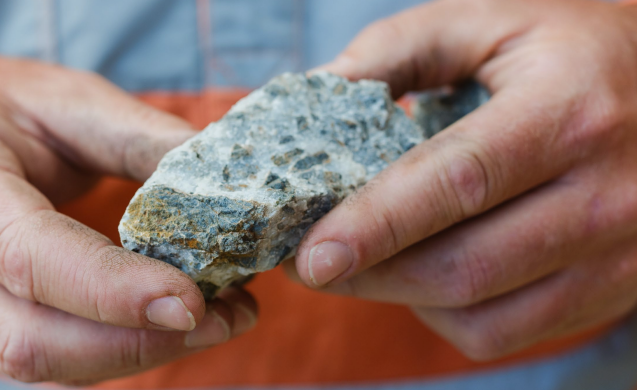
One of the more advanced plays is Larvotto Resources (ASX:LRV). As reported by Mining.com.au on 18 September, the company started construction work to upgrade the processing plant at its Hillgrove Project in New South Wales.
It has employed MACA-Interquip-Mintrex (MIQM) for the engineering, procurement, and construction management role within the construction phase.
Managing Director Ron Heeks says the partnership with MIQM will play a key role in ensuring the Hillgrove plant upgrade is delivered. The construction program will carry Larvotto through to mid-2026, culminating in commissioning and start of production.
“Hillgrove is on course to reemerge as a strategic Western supplier of antimony, in addition to gold, with both commodities currently trading at record prices”
“As the world looks for secure and sustainable supply of critical minerals, Hillgrove is on course to reemerge as a strategic Western supplier of antimony, in addition to gold, with both commodities currently trading at record prices,” says Heeks.
Larvotto intends to deliver 40,500 ounces of gold and 4,878 tonnes of antimony each year from Hillgrove, which it says is Australia’s largest antimony deposit and top 10 globally.
The company says it is set to produce 7% of global antimony supply once Hillgrove comes online. However, it expects to see the upside from exposure to both gold and antimony.
Hillgrove’s MRE grades 2.8% antimony in the measured resource category and 1.1% in the indicated category, although much of the upside in the project will come from gold, which has a resource of 1.7 million ounces AuEq.
Gold the differentiator
However, as Felix Gold’s Webb explains to Mining.com.au, perhaps the most remarkable detail is that in today’s market, Felix treats the associated gold at its Treasure Creek Project as a byproduct.
“At 60% antimony, the contained metal value is equivalent to 10 ounces per tonne gold,” he tells this news service.
“Why would I focus on recovering five grams of gold when I’ve got 300-gram equivalent antimony rock? The gold is almost waste for us – it just sits in the concentrate.”
That inversion of value – ‘gold as waste, antimony as king’ – is underscoring how dramatically the strategic metals narrative is shifting.
Looking ahead, Webb is clear about Felix’s priorities. Fast-tracking production, locking in an offtake deal with the US Government, and building a small but scalable smelting operation on American soil.
“I’m not distracted by name changes or US listings right now. The world is waking up to what Felix has, and I want us to be the first to put antimony back into production outside China,” Webb continues.
Rocks and shoals
China’s storied Hunan mine has fed the world for 50 years, but production is declining. As mentioned, Western governments including Australia, Canada, and US are scrambling to secure alternative supply as stockpiles dwindle and demand from defence, semiconductors, EVs, and solar manufacturers climbs.
Felix is moving quickly to exploit its advantage. The company’s Treasure Creek project in Alaska is targeting first production within months. This will be done using a deliberately simple flow sheet – excavators, hand-sorting, bagging – delivering a direct-ship, military-grade concentrate without the need for complex circuits or costly processing plants.
Webb likens the smelter footprint to “the size of a pizza oven”, yet at that scale it could deliver more than 5,000 tonnes a year of contained antimony.
The goal is clear: demonstrate near-term production capability, secure offtake agreements and continue building toward a longer-term strategic operation. If he’s right, Webb suggests Treasure Creek could be remembered in the same breath as Hunan, which is considered a ‘geological freak of nature’ and cornerstone of a new Western antimony supply chain.
Comparatively, United States Antimony is a downstream player with process capacity and plans, but is constrained by feed supply. It needs reliable, high-quality concentrate. As such there is an urgent need for companies that can deliver clean concentrate that will naturally link up with USAC.
There are others seeking a seat at the antimony table. Perpetua Resources (NASDAQ:PPTA) is a medium-term contender in the space but is not currently producing. It houses one of the largest known US antimony and gold deposits and recently received a conditional Notice to Proceed from the US Forest Service, advancing permitting.
Perpetua is in discussions with major miners and traders like Glencore (LSE:GLEN) and Trafigura to build out processing and refining capacity in America. The company’s Stibnite project in Idaho is a larger, longer-lead development that has advanced through permitting and is being positioned as a strategic US source for antimony.
If it moves quickly, Perpetua may be a large supply factor in the coming years. However, it will mine rather than refine and still needs downstream partners. That combination – near-term processing demand plus medium-term mine supply is creating both opportunity and a race for quick, saleable concentrate.
Zones of action
Meanwhile, Military Metals (CSE:MILI) is at an earlier stage but the junior has been acquiring properties with antimony and gold, including Last Chance in Nevada, where field reviews are underway. Some projects show promising surface and historical results.
Military Metals has been conducting a soil geochemical survey program at Last Chance to follow up on prospective trends identified in a recent geology field program. The company began the survey in late September, collecting up to 1,000 samples to examine alteration and known mineralisation structures ahead of drilling.
It recently returned samples of stibnite grading up to 6.66% and 11.61%, with stibnite often found in quartz-carbonate veins and quartz-carbonate flooded metasedimentary host rocks.
CEO Scott Eldridge says the world is facing a higher demand for munition-related commodities, pushing the surge for antimony.
“Global competition for antimony has increased the need for domestic sources, it is officially listed as a critical mineral in the US which means it gets special attention in policy and planning,” the CEO says.
“Soil geochemistry is a cost-effective and often powerful tool in areas lacking abundant outcrop that can reveal subtle geochemical footprints at surface. It provides Military (Metals) with a cost-effective way to zero in on potentially buried mineralised systems.
“At Last Chance, soil sampling will help us further pinpoint the structures and halos that appear to be related to stibnite mineralisation, sharpening our drill targets and increasing our chances of discovery.”

At the same time, Nova Minerals’ US subsidiary Alaska Range Resources (ARR) recently secured US$43.4 million from the US Department of War to develop a domestic antimony supply chain and refine sulfide feedstocks into antimony products.
ARR is touted as a promising emerging player, especially given the aforementioned funding. As an earlier stage contender, its ability to meet high spec and military grade will be critical.
Domestically in Australia, Warriedar Resources’ (ASX:WA8) Ricciardo deposit is being positioned as a large open-pit antimony resource. Assays and resource work are advancing.
The company is considered a significant regional competitor. But logistics, grade, downstream processing, and ability to access non-Chinese supply chains will likely determine how competitive Warriedar is in the military and high-spec market.
Its outlook and strategic focus now remains uncertain as on 24 July, Capricorn Metals (ASX:CMM) entered into a binding scheme implementation deed to acquire Warriedar, via a court-approved scheme of arrangement. The deal is anticipated to be implemented in early November 2025.
Meanwhile, Alkane Resources (ASX:ALK) is part of the competitive set but not directly similar in ambition and grade to the likes of Felix. Alkane is bringing operating experience, but grades, impurity, and proximity to military-grade specifications are likely less favourable compared to others.
Its existing operations and stable cash flow might allow it to sustain production, maybe even benefit from short-term contracts, but unless it adjusts toward higher specs, margin might be less in a high-premium military-grade market.
As Mining.com.au reported in August, Alkane is substantively debt free apart from a standard equipment financing and repaid a Macquarie facility using the company’s cash reserves.
For investors and policymakers alike, the antimony race places these aforementioned companies high on the radar of the ones to watch in 2026 and beyond.
Why these comparators matter
All up, the United States Antimony deal with the US to an extent offers an immediate processing and defence anchor. A domestic smelter with a DLA offtake solves the offtake and offtake-risk problem and can absorb concentrate from multiple miners.
The contract materially reduces market uncertainty for a smelter operator.
With Perpetua, there is large mine potential and closing of the refining gap. While it has a large resource, the company needs downstream partners further illustrating that mining and refining are often decoupled and both must be solved to deliver supply security.
As Webb reiterates to Mining.com.au, Felix is a rare near-term, high-grade concentrate story. Treasure Creek’s standout feature is the unusually high, near-surface, low-impurity antimony mineralisation – “the type of material that can produce military-grade concentrate with a simple flow sheet”.
“Plus we have the active progress on smelter planning and government engagement – a combination that could allow (the company) to be a short-lead supplier of refined product or highly saleable concentrate,” Webb continues.
With US smelter capacity limited, an offtake, DLA engagement or a funded modular smelter is potentially a commercial turning point. The USAC deal shows the Trump administration is prepared to anchor offtake where national security is at stake.
Perpetua Resources offers scale – an Idaho mine that could supply a large slice of US demand but its focus is mining rather than immediate refining. It is seeking partners to process ore, which means its contribution is medium-term rather than immediate.
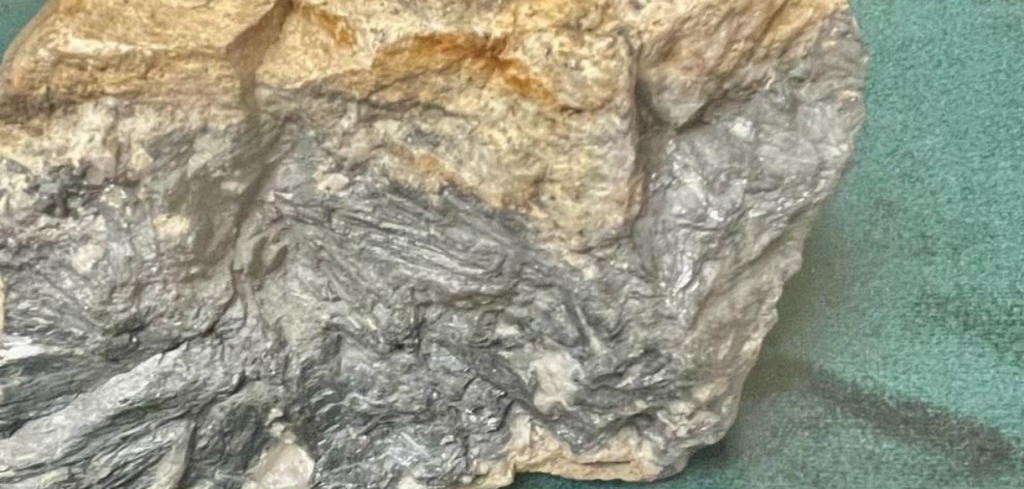
Felix looks like it may occupy a rare intersection – high grade, near surface, strategic location (Alaska), government interest, and a path toward vertical integration (smelter discussions).
Compared to many antimony plays that either have low grade, high impurity, remote location, or lengthy development horizons, Webb reiterates this positions Felix Gold favourably.
Felix has also signalled production targets for late-2025 and early-2026. Meeting those timelines could materially re-rate the story.
If Felix not only produces concentrate but secures co-funding or preferential purchase arrangements with the US Government (similar to the structural support shown to other critical minerals), it could be a first-mover that shows modular smelters and third-party refiners can accelerate expansion.
The combined effect? A secure domestic supply chain emerges faster, buyers pay a premium for non-Chinese, military-grade product, and companies with vertically integrated positions capture outsized margins.
In this case, antimony prices could sustain higher levels into 2026 as Western buyers compete for clean feedstock while Chinese exports remain restricted.
The United States Antimony’s recent DLA contract provides precedent for this type of policy-driven price support.
The contract also demonstrates that policy will be instrumental in the antimony story and that government-backed offtake can make the difference between a marginal project and a strategic supplier.
One thing remains clear – in 2026 it’ll be the fast movers that can mobilise at high speed likely to see first light in the battle to supply antimony. The antimony arms race is on.
Write to Adam Orlando at Mining.com.au
Images: Felix, Larvotto, iStock & Mining.com.au


