
MDF Global MDF Global
Apple’s iPhone boom highlights critical minerals powering smartphones•Presenting a united front for Queensland’s copper sector•Thailand seeks Myanmar mine access amid arsenic pollution•Egypt to set up state-backed company to license artisanal gold miners, free detainees•Brixton closes $7.4 million raise for Thorn, Langis projects•Heliostar banks record $78.7 million for Ana Paula push•Mining giants bet billions on 2030 supply crunch•Gunnison Copper reports Q3 output, revenue surge•Triumph Gold targets $15.46 million for Yukon push•African Rainbow Minerals faces a jobs dispute at Nkomati mine•Angola seeks 10% stake in De Beers under Anglo’s proposed exit•Gold price rebounds but heads for biggest weekly loss since June•Teck copper strike reaches BC port as operator sues union•Copper benchmark rocked by miner-smelter tug-of-war•Zimbabwe mining bill targets community, environmental safeguards•Mount Isa critical minerals hub secures Feasibility Study funding•Eramet initiates $814.5 million capital raise to reduce debt•Richemont backs natural gemstones, declines De Beers comment•‘Tis the season for administration as Comlek falls a second time•OceanaGold Philippines trials wireless blasting at Didipio mine Apple’s iPhone boom highlights critical minerals powering smartphones•Presenting a united front for Queensland’s copper sector•Thailand seeks Myanmar mine access amid arsenic pollution•Egypt to set up state-backed company to license artisanal gold miners, free detainees•Brixton closes $7.4 million raise for Thorn, Langis projects•Heliostar banks record $78.7 million for Ana Paula push•Mining giants bet billions on 2030 supply crunch•Gunnison Copper reports Q3 output, revenue surge•Triumph Gold targets $15.46 million for Yukon push•African Rainbow Minerals faces a jobs dispute at Nkomati mine•Angola seeks 10% stake in De Beers under Anglo’s proposed exit•Gold price rebounds but heads for biggest weekly loss since June•Teck copper strike reaches BC port as operator sues union•Copper benchmark rocked by miner-smelter tug-of-war•Zimbabwe mining bill targets community, environmental safeguards•Mount Isa critical minerals hub secures Feasibility Study funding•Eramet initiates $814.5 million capital raise to reduce debt•Richemont backs natural gemstones, declines De Beers comment•‘Tis the season for administration as Comlek falls a second time•OceanaGold Philippines trials wireless blasting at Didipio mine
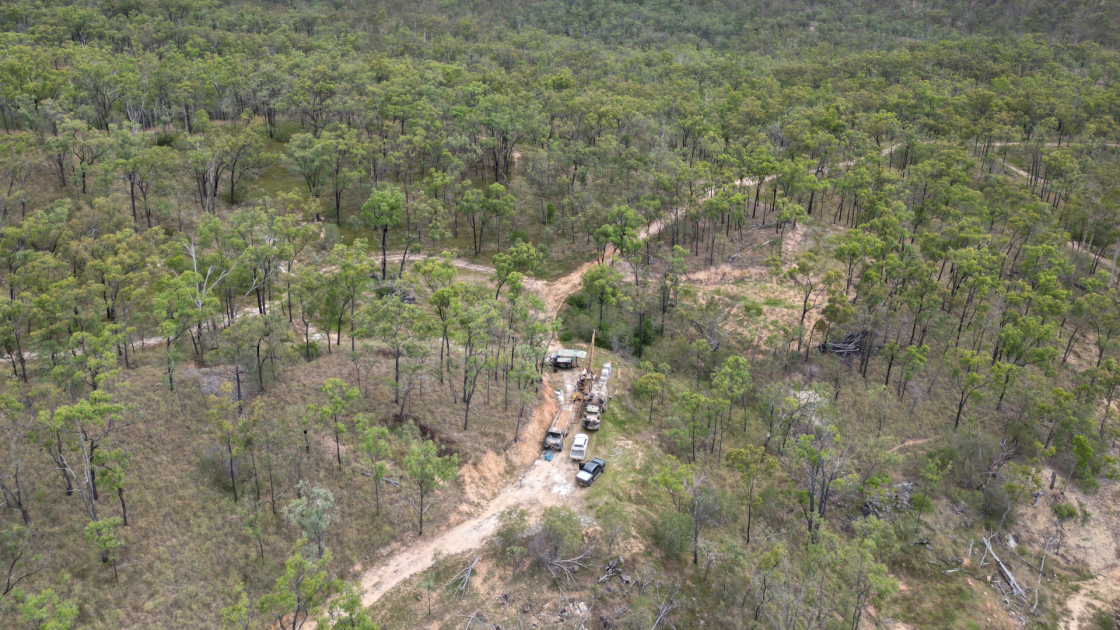
Dart Mining Walwa tin mine in Victoria

Dart Mining confirms ‘high-grade’ tin at Walwa

Dart Mining (ASX:DTM) reports assay results from four rock chip samples collected at the historical Walwa tin mine in north-east Victoria, with the ‘highest-grade’ sample returning 3.96% tin.

The samples were collected in June from the historical Walwa open pit and the Mt Alwa South prospect.

Sample WWP002, an in-situ grab sample of cassiterite-bearing pegmatite from the south-west wall of the historica; pit, returned 3.96% tin (Sn), 165 parts per million (ppm) tantalum (Ta), and 197ppm niobium.

Three other samples returned between 0.40% and 1.09% Sn. All four samples showed elevated lithium, rubidium, and caesium levels, consistent with a fractionated, tin-tantalum specialised pegmatite system.

Chairman James Chirnside says the results provide confidence ahead of the planned deep drilling program.

“Almost 4% tin in a rock sample taken from the wall of the old Walwa pit sits alongside decades of historical sampling that tells the same story — that the Walwa dykes are rich in tin, and associated tantalum and niobium,” Chirnside says.

“This gives Dart Mining confidence as we finalise the deep drilling program designed to test for a larger tin-bearing greisen system beneath the historic workings.”

Historical sampling supports the new results, with previous explorers reporting up to 2.91% Sn at Mt Alwa South, 0.39% Sn at the Walwa pit, and 0.44% Sn with up to 670ppm Ta at Snake Gully.

Walwa has the ‘highest recorded primary tin production’ in Victoria, with about 97,000 tonnes of ore treated from the open pit when it was last mined in the late 1960s.

The tin-bearing dykes are 1–8m thick and dip at 20–30° to the northwest, north, or northeast, forming a broad dome plunging northward. They are predominantly aplite with pegmatite and greisen phases, and commonly contain coarse cassiterite along their margins.

Dart has compiled 150 historical drill holes at Walwa and reported pre-JORC historical estimates by Union Corporation of 8.64 million tonnes at 0.163% Sn and 50ppm tantalum oxide.

These estimates are not reported in accordance with the JORC Code (2012) and are not being treated as current mineral resources.

Dart Mining plans to commence maiden diamond drilling at Walwa in October, with preparations under way across nine proposed drill sites.

Drilling will target repeated tin-mineralised dykes at depth and a possible tin-rich greisen zone at the top of the interpreted causative intrusion.

Write to JC Villarba at Mining.com.au

Images: Dart Mining

Add to Watch List:
Author Image
Written By JC Villarba
JC is an editor with a decade of experience shaping digital content for worldwide audiences. He has spent time embedded in the construction industry, producing content for some of Australia's leading construction and equipment platforms. A Political Science graduate, he has developed a long-standing habit of following global affairs too closely. Outside of work, JC can be found behind a camera, hunting for a good meal, or deep in a book about film or history.