



Cornell University’s Professor Karin Olson Hoal is visiting government-funded science agency CSIRO for six months as the Fulbright Australia-US Chair in Science, Technology and Innovation applying her field of geomet to environmental, social and governance (ESG) activities.
In a CSIRO article, Hoal talks about the untapped potential of sphalerite within this context.
Describing sphalerite as a “very cool mineral”, she outlines how it is a complex and diverse zinc sulfide (ZnS) mineral that also hosts a treasure trove of other critical elements. These include manganese, cadmium, mercury, indium, thallium, gallium, germanium, antimony, tin, lead, silver, and cobalt.
Studying sphalerite is helping geologists understand more about ore-forming fluid processes and opening up ways to extract more value from mineral resources to unlock these critical materials.
“Sphalerite occurs in many different ore deposit types, from sedimentary deposits to ancient volcanic regions, and new ores forming on the modern sea floor. It has even been found in meteorites originating from the formation of the solar nebula about 4.5 billion years ago,” Hoal says.
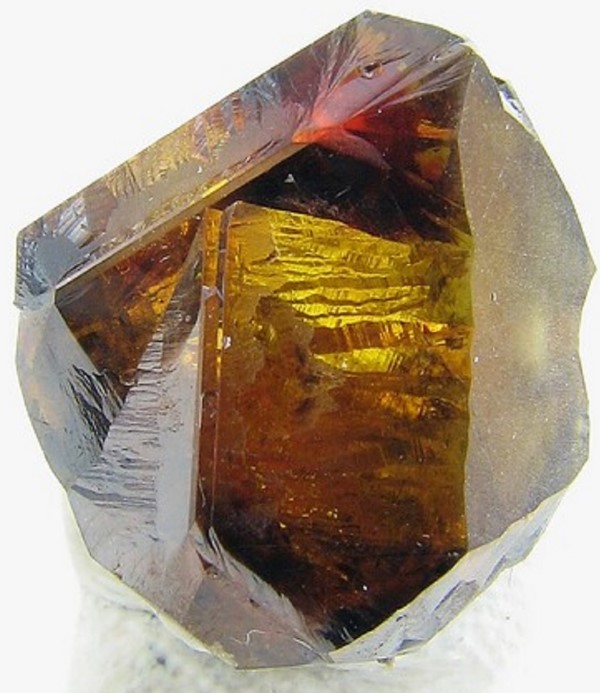
“Prized as gemstones by some, sphalerite comes in an array of colours. From colourless to deep brown, the spectrum of colour reflects other elements in its crystal structure. It is this quality of sphalerite to accommodate so many other elements that is gaining attention.”
Hoal notes that in the past it has been more cost-effective to focus mineral processing activities on main commodities rather than fully understand and characterise whole ores for other potential value.
Many historic mine sites have extracted only a tiny amount of ore, leaving as much as 98% of it as readily available, pre-crushed, above-ground, underutilised, new potential value.
“That is where my work comes in,” Hoal says, noting that geomet links geological information with engineering and downstream impacts to reduce risk, create opportunities for sustainable mineral resource development, and engage local communities to be economically empowered.
Her work links the full characterisation of materials to better designed, less wasteful mineral resources practices and opens the door for value to be reclaimed from historical slag heaps and mining byproducts and embeds ESG into future resource recovery campaigns.
“I believe it is our responsibility as geologists to not only understand the geology, but also to use that knowledge to ensure that the whole minerals value chain carefully works to gain the full value of the materials to help all of our stakeholders
“Linking up geology and engineering solutions improves resource recovery and reduces impacts on the environment,” she says.
“Extraction of minerals from the earth brings them into circulation for humanity. We are just trying to maximise that value for the long term, continuing round and round in the ultimate circular system.”
Write to Adam Orlando at Mining.com.au
Images: Mindat.org & CSIRO


