


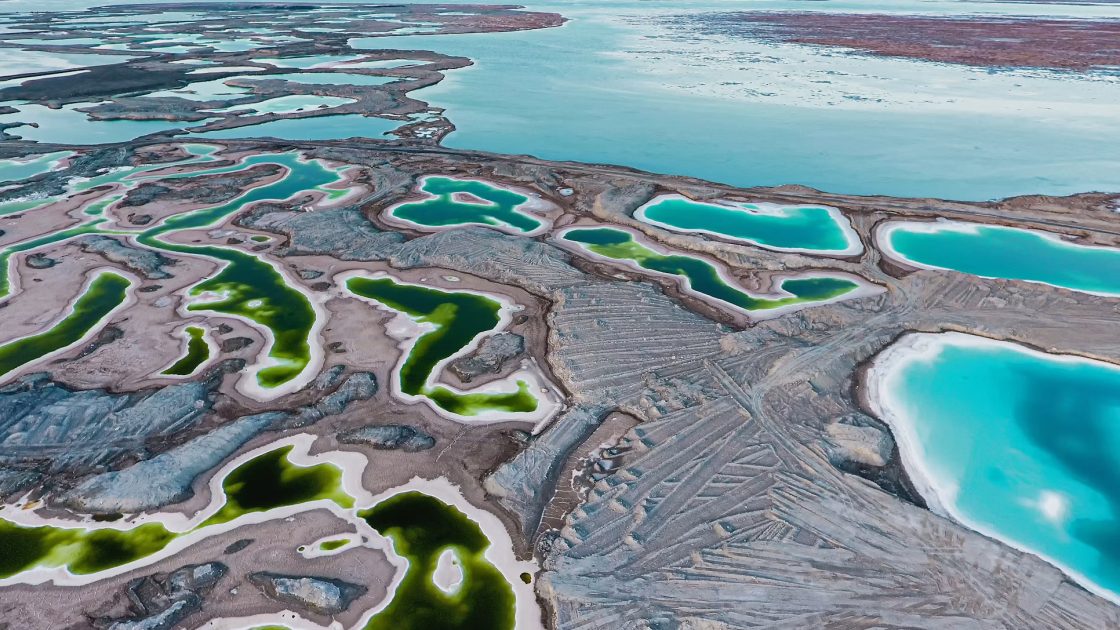
China is looking deeper into its salt lakes, and the implications could stretch far beyond its own borders.
During a recent visit to Qinghai, China’s Minister of Industry and Information Technology Li Lecheng called for greater efficiency, deeper processing, and stronger industrial chains around the country’s potassium, lithium, and magnesium resources.
The Shanghai Metals Market (SMM) reports that Lecheng inspected the Qinghai salt lake magnesium industry, potash fertiliser, and lithium battery companies. He also reviewed the production conditions of integrated magnesium metal, potash fertiliser, and lithium chemical projects.
This highlights China’s desire to extract more value from the resources it already has, while building more competitive supply chains for the materials underpinning its industrial and energy ambitions.
For mining companies, that push could put a fresh spotlight on the global race for lithium, potash, and magnesium.
As China seeks to strengthen its domestic resource base, projects outside the country could become increasingly important to a market grappling with supply security, processing capacity, and geopolitical concentration.
Lithium: Avalon Advanced Materials
Lithium is perhaps one of the most closely watched minerals at the centre of China’s salt lake strategy to secure domestic supplies of critical minerals.
For explorers and developers, China’s push highlights the scale of the resource opportunity and the growing importance of being able to deliver lithium into supply chains.
Currently, China refines over 60% of the world’s lithium, creating a supply bottleneck and dependence on an uncertain partner.
Against this backdrop, projects targeting lithium outside of China could have an important role to play in diversifying global supply.
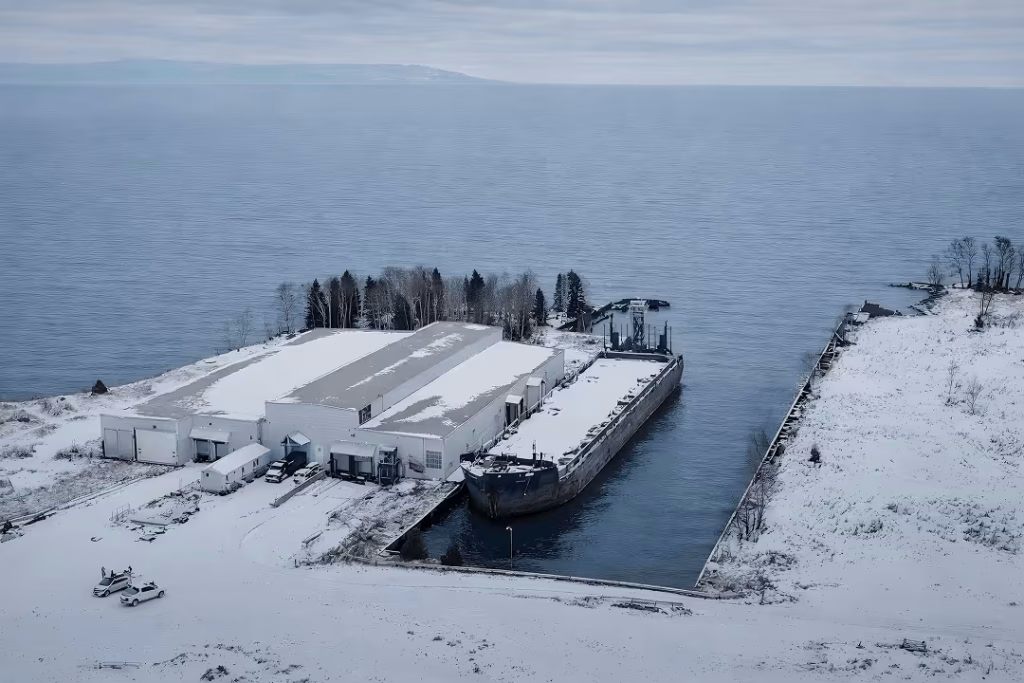
For example, Avalon Advanced Materials (TSX:AVL) aims to build lithium hydroxide processing capacity for North America through its Lake Superior Lithium Project located in Thunder Bay, Ontario, Canada.
Lake Superior has the potential to put Thunder Bay at the centre of that supply chain, reducing Canada’s reliance on overseas suppliers and strengthening control over its own critical mineral production. The project is planned as a long-term operation, with an estimated 30-year operating life and production of 30,000 tonnes per year.
A preliminary economic assessment has been completed for the project, outlining a C$4.18 billion ($4.24 billion) post-tax net present value with an internal rate of return of 48%.
The company recently received a non-binding letter of interest from Finnvera, Finland’s official export credit agency, for potential financing of Metso equipment and services for Lake Superior.
Avalon CEO Scott Monteith says the letter of interest represents an important initial milestone in the development of a comprehensive financing strategy for Lake Superior.
“Metso is a globally recognised processing technology and equipment provider, and the potential availability of Finnish Export Credit support provides Avalon with a credible pathway to finance a significant equipment package while advancing the development of a secure and resilient North American lithium supply chain,” Monteith says.
Australia: Core Lithium
Meanwhile, Australia is one of the largest lithium producers, accounting for about half of global production, as previously reported.
In June alone, Australia provided nearly half of China’s spodumene imports, totalling 370,964 tonnes of the 768,411 tonnes imported.
During the same period, China recorded its first spodumene import from the Democratic Republic of the Congo, but imports from Zimbabwe were down 58.5% year-on-year due to the country’s export ban, as White Noise Communications reported.
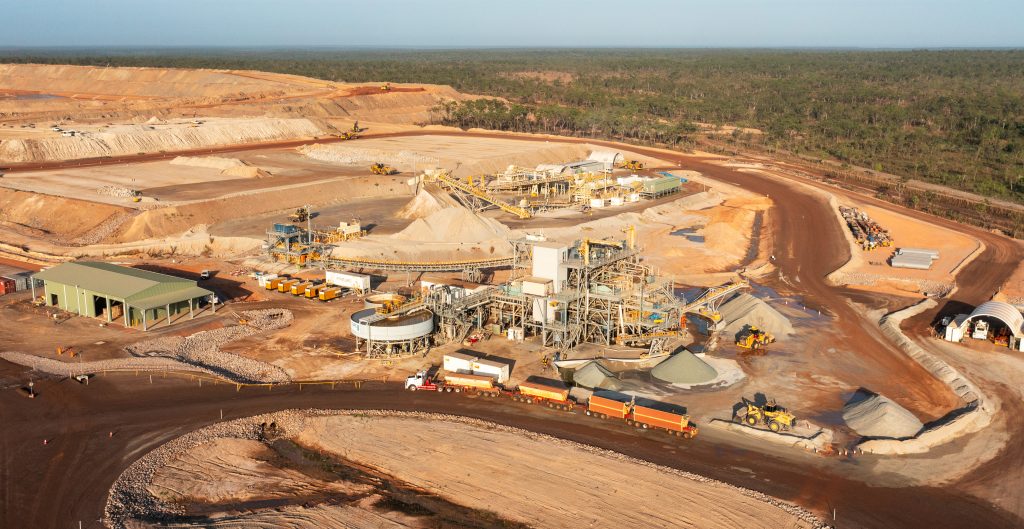
Core Lithium (ASX:CXO) is one of the many mining companies in Australia contributing to the nation’s lithium production via its Finniss Lithium Project in the Northern Territory.
Finniss has been repositioned as a lower-cost, long-life operation, with a 20-year mine life and 214,000 tonnes produced per year. The project includes mining, processing, and export of lithium ore used in the manufacturing of batteries for electric vehicles and energy storage.
The Finniss logistics chain is now fully operational, with the first shipment of 20,000 tonnes of lithium fines and 5,000 tonnes of stockpiled spodumene concentrate successfully departing from Darwin Port.
In June 2026, Core Lithium began underground decline development at the BP33 deposit within its Finniss Project. BP33 is central to the operation and consists of one large, sub-vertical, mineralised pegmatite.
First development ore from BP33 is expected in mid‑2027, with nameplate production targeted for mid‑2028.
Managing Director Paul Brown says the company has made substantial progress across Finniss since announcing a final investment decision and funding package in mid-March.
“In just three months, the company has awarded all major mining contracts, commenced mining at the Grants open pit, secured two direct shipping ore fines sales, and the sale of 5,000 tonnes of spodumene concentrate, with the first shipment now underway, commenced underground decline development at BP33, and advanced brownfields works at the DMS plant,” Brown says.
Potash: Australia and the US
Lithium is only one piece of the salt lake equation. Potash is also emerging as a key focus, with China looking to make greater use of domestic potassium resources to strengthen agricultural supply chains and reduce reliance on external markets.
For potash explorers and developers, that creates a broader opportunity as governments and producers increasingly view the importance of fertiliser minerals.
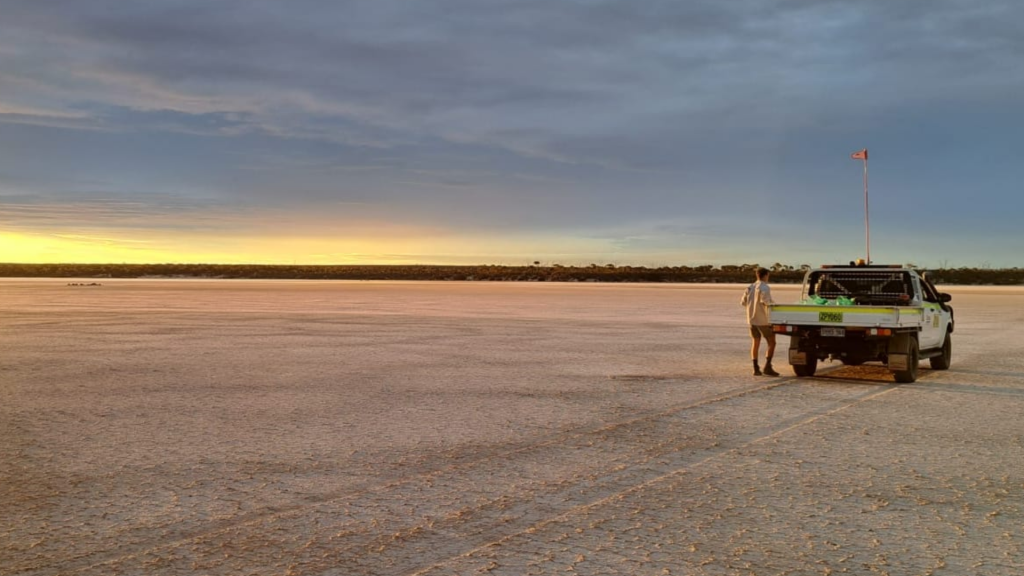
In Australia, Impact Minerals (ASX:IPT) is conducting careful project development and rigorous technical and financial evaluation to contribute to the sustainable growth of the mining sector.
The centrepiece of its strategy is the Lake Hope High-Purity Alumina (HPA) Project in Western Australia, which is set to “revolutionise HPA production with cost-efficient mining and processing”.
HPA is a high-value aluminium oxide typically 99.99% pure. It is critical for manufacturing lithium-ion batteries, LED lights, and semiconductor substrates.
Earlier this month, Impact recorded uranium and thorium levels below 1 parts per billion in HPA samples from Lake Hope.
Managing Director Mike Jones says this is an “excellent” starting point for engaging with the semiconductor industry, where ultra-low-alpha radiation alumina is required for advanced semiconductor packaging, and with thermal management materials, where even trace radioactive impurities can compromise chip reliability.
“It is evident that Lake Hope HPA has the potential to consistently deliver this standard with ongoing refinement of our metallurgical process,” Jones says.
In the US, Nevada Organic Phosphate (CSE:NOP) has been progressing a drilling program within the Murdock Mountain Project, which recently confirmed the strike length of the Upper Phosphate zone to more than 3km.
The latest intersection from hole MM26-10 demonstrated continuity of the Upper Phosphate zone along strike, which is a key requirement for future resource evaluation.
The company is aiming to generate data through this drilling program to guide its next steps at the project.
“Each hole adds valuable information, and the overall dataset continues to support our technical understanding of the target horizon,” CEO Robin Dow previously said.
Murdock Mountain contains an exploration target totalling 10–46Mt of rock phosphate, with a grade ranging from 3–15% phosphorus pentoxide.
China’s salt lake strategy emphasises how lithium and potash are increasingly being viewed as strategic resources tied to energy, industry, and food security.
As the nation works to strengthen domestic supply, the focus also highlights the opportunity for mining companies elsewhere to develop new sources of these critical minerals — and potentially play a greater role in diversifying global supply chains.
Write to Aaliyah Rogan at Mining.com.au
Images: Unsplash, Avalon Advanced Materials, Core Lithium, & Impact Minerals


