

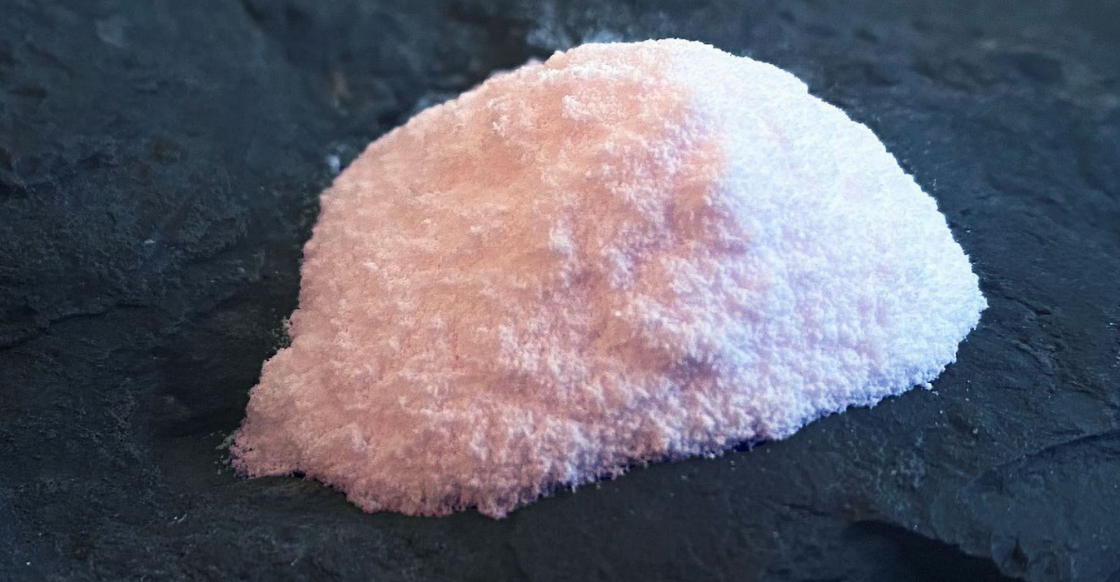
Black Canyon (ASX:BCA) is confident it can produce a manganese oxide concentrate of 30% to 33% after heavy liquid separation testwork showed the explorer can upgrade ore from its KR1 deposit to 35%.
The company notes the higher grade 35% manganese product also has potential as a downstream feedstock for high purity manganese sulphate (HPMSM) processing.
HPMSM is used to make the precursor material for cathode active material and is the main input for manganese in batteries.
Benchmark Mineral Intelligence sees HPMSM demand climbing 3.5 times by 2030.
Previous hydrometallurgical testwork on manganese oxide samples from the KR1 deposit have shown Black Canyon can produce HPMSM that meets battery grade specification of >99% purity and within specification impurity levels.
The latest upgrade of KR1 samples was done using stage-two density based beneficiation, which is an extension of previous testwork that used dense media separation (DMS) to produce manganese concentrates grades of 32%.
Managing Director Brendan Cummins says the company continues to further improve its metallurgical understanding on the liberation and recovery properties of these large-scale, shale-hosted manganese ores.
“We are confident in delivering a manganese oxide concentrate ranging between 30 to 33% manganese from the DMS testwork we announced in May, achieving a key objective of producing a consistent 32% manganese product using standard industry based processing equipment,” he says.
“Leveraging from this we have now been able to demonstrate that with additional secondary gravity based processing we can produce a higher grade 35% manganese product suitable for HPMSM downstream processing and potentially for manganese alloys subject to appropriate agglomeration.”
Cummins says the testwork is important in further developing and advancing flowsheet design to extract maximum value from Black Canyon’s manganese assets.
“We will continue to review the testwork completed to date and consider more gravity based work to further improve product grades,” he says.
The testwork was undertaken on 400kg of reverse circulation drill chip samples collected from the KR1 and KR2 deposits in late 2023. The samples were selected from five holes located across each resource area to depths of 10m.
The two deposits sit within the company’s Balfour Manganese Field in the Pilbara region of Western Australia, which hosts a resource of 314 million tonnes @ 10.5% for 33.1 million tonnes of contained manganese.
Black Canyon’s projects span 2,100km2 in the east Pilbara, close to the operating Woodie Woodie and Butcherbird manganese deposits.
Write to Angela East at Mining.com.au
Images: Black Canyon