


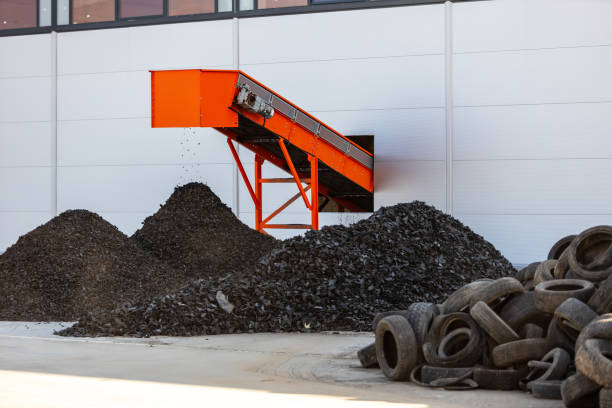
New analysis reveals Australian miners are burying more than 110,000 tonnes of end-of-life mining tyres annually, with only 2% recovered, amid global demand for recycled materials continuing to grow.
Over $100 million in recycling and processing infrastructure is sitting underutilised and demand for recycled rubber for new tyre production is growing globally, as reported by SLR Consulting.
SLR Consulting’s new analysis found that off the road (OTR) tyres contain an estimated 27–47% natural rubber, meaning up to 52,000 tonnes are being discarded each year. The tyres also include recoverable steel and carbon black.
With the price of virgin rubber increasing by around 30% in the past five years, 52,000 tonnes of natural rubber alone could be valued at up to $200 million based on current commodity prices.
Global natural rubber consumption is forecast to exceed production this year, as weather, disease, and production constraints hit Southeast Asian plantations. The rubber buried each year in mining OTR tyres is equivalent to up to 50% of that shortfall.
Australian Tyre Recyclers Association (ATRA) Chief Executive Robert Kelman says the ‘high-quality’ natural rubber and steel in mining tyres are essential materials globally, which can be recovered and reused in manufacturing and infrastructure.
“At a time when rubber supply is under pressure and global tyre manufacturers are calling for more recovered rubber, we are favouring burial instead of recovering it for productive use like other nations across Europe and South America,” Kelman says.
“We have governments investing taxpayer dollars in recycling facilities while allowing the very materials those facilities were built to process to be buried. We cannot build a sovereign recycling and remanufacturing capability if burial remains the permitted and cheapest option.”
Strengthening recycling capabilities
In three years, $100 million has been invested in Australia’s OTR tyre recycling and processing infrastructure. This includes $20.7 million in government funding.
The investment involves Tyrecycle’s Port Hedland facility in Western Australia’s Pilbara region, which opened in 2025, with a capacity to process more than 30,000 tonnes of OTR tyres annually, and CTS Tyre Recycling’s plant in Perth.
Michelin has committed to lifting renewable and recycled materials in its tyres to 40% by 2030 and 100% by 2050.
Major resource-producing countries such as Chile are mandating recovery of large mining tyres, with progressive targets reaching 100% by 2030. Meanwhile, Denmark has achieved a 100% OTR recovery rate, and Canada has a legislated recovery rate with 87% large OTR recovery.
ATRA is now calling for a coordinated national approach to OTR tyre recovery.
This includes phasing out routine burial of end-of-life mining tyres where viable recovery pathways exist, as well as introducing mandatory recovery targets and stronger producer responsibility requirements.
ATRA adds that the proposal also includes establishing consistent reporting on OTR tyre generation, burial, and recycling, alongside strengthening markets for recovered rubber and other recycled materials throughout procurement.
Write to Aaliyah Rogan at Mining.com.au
Main image: iStock


