

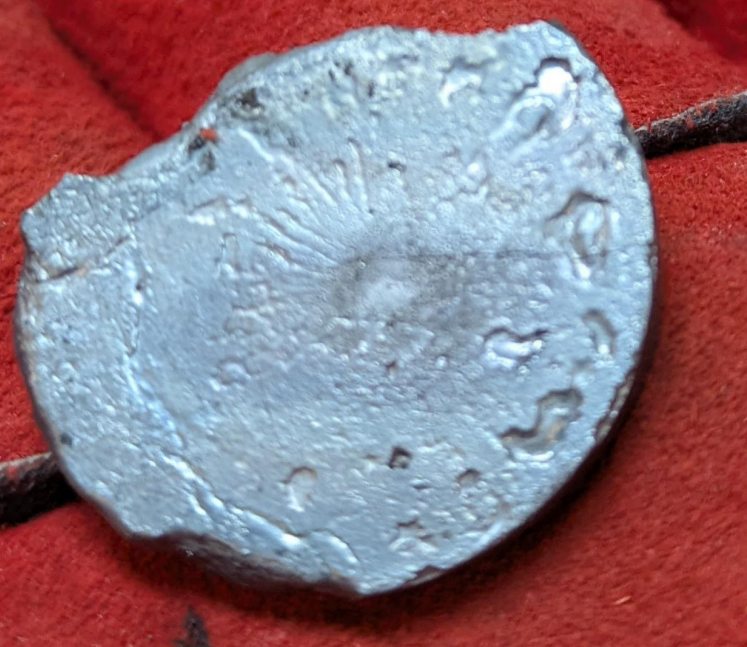
Locksley Resources (ASX:LKY) has produced a 100% American made antimony ingot, marking the return of the first marketable US domestic antimony metal production in decades.
The breakthrough represents proof-of-concept for a fully US mine-to-metal supply chain, from ore sourced at Locksley’s Mojave Desert Antimony Mine in California, through to entirely domestic refining by metallurgical and process development laboratory Hazen Research.
This milestone supports US Government and Presidential executive orders from Donald Trump aimed at re-establishing domestic production of critical minerals vital to defence, clean energy, and strategic manufacturing supply chains.
The company’s share price had soared 14.285% to $0.560 as of 1.45pm AEDT (10.45am AWST) on the back of the news.
Locksley is working closely with its strategic partners, and Washington DC-based advisors GreenMet to advance permitting and funding initiatives to support the next stage of the company’s commercialisation strategy.
The company will advance discussions for offtake qualification, funding support, and strategic collaboration under existing national interest programs and defence supply chain programs.
Locksley is now transitioning from validation to pilot-scale and pre-commercial operations. The next phase of work is focusing on scaling, refining, and positioning the company for government and industry engagement.
The company will also focus on scaling up to US-based pilot plant operations, and establishing a domestic pilot facility to validate process efficiency, recoveries, and repeatability under commercial conditions.
A detailed metallurgical interpretation and process flow-sheet optimisation will be undertaken to utilise test data from Hazen Research to refine processing parameters and finalise design inputs for larger scale operations.
Presently, about 90% of global antimony production is controlled by China, Russia, and Tajikistan, which is creating significant supply risks for Western nations such as the US, Canada, and Australia. Demand for the metal remains high due to its essential role in defence systems, semiconductors, and metal alloys.
“This is just the beginning, the foundation has been set, and we look forward to updating the market on the next steps for Locksley and its strategy to support America’s critical minerals independence”
Locksley CEO Kerrie Matthews says the casting of the first 100% American made antimony ingot in decades demonstrates mine-to-metal production is not only possible but is already underway.
“We’ve proven the concept, and now our focus turns to scaling this achievement into a sustainable, commercial supply chain that supports America’s industrial and defence sectors,” the CEO says.
“This is just the beginning, the foundation has been set, and we look forward to updating the market on the next steps for Locksley and its strategy to support America’s critical minerals independence.”
Advancing toward pilot scale production
As part of advancing towards pilot-scale production, the company will work closely with industry partners and downstream consumers to ensure product specifications for both antimony trisulfide and antimony trioxide meet stringent US defence and industrial standards.
The company says this milestone firmly establishes Locksley as a “pioneer in rebuilding America’s antimony supply chain”, aligning with ongoing government and Presidential executive orders that prioritise domestic sourcing and processing of critical minerals essential for defense, energy storage, and advanced manufacturing.
With one of the few known ‘high-grade’, primary antimony deposits in the continental US, the company adds that its Mojave project offers a path to scaled production and a strategic alternative to Chinese controlled supply chains.
Echoing these sentiments, GreenMet CEO Drew Horn calls Locksley’s achievement not only a technical success, but also a national milestone.
Horn notes that the ability to produce an American sourced and refined antimony ingot is “precisely the kind of outcome that US policymakers and industry leaders have been seeking to re-establish domestic supply chains for critical minerals”.
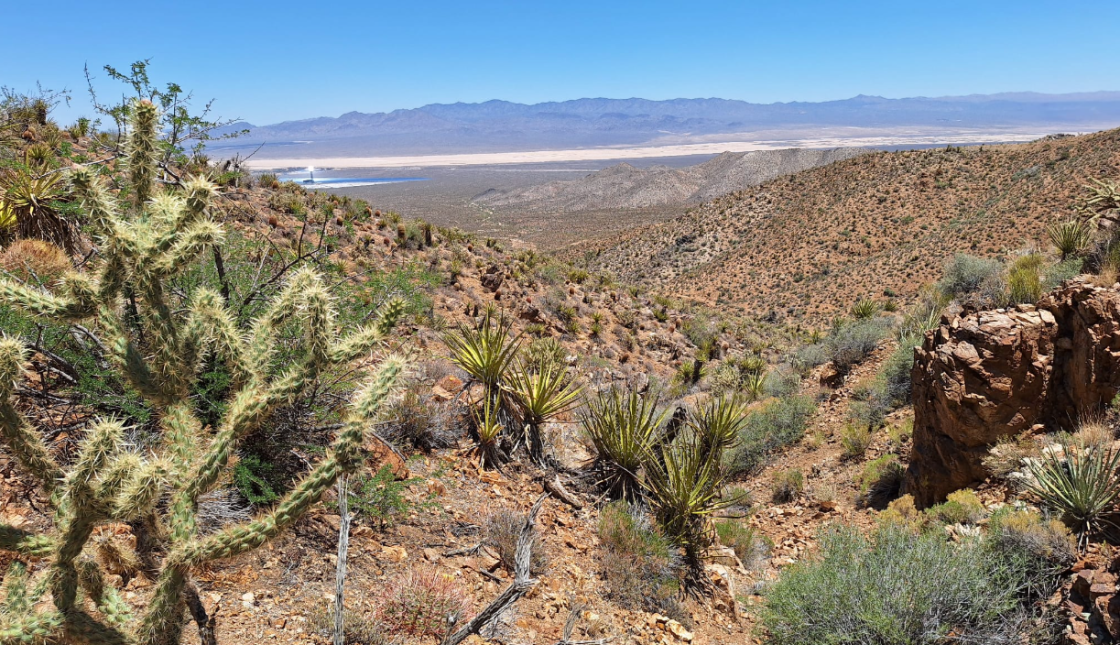
Located in the Mojave Desert, California, the Mojave project comprises more than 491 claims across contiguous prospect areas, namely, the North Block/Northeast Block and the El Campo Prospect.
The North Block directly abuts claims held by MP Materials, while El Campo lies along strike of the Mountain Pass Mine and is enveloped by MP Materials’ claims, highlighting the strong geological continuity and exploration potential of the project area.
In addition to rare earths, the Mojave project hosts the historic Desert Antimony Mine, which last operated in 1937.
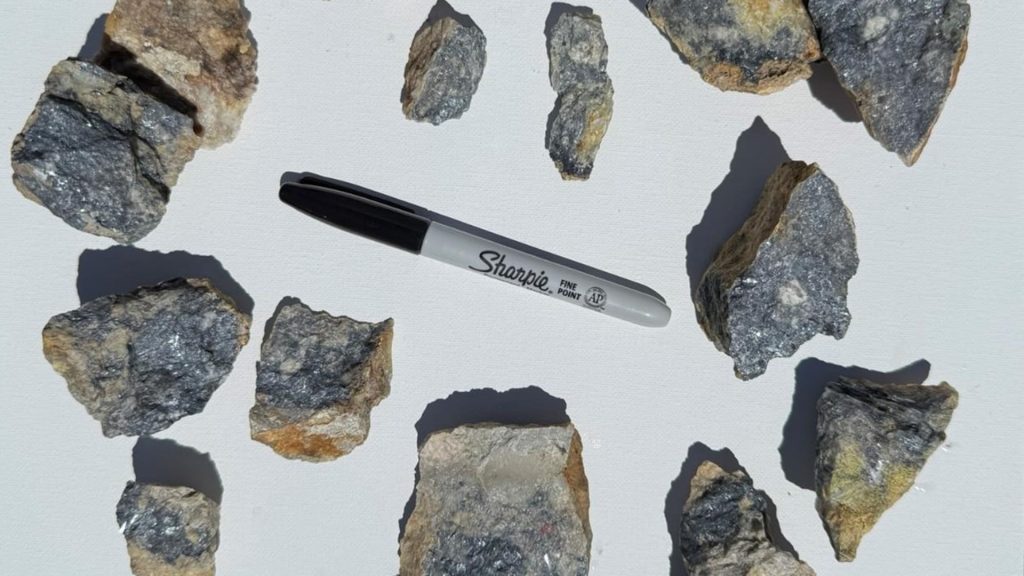
As Mining.com.au previously reported, antimony is no longer considered niche and is now an indispensable commodity. Driven by China’s aforementioned export ban, recent structural supply constraints, and rising critical minerals policy urgency in America, it is now a red-hot commodity.
Smelting capacity is constrained globally, even for companies like United States Antimony Corporation (NYSE:UAMY), which has limited output and depends on securing both raw supply and energy inputs, as reported.
In late September 2025, USAC secured a five-year contract worth up to US$245 million from the US Defense Logistics Agency to supply antimony metal ingots for the national defence stockpile.
In a sign of antimony’s emerging importance, USAC last Friday (17 October) made an unsolicited, conditional, and non-binding indicative offer to acquire merging antimony player Larvotto Resources (ASX:LRV), as reported by this news service.
There are two primary forms of antimony for sale – metallic antimony, used primarily as a hardening agent in manufacturing solder, ammunition, castings, and pewter; and antimony trioxide (ATO), used in flame retardants and increasingly as a clarifying agent in solar glass, which increases panel efficiency.
In addition to antimony’s application in flame retardants and cladding, which boomed after the Grenfell Tower fire incident in June 2017 in London, UK, military applications account for a significant share of its usage.
As a key hardening alloy in lead and tin, antimony is vital for the manufacturing of arms and ammunition, as well as other advanced technologies, manufacturing and renewable energy applications.
Though the aforementioned factors are well-established, prices were dealt an additional boost with China’s decision to restrict exports of the metal from mid-September 2024.
Write to Adam Orlando at Mining.com.au
Images: Locksley