Larvotto Resources (ASX:LRV) has received a confidential, conditional, and non-binding indicative offer (NBIO) from United States Antimony Corporation (NYSE:UAMY) to acquire the company.
Larvotto has appointed Barrenjoey Capital Partners and Allion Partners to act as financial and legal advisors to help the target assess the unsolicited offer.
USAC made the offer after the close of trading on Friday 17 October, after lodging a substantial shareholder notice aftermarket, notifying Larvotto that it had acquired a 10% shareholding in the company.
Speaking to Mining.com.au this morning (20 October), Managing Director Ron Heeks explains that Larvotto was caught by surprise by USAC taking a substantial stake in the company on Friday and then launching a takeover offer.
“They released their intentions aftermarket,” Heeks tells this news service.
Heeks says there had been no discussions between the two parties prior to Friday’s offer.
“We have no idea why they went this way, obviously they want to get the best deal for them,” he adds.
On the tail of this news, Larvotto has seen its share price rise by 10.48% to trade at $1.37 per share as of 11.50am AEDT today.
The indicative non-binding offer is listed for a fixed exchange ratio of six USAC shares per every 100 Larvotto shares, representing a value of $1.40 per Larvotto share based on the USAC’s five-day volume weighted average price.
The company and its advisors are currently assessing the offer, looking to garner more information surrounding USAC’s intentions.
Mining.com.au reached out to USAC for comment, with the suitor telling this news service it will respond to emailed questions tomorrow morning US time.
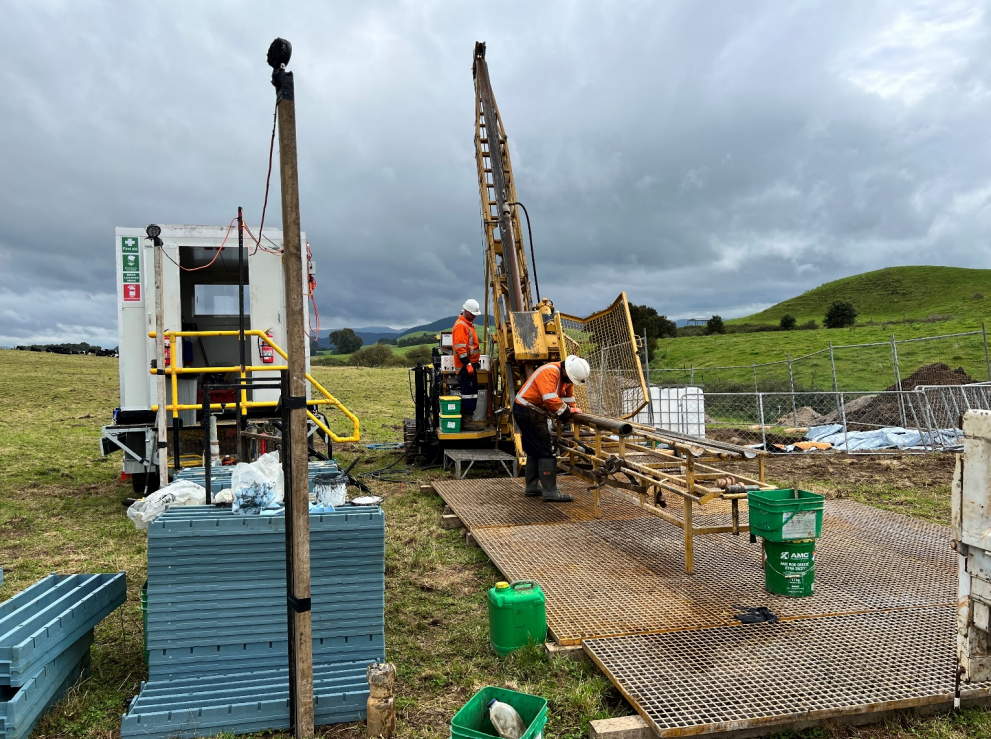
Larvotto has been actively deploying pre-production capital into ongoing infill and expansionary drilling from underground and surface at Hillgrove Antimony-Gold Project in New South Wales. These early site works come ahead of a mill expansion.
An August $10 million share purchase plan, together with a completed $60 million placement, positions the company in a strong financial position to develop its antimony project, as reported.
The Hillgrove Mine is advancing in readiness for mining to begin with first production expected as early as Q2 2026.
The company has employed MACA-Interquip-Mintrex to upgrade and refurbish a processing plant at the project, with current site works including earthworks, stripping of unwanted and obsolete plant items and preparing for installation of a new plant.
On 31 July, Larvotto reached the final investment decision to proceed with the development of the Hillgrove project and approved the $140 million capital cost for the development.

Antimony is no longer considered niche and is now an indispensable commodity. Driven by China’s export ban, recent structural supply constraints, and rising critical minerals policy urgency in America, antimony is a red-hot commodity although US domestic supply is virtually non-existent.
Smelting capacity is constrained globally, even for companies like USAC that have limited output and depend on securing both raw supply and energy inputs, as reported by Mining.com.au.
In late September 2025, USAC secured a five-year contract worth up to US$245 million from the US Defense Logistics Agency (DLA) to supply antimony metal ingots for the national defence stockpile.
The Pentagon contract wins, subsidies, and procurement guarantees are all signs that antimony is increasingly being treated as strategic, not speculative.
News of the DLA deal sent USAC’s shares soaring 17.8% in New York trading upon the announcement, pushing the company’s market capitalisation to about US$975 million at the time.
USAC is working to expand its feedstock base, sourcing ore globally while advancing projects in the US.
Presently, about 90% of global antimony production is controlled by China, Russia, and Tajikistan, which is creating significant supply risks for Western nations such as Australia, Canada, and the US.
A forecast by China Merchants Securities suggests antimony demand from the photovoltaic sector alone will increase from roughly 16,000 tonnes in 2021 to 68,000 tonnes in 2026. The industry’s share of total consumption is poised to rise from 11% to 39%.
Write to Maddison Elliott at Mining.com.au
Images: Larvotto