


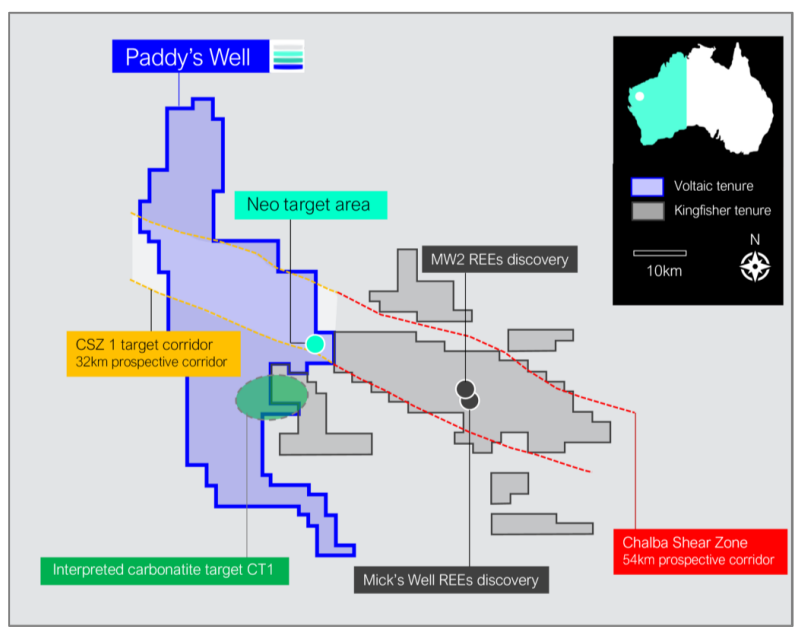
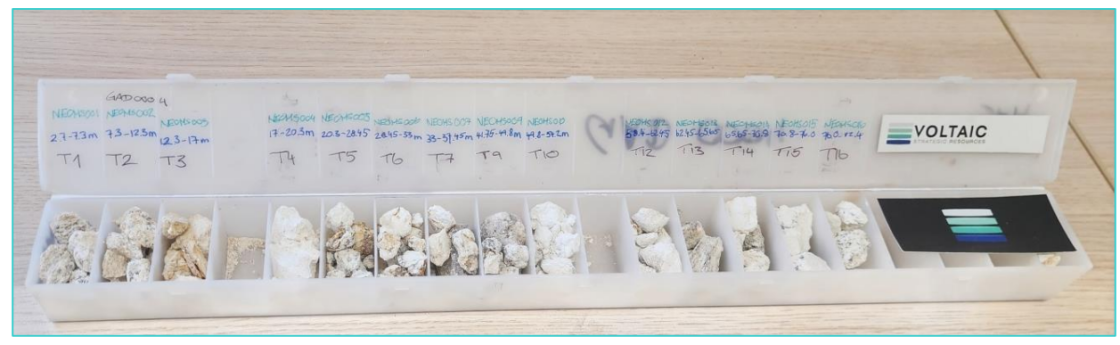
Voltaic Strategic Resources (ASX:VSR) is set to begin metallurgical testwork on recently drilled rare earth elements-enriched clays at the Neo prospect within its Paddy’s Well Project in Western Australia.
The company reports this program has been designed to characterise REE species present within ‘large’ clay intervals (up to 30m true width), identified from near surface and determine what specific fraction of the REEs are “ionic”, as well as what fraction of the REEs are in the more refractory colloidal and mineral phases.
Metallurgical work will also aim to discover how temperature, acid concentration and pH influence recovery of the REEs, and it is believed the results of this work will enable the company to ascertain the preliminary viability of a clay-hosted REE venture.
The company also seeks to understand whether it would be more efficient and economical to focus solely on primary (hard rock) REE targets at Paddy’s Well.
Testing will be carried out by Independent Metallurgical Operations, the largest metallurgical services group in Australia which has ‘extensive’ experience with REE metallurgy including clay characterisation testwork for ASX-listed clients.
Addressing the start of testwork, Voltaic Strategic Resources Chief Executive Officer (CEO), Michael Walshe says: “The key test will be to determine the ionic adsorption potential of the REE-enriched clays using ammonium sulphate as the ion-exchange medium under mildly acidic conditions.
Most of the clay hosted REE discoveries made in Western Australia thus far, have not proven to be true IADs, with the majority requiring aggressive low pH, highly acidic conditions to leach, which limits their potential economic viability.
“The key test will be to determine the ionic adsorption potential of the REE-enriched clays using ammonium sulphate as the ion-exchange medium under mildly acidic conditions.”
In less than 6 months, we have identified a large REE clay system at Neo, along with several other primary hard rock targets, and metallurgical testing of the clay is the most logical next step. We have already identified the presence of halloysite within these clays which is encouraging for IAD potential and look forward to commencing the work mid-April. In parallel, we will continue to pursue our several primary hard rock targets.”
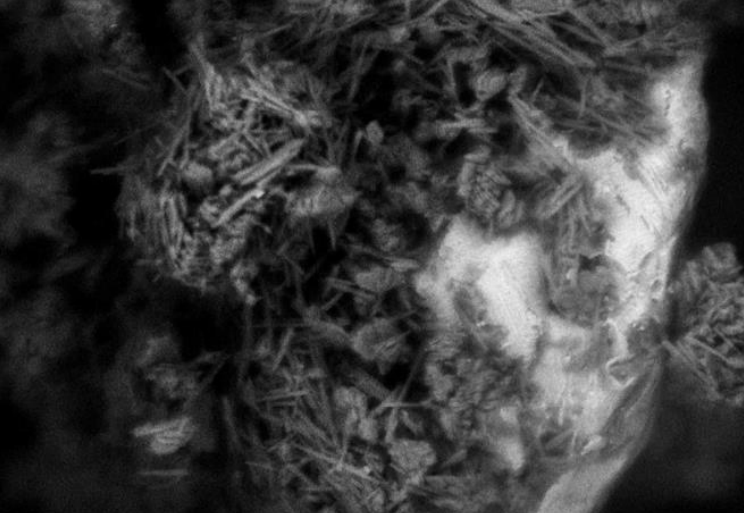
Meanwhile, the company notes halloysite has been identified from scanning electron microscope (SEM) analysis, which is a common kaolinitic clay mineral found in true REE ionic adsorption deposits (IADs).
Voltaic Resources is an ASX-listed exploration company focused on exploring for the next generation of mines that will produce the metals required for a cleaner, more sustainable future where transport is fully electrified. The company has a strategically located critical metals portfolio led by lithium, rare earths, base metals, and gold across Western Australia and Nevada, US.
The company’s Paddy’s Well Project is located in the Gascoyne region of Western Australia and is interpreted to be prospective for REE mineralisation.
Images: Voltaic Strategic Resources Ltd


