Vision 2030 to ‘shape mining for next 100 years’
Saudi Arabia has made a deliberate and highly visible decision to become a serious player in the global mineral industry. Not as a long-term aspiration or a distant policy objective, it is already being executed through budgets, programmes, and institutional behaviour.
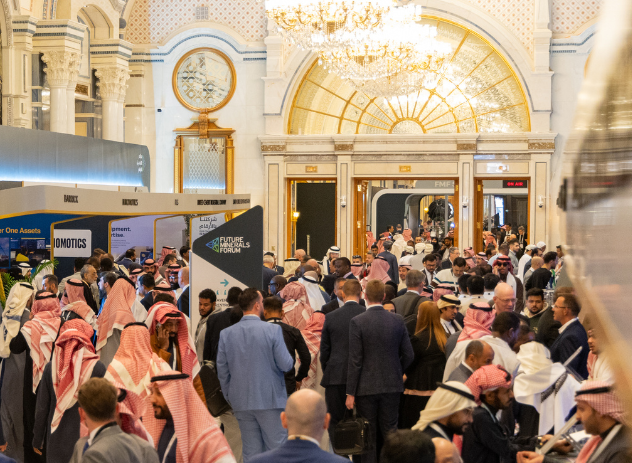
I have spent the past two weeks reflecting on what I saw and heard in Riyadh and comparing it with how the Kingdom is often described back home. The gap between perception and reality is clear. Much of the international commentary still treats Saudi Arabia’s mining ambitions as a long way to go, but what I saw on the ground was very different. The system is already being built.
This was my first visit to the Kingdom. I had followed the policy announcements, capital commitments, and exploration targets for a few years now, but seeing it first hand has changed my picture entirely.
Where exploration actually happens
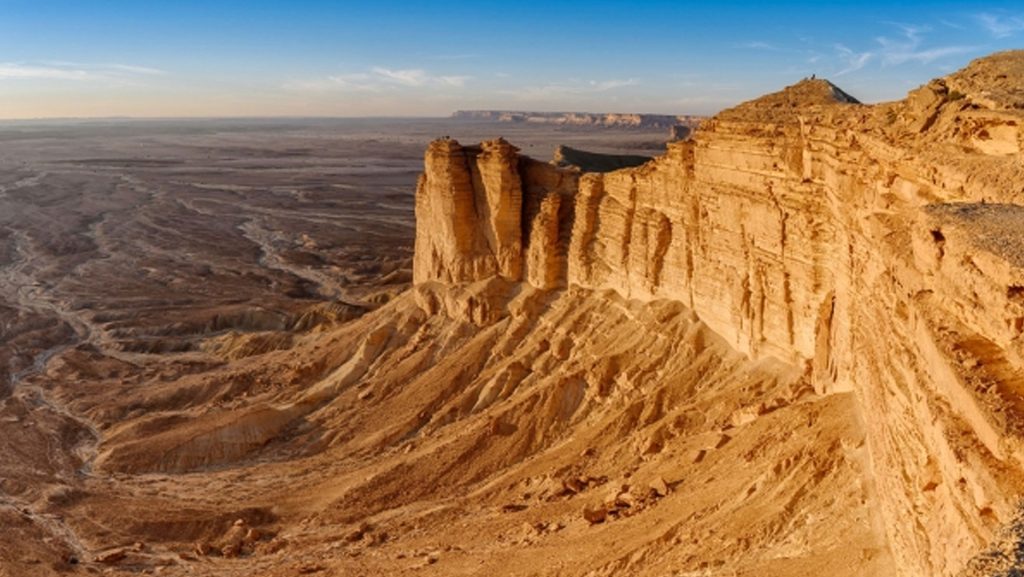
For geologists, the comparison between the Arabian Shield and Western Australia’s Yilgarn Craton is there. Both are large, coherent Precambrian provinces of comparable scale, the Yilgarn covers roughly 650,000km2, the Arabian Shield around 600,000. The Yilgarn is Archean, the Shield is Neoproterozoic, different ages, but critically, both host VMS copper-zinc and orogenic gold systems. The Arabian Shield also shows significant porphyry copper-gold potential.
The Yilgarn has been systematically explored for over a century. The Arabian Shield has not. Large areas have never been surveyed using contemporary geophysics, geochemistry, or mineral systems frameworks.
For any exploration team, that creates a rare situation. Known deposits exist, but the underlying geological architecture suggests room for genuine new discovery at scale.
Saudi Arabia has invested approximately US$347 million into its Regional Geosciences Program since 2020. High-resolution geophysical coverage, geochemical datasets, and modern geological mapping now span vast areas of the Shield. In effect, the Kingdom is compressing decades of national geological data acquisition into a short, coordinated timeframe.
For explorers, that changes everything. First-order geological risk drops. Targeting costs fall. Yet the upside of operating in a frontier environment remains. The number of projects drilled jumped from 58 in 2023 to 160 in 2024, an exciting explosion of activity in a very short window.
Shaping mining regulation
What stood out most in Riyadh was not the stated ambition but It was the operational follow through.
Starting with policy, the people actually shaping mining regulation in the Kingdom have real-world experience inside mining companies, unlike most Western countries, where a clear disconnect exists between policymakers and industry people.
Saudi Arabia’s mine site exploration budget has increased from US$21 million in 2022 to US$146 million in 2025, a 595 per cent jump that far outpaces the global average of 6-8% annual growth. A further 11,302 square kilometres of new geological coverage is already underway.
In a short period, the Kingdom has established a functioning exploration pipeline that moves from data acquisition through to project generation and licensing. The whole system operates as a coordinated machine.
Bumps exist along the way. I have taken it upon myself to understand them, with meetings lined up with Australian and Canadian listed explorers entering the country. But given the policy support and capital being deployed, I am confident the challenges can be overcome.
Technology as foundation
The third consistent theme was technology’s role.
In most mature mining regions, technology adoption tends to be incremental, sometimes even resisted. New tools get layered onto legacy systems. Data architectures are retrofitted. Automation is bolted onto workflows never designed for it.
Saudi Arabia is approaching the problem differently. The exploration and mining system is being constructed with digital infrastructure embedded from the outset. Geological databases, remote sensing, automation, and AI assisted driven targeting are treated as core inputs.
Officials from the Ministry and leaders from Ma’aden spoke repeatedly about designing systems that can scale, rather than trying to modernise later. How data is captured in the field. How targets are ranked. How projects advance through decision gates. All of it built with scalability in mind.
The strategic advantage is timing. By building a modern architecture now, the Kingdom avoids the sunk-cost inertia that slows transformation in established mining economies. It also positions itself to integrate new technologies faster as they emerge.
Vice Minister Khalid Al-Mudaifer articulated this clearly in discussions around exploration efficiency and discovery rates. The objective is not simply to find resources, it is to compress discovery timelines and reduce the capital intensity of early-stage exploration.
In an industry that loves being second and hates being first, I found that refreshing. As someone currently raising capital to change the unit economics of exploration, I still encounter resistance simply because the approach is a little different. Here, different is welcomed, that slight mind set change really compresses advantages over time.
What this means
For investors and operators, the signal from the Kingdom is pretty straightforward: Saudi Arabia is no longer experimenting with mining policy. It is implementing an industrial strategy. That message comes from the very top and is shared time and time again.
Ma’aden alone has committed approximately US$110 billion of investment over the coming decade, spanning upstream mining, midstream processing, and downstream manufacturing. Workforce development programs are expanding in parallel to address technical capacity before it becomes a constraint.
The Kingdom is positioning itself not just as a source of raw materials, but as a fully integrated mining economy. Regulatory, financial, and institutional frameworks are being designed for long-term capital deployment.
Execution risk remains, as it does in any jurisdiction attempting transformation at speed. But the intent is matched by funding and institutional alignment. That combination is rare.
And that’s what I find so exciting.
This visit won’t be my last. Jurisdictions that combine capital, political commitment, and genuine geological prospectivity do not appear often. When they do, they tend to shape industry patterns for decades.
Saudi Arabia has placed its bet. Will it win? We will know in 2030.
Images: Tinka & Mining.com.au