


Tin is among the earliest metals known to humanity, with evidence of its use stretching back more than 5,500 years. Its discovery, early mining and evolving role in technology offer a clear line from Bronze Age trade networks to modern electronics, packaging and energy applications.
Tin’s early history is inseparable from the Bronze Age. As an element, tin is scarce in Earth’s crust, occurring principally as the oxide mineral cassiterite (SnO₂) rather than in native metal form.
According to Tinplate.co.uk, tin was first mined and processed in Turkey about 3,500 BC. Ancient metalworkers learned to combine relatively soft copper with tin to form a much harder bronze, which could be made into tools and weapons that were more durable and stayed sharp longer.
While the exact location of the very first tin discovery is uncertain, ancient mine workings in regions such as modern-day Turkey, Iran, UK, and Spain attest to early extraction. In particular, tin sources in southwest Britain – Cornwall and Devon – supplied metal across Europe and the Mediterranean in the Late Bronze Age, forming trade networks over thousands of kilometres by around 1300 BC.
Archaeological research confirms Cornish tin ingots at shipwreck sites as far afield as the Levant, highlighting the metal’s early strategic importance in interregional exchange.
Romans also mined tin in Britain, and classical sources record tin trade connecting the British Isles with continental markets. Tin’s presence in at least three books of the Bible further illustrates its significance in ancient economic systems.
The Bronze Age lasted 2,000 years. True bronze is a combination of 10% tin and 90% copper, and both materials were readily available in Britain throughout the period. However, Tinplate notes before its entry into Britain, the Bronze Age was in full swing in Europe. Some of the finest bronze weapons were made by the Mycenaeans, who came from Southern Russia at around 2000 BC, and settled in the lowlands of Greece. There they began to trade with the Minoans.
As such, the earliest bronze objects sometimes contain very small amounts of tin or arsenic – possibly from trace metals in copper ores – but intentional tin-copper alloys emerge around this time. The adoption of bronze enabled more complex casting and tools that retained sharper edges and greater resilience than their Stone Age predecessors.

First mining and global trade
Tin was not widely used in its pure form until about 600 BCE, but before that its role in bronze production drove long-distance procurement and mining. Early mining was concentrated where cassiterite occurred in alluvial deposits or as veins associated with granite intrusions. Cassiterite’s high density made it amenable to placer mining in river beds and stream channels, especially in Southeast Asia, South America and Europe.
In Britain, centuries of tin mining — from prehistoric times through the medieval period and into the modern era — left a legacy of production that helped position the region as an early source of global tin trade. Mines such as Geevor, which operated from 1911 to 1990, reflect the long-standing importance of these deposits.
By the early 21st century, China accounted for nearly 50% of global tin production, with significant contributions from Indonesia, Peru, and Bolivia. Although Australia’s share has historically been much smaller by comparison, deposits such as those at Renison Bell in Tasmania remain important sources for domestic and export markets.

Contemporary uses and applications
Tin is a soft, non-toxic, highly malleable, rust, and fatigue resistant metal. Geoscience Australia says it is one of the few metals that has been used and traded by humans for thousands of years. It has a low melting point and alloys easily with other metals, “thus enabling humans to combine tin with copper to make bronze, taking us from the Stone Age to the Bronze Age”.
While tin is not poisonous, organotin compounds can be, and such compounds have been used as fungicides and insecticide, in biocides such as wood preservatives, and also as stabilisers in plastics, such as PVC. Some organotin compounds (for example tributyltin, which was used as an anti-fouling agent in paints for marine vessels), can be highly toxic.
Tin occurs in both primary and secondary ore deposits. Primary ore deposits typically occur within granite or within associated pegmatites or aplites. Geoscience Australia says deposits also occur associated with the margins of these intrusive rocks as veins, disseminations, skarns or carbonate replacements generated by tin-bearing fluids derived from the granite magmas. Carbonate-replacement deposits (such as found in western Tasmania) form some of the largest tin deposits in Australia.
Cassiterite (SnO2) is by far the most important tin ore in all deposits. Small amounts of tin are also recovered from sulphide minerals such as stannite (Cu2FeSnS4). Secondary tin deposits (placers) come from the weathering and erosion of primary tin occurrences and deposits, where cassiterite readily forms residual concentrations owing to its density and chemical resistance. Significant amounts of historical tin production in Australia have been from secondary sources, such as in the Mount Garnet region of north Queensland. Much of historical world production has also been from secondary sources.
Tin’s properties, including its ductility, resistance to corrosion, low melting point and ability to alloy with other metals, underpin its role in a wide range of modern applications. Most tin today is not used in its pure metallic form but rather as part of alloys or coatings, according to Geoscience Australia.
Solder and electronics: The largest single application of tin is in solders, which join metallic components in electrical and electronic assemblies. Lead-free solders that dominate modern printed circuit boards often contain a high proportion of tin, accounting for roughly half of global tin consumption. These solders are critical in computers, smartphones, automotive electronics and renewable energy equipment.
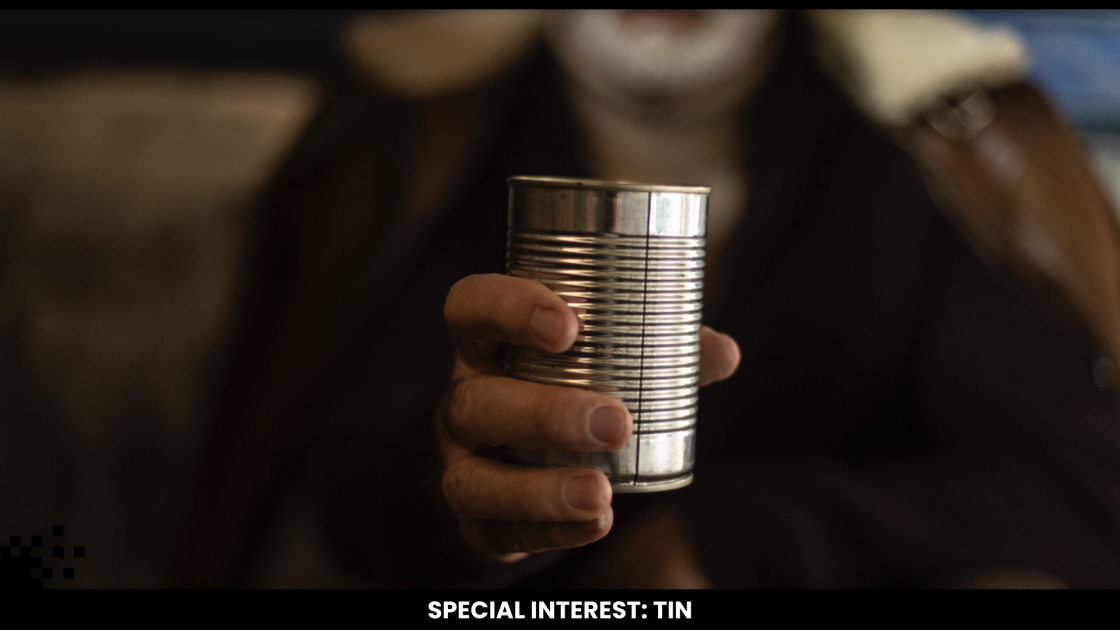
Tinplate and packaging: Tinplate – steel sheet coated with tin – is widely used in food and beverage cans. Tin’s corrosion resistance protects steel from rust and provides a surface that can be easily soldered or formed for packaging. Tinplate accounts for a significant share of annual tin use worldwide.
Tinplate has been commercially made in the UK since the late 1600s, originally by dipping sheets of wrought iron, and later steel, into baths of molten tin. During World War II, electro-coating was introduced, allowing the continuous application of tin to both sides of the metal simultaneously; tin could thus be applied to wide coils of steel, which could be unwound, coated and then rewound.
A hundred years ago there were 83 tinplate works, mostly in South Wales. Today, there is a single UK manufacturer, Tata Packaging Steel at the Trostre factory in Llanelli – though many businesses, such as Tinplate, make tin packaging products.
Alloys: Historically significant alloys include bronze (copper and tin) and pewter (primarily tin with antimony and other metals). While pewter sees more niche use today in decorative and ceremonial objects, bronze remains important in marine hardware, bearings, bells and artistic casting, according to The Silver Crane Co.
Glass production: Tin plays an essential role in float glass manufacturing, where molten glass is floated on a bath of molten tin to produce flat, smooth panes for windows and architectural uses. Silver Crane notes this process underpins modern glass production worldwide.
Chemicals and specialised alloys: Tin compounds appear in ceramics, glazes and plastics. Organic tin compounds formerly served as biocides and stabilisers in PVC, though some toxic variants have been phased out or restricted. Tin also alloyed with titanium and other metals is used in aerospace components and specialised industrial applications, as per Geoscience Australia.

Critical mineral status and future demand
Despite its ancient origins, tin remains a critical mineral in the twenty-first century. Modern demand drivers include not just electronics and packaging, but emerging technologies such as solar photovoltaics and electric vehicles.
Tin’s role in solder for solar cells and advanced batteries positions it as part of broader energy transition supply chains, with demand expected to grow alongside renewable energy deployment and electrification.
Tin’s market remains sensitive to supply constraints because economically viable deposits are relatively rare, and production is concentrated in a handful of regions. This combination of enduring foundational use and evolving strategic demand highlights the metal’s unique position in both historical and modern economic landscapes.
In tracing the arc from early Bronze Age alloying to the complex industrial roles of today, tin illustrates how a metal can shape technology, trade and industry across millennia while remaining integral to the world’s evolving manufacturing, and energy systems.
As Tinplate.co.uk states: “After nearly 5,000 years, it’s safe to say that tin isn’t just a fad.”
Write to Adam Orlando at Mining.com.au
Images: iStock


