


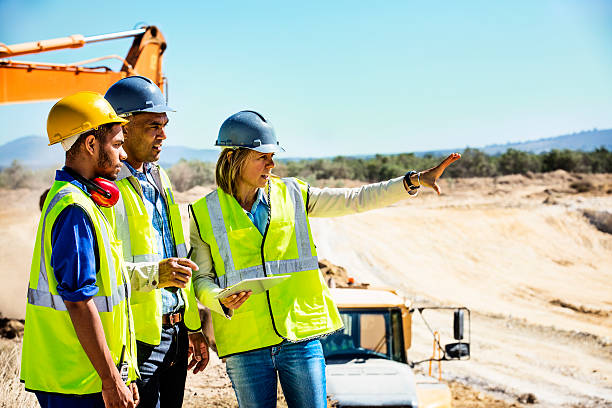
South Africa is targeting a R$2 trillion ($176.41 million) investment over the next five years to upskill its workforce that drives operational efficiency and strengthens investor confidence, positioning the country as a globally competitive hub for critical minerals investment.
Energy Capital & Power says enhancing skills development supports South Africa’s broader agenda of increasing employment opportunities and strengthening economic resilience, while channeling mineral wealth into local industrialisation.
South Africa is aiming to tackle youth unemployment by creating more opportunities for 1.8 million young people by 2030. As one of South Africa’s largest employers, the mining sector plays a key role in achieving this goal. The country’s mining sector supports nearly 900,000 direct jobs.
A major boost to workforce development in critical minerals was announced in mid-February through a partnership between the European Union and South Africa’s Energy and Water Sector Education and Training Authority and the Council for Scientific and Industrial Research.
The initiative includes €2 million in funding from the EU to establish a dedicated platform to strengthen skills development and research and workforce readiness across the critical minerals and battery value chain.
Part of the EU’s broader Clean Trade and Investment Partnership, under which €15.5 billion has been committed to strengthening South Africa’s critical minerals sector, the skills initiative aims to expand technical and vocational education and training institutional capacity.
The initiative also aims to provide specialised training aligned with battery minerals, refining and recycling, facilitate internships and work-integrated learning placements with industry partners and create employment pathways for graduates entering critical mineral industries.
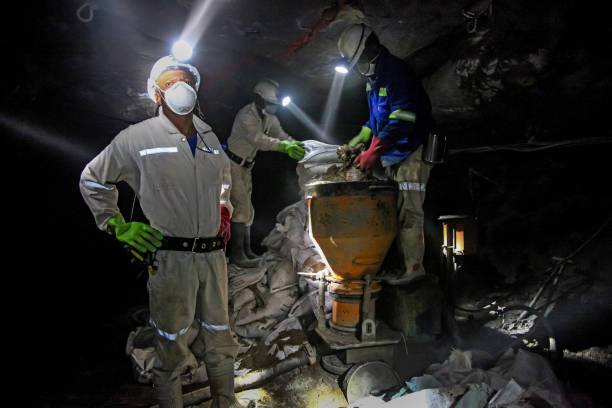
Skills shortage gap
In Australia, younger people are no longer choosing careers in mining for a variety of reasons, as the 2023 McKinsey report showed a 63% decline in Australian mining graduates from 2014 to 2020; similarly, the US saw a 39% decline from 2016 to 2020, as reported.
Mark Pearce, marketing business partner of MPI Recruitment, previously told Mining.com.au that although leadership and culture is not exactly underestimated, giving someone a pay rise is considered “quick and easy”.
“But really putting in place the strategies that create a great culture is a much longer and harder process,” Pearce says.
“It’s always been an industry where people tend to be promoted into positions of authority at a relatively young age, often before they’ve developed the communication skills to call out bad behaviour in more experienced workers.”
A recent survey from MPI Recruitment has revealed that leadership and culture are the main motivators behind why workers are leaving the mining industry or changing jobs.
According to the survey, 86% of Australia’s mining workers are movable, with only 14% ‘empathetically’ planning to stay put in 2026.
Out of the 217 employees surveyed, 66% prioritise leadership and culture, while only 6% care mostly about pay.
Against this backdrop, the upcoming African Mining Week conference, scheduled for 14-16 October 2025 in Cape Town, is set to play a key role in advancing dialogue on workforce readiness, investment and strategic partnerships.
This year’s event will examine how African producers can move beyond the volume-led growth to capture greater value across mining, processing, and trade.
Rachelle Kasongo, AMW event director, says the event is designed to bring project developers, governments, and international investors into the same room to accelerate transactions that move Africa’s mining sector from potential to production.
Write to Aaliyah Rogan at Mining.com.au
Images: iStock


