


While they are often synonymous with impulsive choices and social media distractions, it is our youth who hold the key to revolutionising the resources sector.

Katrina-Lee Jones, Policy Director Skills, Education and Diversity at the Queensland Resources Council (QRC), underscores the urgency of engaging the younger generation, saying the world cannot progress without the ideas and energy of young people.
“We need resources for renewables and sustainable development. And we can’t get there without young people and their ideas and their willingness to be able to work with us to reach net zero,” Jones says.
With their innovative thinking and fresh perspectives, young people are helping solve problems of today and shaping the future. In fact, since 2000, the United Nations has dedicated an awareness day for the people of the future — Youth — to shed light on issues, as well as celebrate their potential as partners in our global society.
Today (12 August) marks International Youth Day, and this year Mining.com.au is shining a spotlight on the vital role our youth have to play in the mining industry.
Bridging the gap: Addressing perceptions and opportunities
Despite the crucial role young people could play, the reality is that many young Australians are shying away from choosing careers in the mining sector due to negative perceptions of the industry.
A 2023 McKinsey report revealed that 70% of young participants said they would definitely or probably would not work in mining. These findings are further backed up by a survey conducted by the Mining and Automotive Skills Alliance with many respondents saying they believe it does more harm than good.
So how can the mining sector bridge this gap and address the concerns of the youth?

Cherie Everett, General Manager of People and Culture at Metro Mining (ASX:MMI), stresses the importance of education and open dialogue.
“Historically mining might be seen as just based on coal or underground, and some people might look at that and go, that is not for me,” Everett says.
“But there are so many more opportunities in so many different streams and different ways to get involved. Education, knowledge, and sharing all the different elements of the sector and the work that is being done is what is absolutely important.”
It’s a point that Jones concurs on, noting that traditional communication methods are ineffective.
“There’s ways and means of communicating and it is not the old way of communication,” Jones says.
“It’s actually working either directly with these young people through schools or it’s targeting them through a digital media marketing campaign.”
The QRC’s ‘Shape Your Future, Innovate Our World’ digital media campaign exemplifies this strategy. By tapping into research about Gen Z’s career motivators, the campaign shares inspiring stories and shows the lifestyle and opportunities available in a decarbonised future.
“The Gen Z demographic are swipers and you haven’t got long. That’s why the campaign that we did was so far from being corporate,” Jones says.
“We did not want to use any of the corporate players out there. We need to be using people who are lifestyle marketers and that is what we did. So that’s why we have 15 second advertisements that are out there at the moment and the hero video is 90 seconds.”
On paper, it is easily assumed that the mining industry would be an attractive option for younger generations, due to its generous salaries, abundant opportunities, and an overall great career path.
However, regardless of the opportunities that are at the palm of these young people’s hands, there remains a tarnished image of mining careers among young people.
A tarnished image: Confronting mining’s negative connotations
MPI Recruitment says Gen Z is increasingly turning away from the mining sector.
“The generation born between 1997 and 2012 is actively turning its back on mining.”
The McKinsey report further illustrates this trend, showing a staggering 63% decline in Australian mining graduates from 2014 to 2020;similarly, the US saw a 39% decline from 2016 to 2020.
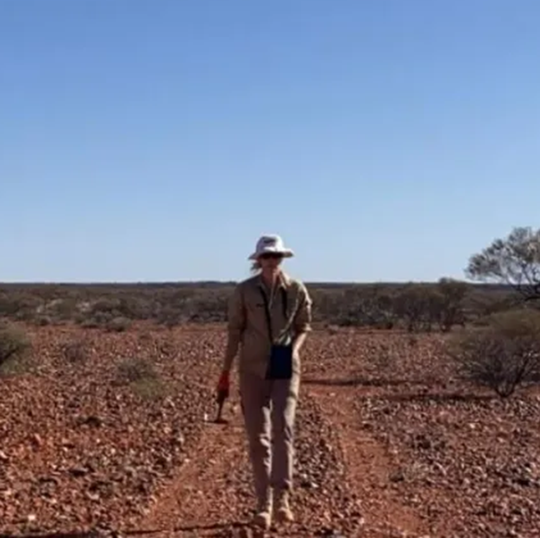
Lauren Bamber, a graduate exploration geologist at Great Boulder Resources (ASX:GBR), tells this news service that the industry must confront these negative associations.
“Mining is often lumped together with oil and gas, and the sector can not simply promote that it is good, when it has negative connotations associated with it,” Bamber says.
“I think we’re still trying to figure out the best way to adapt because the industry has to delicately fight against the narrative that mining is all bad. But then we also have to show how crucial a role mining plays in the energy transition, how much good it can do for rural communities and also demonstrate how it is trying to do better.
“We need young people who care about those things in the industry in order to do better.”
Bamber has been working in the industry for nearly two years. Before kick-starting her career in mining, she completed a masters degree in mining geology from the Camborne School of Mines in the UK
Since working in the sector she has obtained a plethora of skills, and while working with a junior explorer such as Great Boulder, she has developed software skills and gained an abundance of geological knowledge.
“When you are on the rig as a geologist, seeing the rocks come out of the ground and being the geologist there to identify the minerals and rock types, trying to figure out how it all relates, makes me a better geologist,” Bamber says.
She emphasises the importance of young people creating opportunities and being open to them.

From clicks to progress: Harnessing digital pathways
As the world and technology continues to evolve, Metro Mining’s Cherie Everett says the industry is also changing to meet the expectations of current and future generations.
“Adapting to these demands is crucial and solving these challenges in the coming years will be essential as technology continues to advance,” Everett says.
Today’s youth — dubbed digital natives — have the potential to lead in technological adoption within the mining industry. According to Act for Youth, almost all youth (96%) use the internet daily, as of 2024.
This figure highlights the opportunities that exist to tap into the younger generation and equip them with digital skills that can enable them to handle data analysis, automation, and remote monitoring — which geologist Baraka Mbosho says is all crucial in the modern mining industry.
Or as Jones says: “You can’t invest in new technology without also investing in the people who operate it.”
This year’s theme for International Youth Day is ‘From Clicks to Progress: Youth Digital Pathways for Sustainable Development,’ which highlights the importance of technology in driving change.
Bamber says, on a more personal level, this year’s theme represents the unique avenues for youth to engage with the industry.
“As a young person, you can lead the way through digital avenues, as well as pick up new apps that you might need to download for work that can make things more efficient in the long run,” Bamber says.
Everett adds that this year’s theme underscores the commitment to enhancing digital inclusion, especially for youth in remote communities.
“For Metro Mining, it highlights the challenges youth face in remote communities due to limited internet access and the need to improve digital inclusion to allow for equitable access for all youth regardless of where they live,” she says.
“We are committed to creating opportunities that promote equality and bridge this gap through direct opportunities at the mine and the flow-on impacts that mine has in the community.”

Innovative initiatives: A vision for the future
With technological advancements made in recent times, many organisations are launching initiatives to promote science, technology, engineering, and mathematics (STEM) and earth sciences professional development avenues for employees.
Andrew Paterson from Great Boulder Resources highlights their commitment to employee development, offering both formal and informal training opportunities.
Great Boulder has initiated monthly group technical sessions where the team interact with a group of expert independent consultants in the fields of geochemistry, structural geology, geophysics, and petrology to share updates on project areas, while also gaining further insight into what results mean and how everything fits into the bigger picture.
Additionally, the QRC’s Queensland Minerals and Energy Academy (QMEA) is paving the way for young Queenslanders by providing pathways into long-term careers in the resources sector.
“There is nothing like the QMEA that exists in Australia,” Jones says.
“It’s the biggest industry-led schools partnership in the country. We are in 100 schools throughout Queensland and we run hundreds of workshops throughout the course of every year.”
Metro Mining’s collaboration with the Johnathan Thurston Academy further exemplifies this commitment through the ‘JTLeadLikeAGirl’ program, which focuses on empowering young women with leadership and resilience skills.
“We are really focused on these types of programs. How we can better partner, support, and engage with our communities and support opportunities that currently exist or don’t yet exist?” Everett says.

To revitalise interest in mining careers among youth, the industry is also shifting towards more transparent communication and education. By showing the diverse roles and opportunities available and the positive impacts of sustainable practices being made, the industry can not only attract, but also empower the next generations.
The future of our resources sector depends on how we engage with the innovative spirit of young people. Without their fresh perspectives and innovative thinking, we risk stagnating in a world that demands progress.
As Mining.com.au celebrates International Youth Day, it is clear that the key to revolutionising the resources sector lies in the hands of our youth.
Write to Aaliyah Rogan at Mining.com.au
Images: Queensland Resources Council, Great Boulder Resources, Metro Mining, File