



A recent survey from MPI Recruitment has revealed that leadership and culture are the main motivators behind why workers are leaving the mining industry or changing jobs.
With job vacancies everywhere and projects slipping, the industry tends to go with the convenient scapegoat of a talent shortage. However, MPI Recruitment says that the 217 mining industry employees surveyed tell a different story.
According to MPI Recruitment, 86% of Australia’s mining workers are movable, with only 14% ‘empathetically’ planning to stay put in 2026.
Out of the 217 employees surveyed, 66% prioritise leadership and culture, while only 6% care mostly about pay.
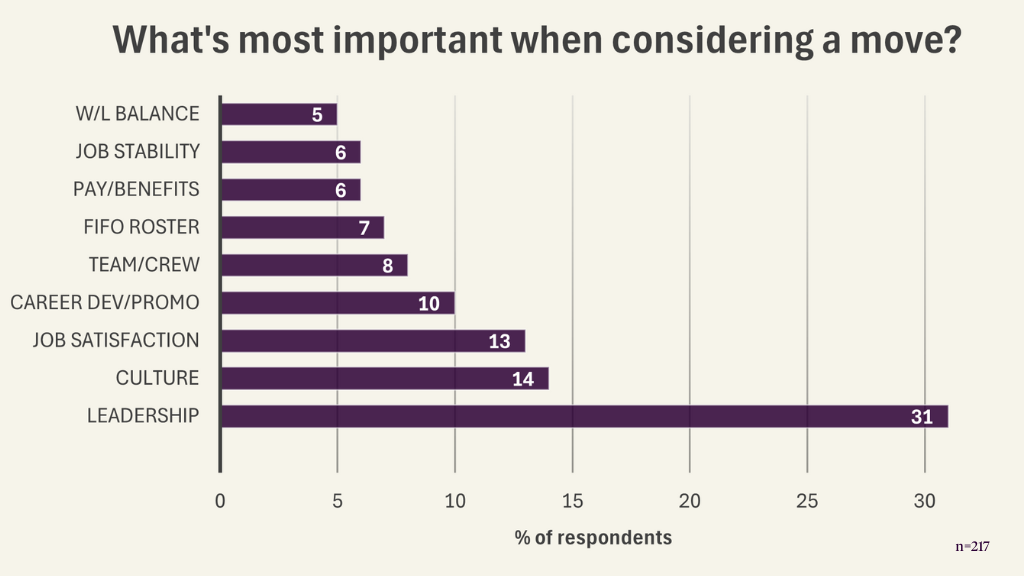
Speaking to Mining.com.au, Mark Pearce, marketing business partner of MPI Recruitment, says although leadership and culture is not exactly underestimated, giving someone a pay rise is considered “quick and easy”.
“But really putting in place the strategies that create a great culture is a much longer and harder process,” Pearce says.
“It’s always been an industry where people tend to be promoted into positions of authority at a relatively young age, often before they’ve developed the communication skills to call out bad behaviour in more experienced workers.”
“The generation born between 1997 and 2012 is actively turning its back on mining”
As Mining.com.au reported, young Australians have been shying away from choosing careers in the mining sector for a variety of reasons.
MPI Recruitment says Gen Z is increasingly turning away from the mining sector.
“The generation born between 1997 and 2012 is actively turning its back on mining.”
A 2023 McKinsey report further illustrates this trend, showing a staggering 63% decline in Australian mining graduates from 2014 to 2020; similarly, the US saw a 39% decline from 2016 to 2020.
Earning belief
MPI Recruitment says while the mining industry is short of top technical talent, individual organisations need not be.
“If they are, it is more likely to be a belief crisis, where leadership keeps trying to buy trust instead of earning belief,” MPI notes.
“Trust is hygiene. It’s necessary, but replaceable. Belief, on the other hand, is emotional and identity-level.”
When asked to comment about why employees are looking and what they are looking for next, one respondent wrote that they are seeking for “a decent boss who’s fair, rather than somebody pandering to the cameras to look good”.
Another wrote, “leadership integrity (values aren’t just words on a wall) … mining is too easily held back by its ’we’ve always done it this way’ and a fear of setting precedent”.
Pearce explains that companies are making the mistake of not supporting their employees with leadership and communication coaching, as well as coaching around how to effectively give and receive feedback.
“Invest more in leadership coaching skills concurrent with promoting people into positions of influence,” he tells this news service.
“People change jobs more easily today, so they don’t have the same long-term mentorship available within their employers. Employers need to bring this expertise in externally.”
MPI Recruitment believes that CEOs and boards need to stop over-focusing on pay and peaks as the primary retention strategy, as well as explain what the company is building and fix decision latency.

A network of efforts
Earlier this year, the Western Australian Government outlined its plans to support young people in obtaining the right sets of skills needed for the mining industry.
The initiative forms part of the state government’s work to support the international education sector, while also diversifying Western Australia’s economy and building a strong pipeline of workers.
Replacing the previous WACE Bursary, the new scholarship offers financial support to help new international students with their travel, living, and study expenses as they conduct tertiary education in Western Australia.
The scholarship is open to international students who have completed the WACE overseas and plans to take undergraduate studies at one of Western Australia’s five universities or enrol in a recognised tertiary pathway program in the state.
With an annual funding allocation of $1 million annually, the initiative provides $50,000 scholarships for up to two international WACE graduates with the highest academic achievement, and $30,000 scholarships for up to 30 high-achieving international WACE graduates.
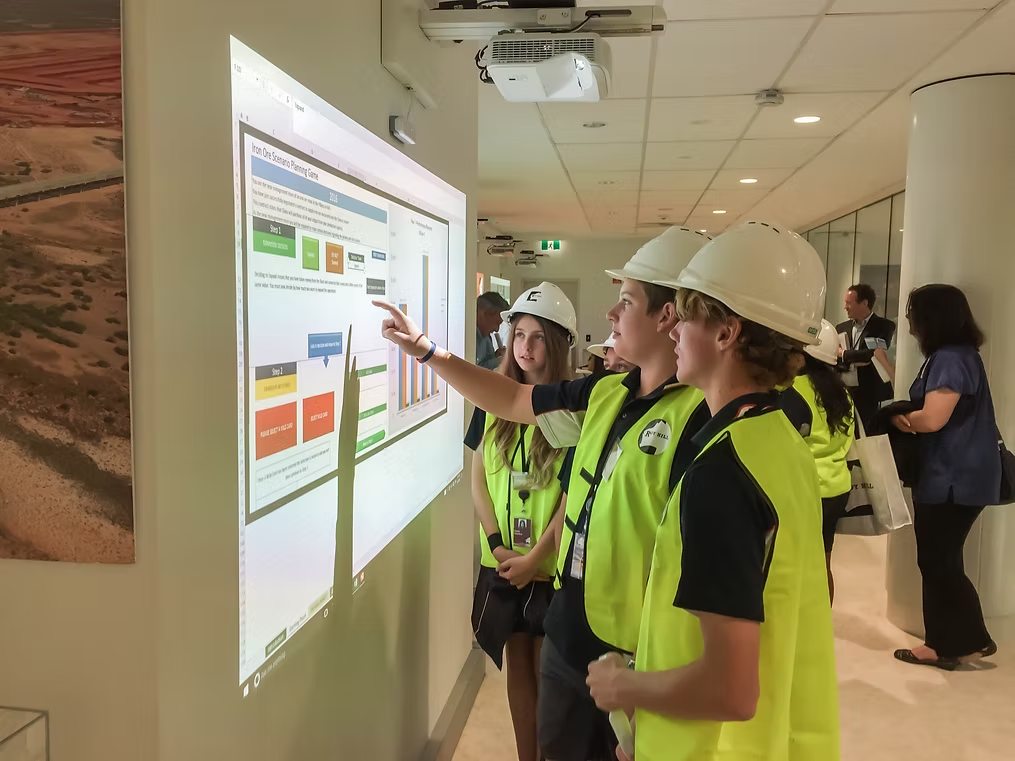
The WA Mining Club is one network that is pushing for training opportunities for the next generation. The club hosts 15 opportunities for mining professionals to connect throughout the year, from luncheons to networking events.
As previously reported, the WA mining Club focuses on developing a range of student-based initiatives, including its Get into Mining camp program – a free camp opportunity for high school students aged between year 10-12. Students are able to gain firsthand experience at what the mining sector has to offer.
Another network is the Centre of Resource Excellence (CoRE) Learning Foundation, which equips students with science, technology, engineering and mathematics (STEM) skills necessary for ‘meaningful careers’ in the resources industry.
The CoRE program is currently operating across 17 schools with more than 1,300 students engaged. The foundation reports more than 150 alumni from the program to have entered the resources industry.
A key aspect of the program is allowing students access to working mine sites to create a link between the classroom and the industry.
“It’s all real-world learning,” Co-Lead for the Emerging Professionals Advisory Committee James Fox previously told Mining.com.au.
“As soon as I had that exposure and experience to those things, it was that lightbulb moment. As soon as I saw that, I was hooked and that was my drive into mining.”
MPI Recruitment combines deep mining knowledge with care. From first-year trainees to senior managers, MPI provides personalised guidance and insights.
Write to Aaliyah Rogan at Mining.com.au
Images: MPI Recruitment, Unsplash, WA Government & CoRE Learning


