


Orpheus Uranium (ASX:ORP) is planning follow-up drilling at its Frome Project in South Australia after a maiden program defined two redox corridors prospective for sandstone-hosted uranium.
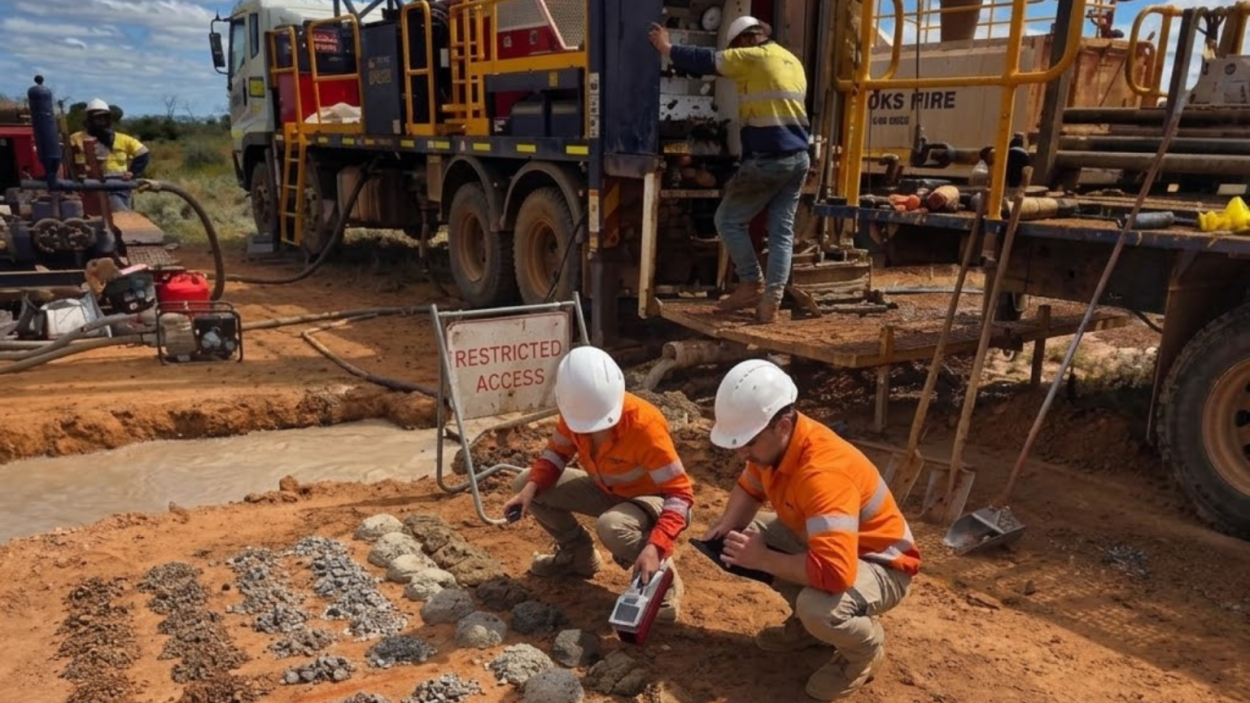
The company completed 18 rotary mud holes for 3,600m at the Erudina uranium prospect, testing targets in the Callabonna Sub-Basin. It was the first drilling program in the area in about 15 years.
Downhole geophysical logging was completed in 16 holes, with nine recording peak results above 100 parts per million (ppm) equivalent triuranium octoxide (eU3O8), including two above 400ppm.
Significant intercepts include 1.1m @ 221.4ppm eU3O8 from 161.22m in hole CURE0012, and 1.44m @ 197.2ppm eU3O8 from 189.23m in hole CURE0004.
The drilling refined four target areas, named Siccus North, Siccus East, Siccus South, and Siccus West.
Siccus East and West are redox corridors within the Tertiary Eyre Formation, extending at least 2.2km along strike. The Siccus East corridor is up to 250m wide.
Siccus South is an earlier-stage concept targeting a deeper, localised Cretaceous unit. Meanwhile, Siccus North represents a potential northern continuation of the known corridors.
Orpheus says these dimensions describe the geological area selected for investigation, not a demonstrated mineralised body. The company notes that a redox front does not confirm uranium mineralisation.
In roll-front systems, uranium transported in oxidised groundwater is deposited where it encounters reducing conditions.
Orpheus says the footprints are comparable to known deposits in the basin, including Heathgate’s Four Mile East, Four Mile Northeast, Pannikan, and Pepegoona, as well as Boss Energy’s (ASX:BOE) Honeymoon Uranium Project and Gould’s Dam satellite deposit.
Managing Director Clinton Dubieniecki says the program has refined the targets for follow-up exploration.
“Our approach here reflects the need to understand the redox front at scale, and the recently completed drilling has supported key geological and geochemical predictions,” Dubieniecki remarks.
“We can now plan more focused drilling around areas that share geological characteristics and comparable footprints with known deposits in the region.”
The next phase involves validating data, ranking the four areas, and designing follow-up drilling. The company says this work could support the definition of an exploration target, subject to further drilling and a JORC mineral resource estimate.
The project is held through wholly owned subsidiary Trachre, with native title agreements in place for exploration.
Orpheus Uranium is an Australian explorer advancing a portfolio of uranium projects across multiple states.
Write to JC Villarba at Mining.com.au
Images: Orpheus Uranium


