
MDF Global MDF Global
Apple’s iPhone boom highlights critical minerals powering smartphones•Presenting a united front for Queensland’s copper sector•Thailand seeks Myanmar mine access amid arsenic pollution•Egypt to set up state-backed company to license artisanal gold miners, free detainees•Brixton closes $7.4 million raise for Thorn, Langis projects•Heliostar banks record $78.7 million for Ana Paula push•Mining giants bet billions on 2030 supply crunch•Gunnison Copper reports Q3 output, revenue surge•Triumph Gold targets $15.46 million for Yukon push•African Rainbow Minerals faces a jobs dispute at Nkomati mine•Angola seeks 10% stake in De Beers under Anglo’s proposed exit•Gold price rebounds but heads for biggest weekly loss since June•Teck copper strike reaches BC port as operator sues union•Copper benchmark rocked by miner-smelter tug-of-war•Zimbabwe mining bill targets community, environmental safeguards•Mount Isa critical minerals hub secures Feasibility Study funding•Eramet initiates $814.5 million capital raise to reduce debt•Richemont backs natural gemstones, declines De Beers comment•‘Tis the season for administration as Comlek falls a second time•OceanaGold Philippines trials wireless blasting at Didipio mine Apple’s iPhone boom highlights critical minerals powering smartphones•Presenting a united front for Queensland’s copper sector•Thailand seeks Myanmar mine access amid arsenic pollution•Egypt to set up state-backed company to license artisanal gold miners, free detainees•Brixton closes $7.4 million raise for Thorn, Langis projects•Heliostar banks record $78.7 million for Ana Paula push•Mining giants bet billions on 2030 supply crunch•Gunnison Copper reports Q3 output, revenue surge•Triumph Gold targets $15.46 million for Yukon push•African Rainbow Minerals faces a jobs dispute at Nkomati mine•Angola seeks 10% stake in De Beers under Anglo’s proposed exit•Gold price rebounds but heads for biggest weekly loss since June•Teck copper strike reaches BC port as operator sues union•Copper benchmark rocked by miner-smelter tug-of-war•Zimbabwe mining bill targets community, environmental safeguards•Mount Isa critical minerals hub secures Feasibility Study funding•Eramet initiates $814.5 million capital raise to reduce debt•Richemont backs natural gemstones, declines De Beers comment•‘Tis the season for administration as Comlek falls a second time•OceanaGold Philippines trials wireless blasting at Didipio mine
Soma

Ore sorting spurs Soma Gold momentum

Soma Gold (TSX-V:SOMA) has carried out an evaluation of sensor-based sorting (SBS) technology at the Steinert Latinoamericana Test Center (STL) in Brazil on a 1,200kg bulk sample. 

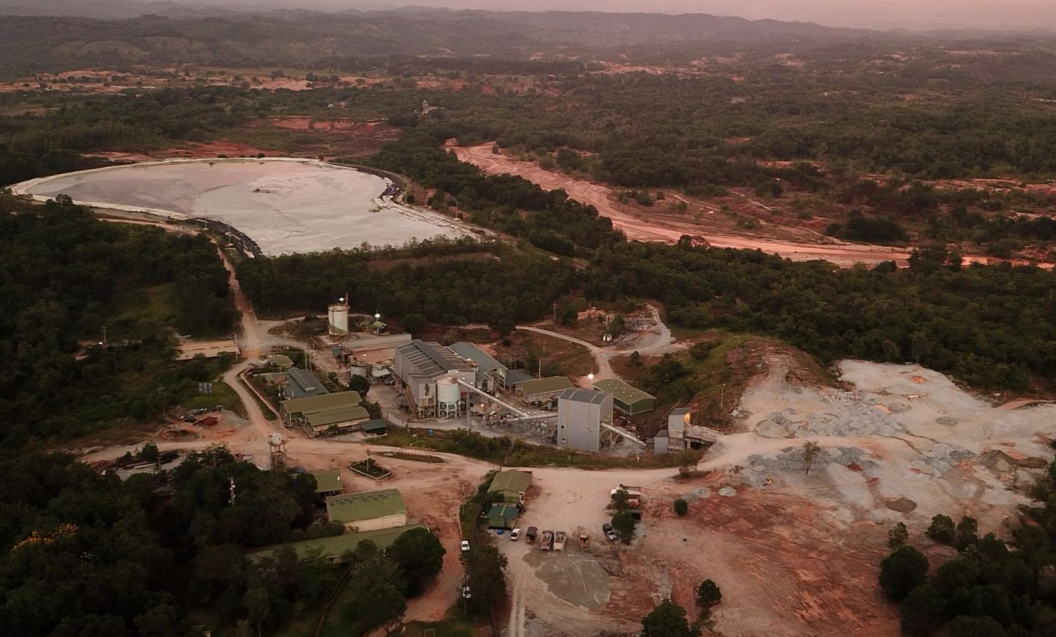
The preliminary ore sorting study was conducted on a bulk sample of mineralised material from the Cordero Mine in Antioquia, Colombia. 

VP Operations Mark Bren says ore sorting has the potential to significantly impact operations by allowing Soma to increase gold production without adding plant capacity. 

Bren says ore sorting is the first step, and Soma will study the results to optimise the metal recovery and rejection curves to find the proper operating scenario.

The next step is to install a pilot plant to process ROM material at a commercial level, enabling Soma to adjust algorithm parameters to optimise the sorted product for plant feed. 

“Installing this equipment at each of the El Bagre and El Limon Mills could effectively double throughput and ounces produced, reducing reliance on either mill to maintain planned production levels,” says Bren.

The objective of the aforementioned testwork was to achieve the highest possible metal upgrade by rejecting up to 50% of gangue material.

A series of calibration samples, representing four grade bins, was scanned with four standard sensors. This data was used to inform the decision to utilise the 3D laser and XRT sensors for the bulk sample test. 

The sample was crushed and screened to provide two size fractions (-75+25mm and -25+12mm) for sorting. These samples were processed with a cascade method using 3D Laser and XRT sensors.

Soma says data for the coarse fraction alone indicates up to 40% mass rejection and 94% metallurgical recovery, while the data for the middling sample indicates up to 50% mass rejection and 86% metallurgical recovery. 

The fine material (less than 12mm) was not processed through the sorter, but a representative sample was assayed to determine the metal contribution to the bulk sample.

Considering only the final sorted product from the coarse and middling samples, Soma says the 1,200kg sample was reduced by 70% to 570kg, effectively increasing the grade by 275% from 7.45g/t to 20.44g/t, while accounting for 90% of the gold in the bulk sample. 

The company adds that the results demonstrate Cordero Mine ore is amenable to sorting and that SBS technology can achieve desired gold-grade targets with high mass recovery, minimising the amount of metal lost to the reject stream.

Write to Adam Orlando at Mining.com.au

Images: Soma Gold

Add to Watch List:
Author Image
Written By Adam Orlando
Mining.com.au Editor-in-Chief Adam Orlando has more than 20 years’ experience in the media having held senior roles at various publications, including as Asia-Pacific Sector Head (Mining) at global newswire Acuris (formerly Mergermarket). Orlando has worked in newsrooms around the world including Hong Kong, Singapore, London, and Sydney.