



This article is a sponsored feature from Mining.com.au partner OD6 Metals. It is not financial advice. Talk to a registered financial expert before making investment decisions.
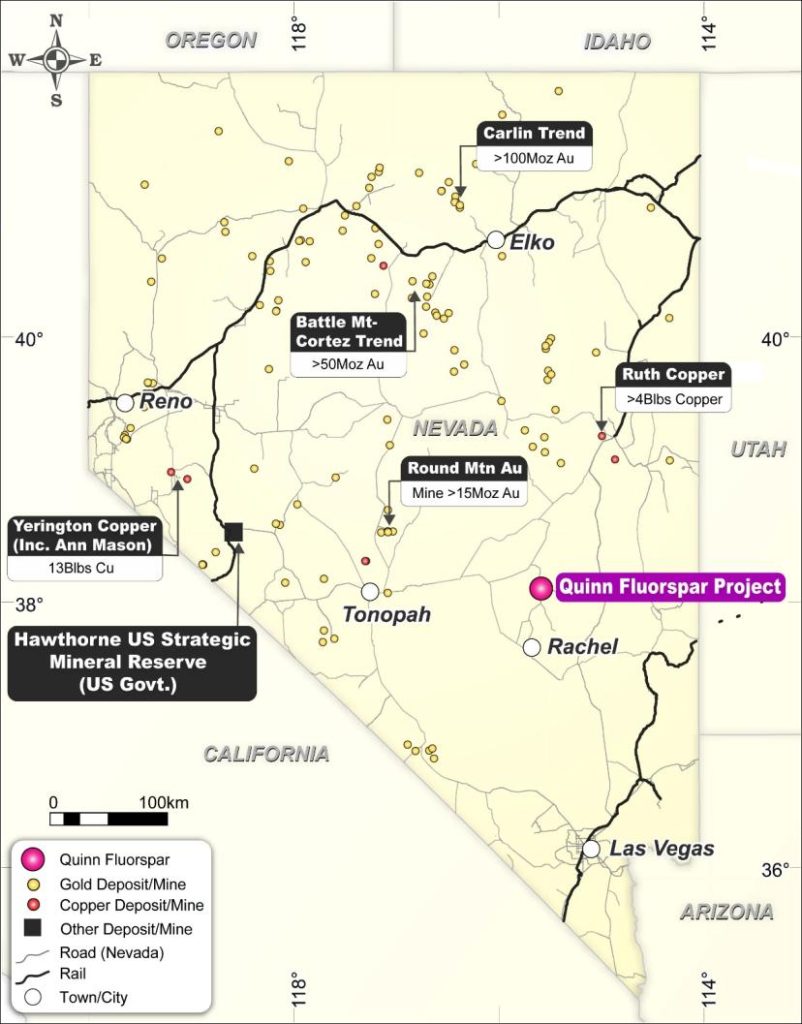
Perth-based OD6 Metals (ASX:OD6) is emerging as a frontrunner in the race to secure fluorspar, a critical mineral facing a potential supply shortfall, following its acquisition and expansion of the Quinn Fluorspar Project in Nevada, US.
OD6 focuses on exploration and development opportunities across Australia and the US.
Also known as fluorite, fluorspar is classified as a critical mineral in the US, European Union, Canada, Australia, and Japan.
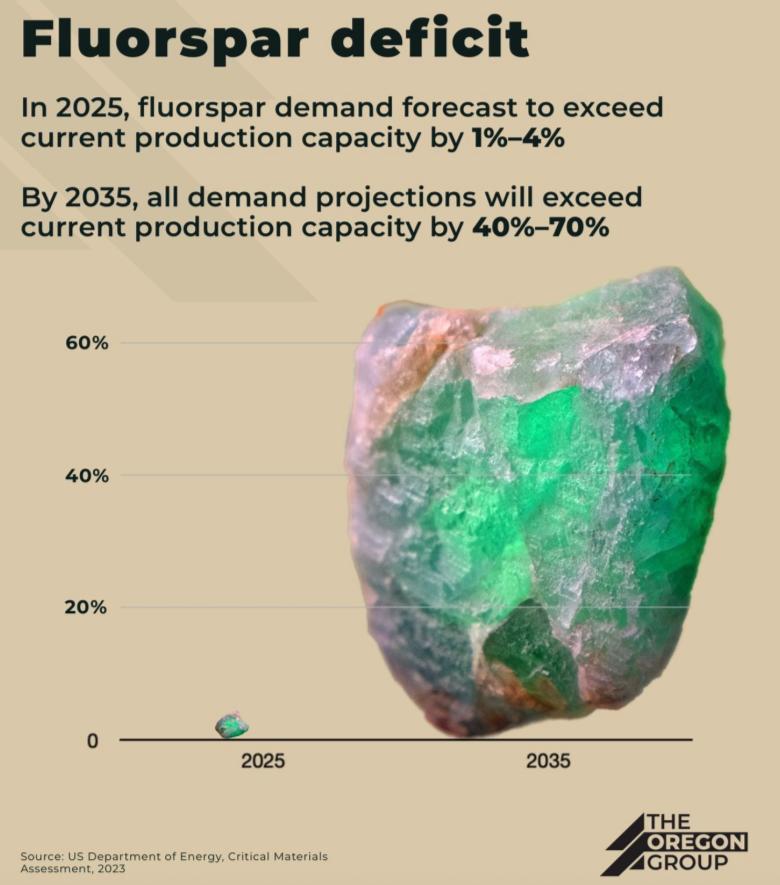
Demand is expected to outpace supply, with projections indicating a potential shortfall of up to 70% by 2035, as the US seeks to establish a fully domestic supply chain for the mineral.
The timeline
In April, OD6 Metals Managing Director Brett Hazelden told Mining.com.au that the company was completing the final due diligence works on the option but “the more we look into it, the more it stacks up”.
In late June, the company revealed it had staked 226 mining claims, expanding from its original 48 optioned claims to cover 4,670 acres in the project area.
The expansion includes the acquisition of the Blue Bell Project, the Bonanza Project, the El Cortez Project, and the Bruno Project.
A United States Geological Survey (USGS) conducted in 1969 on the site confirmed fluorspar (CaF₂) grading of up to 72% CaF₂ in bulk samples.
The multiple applications of fluorspar
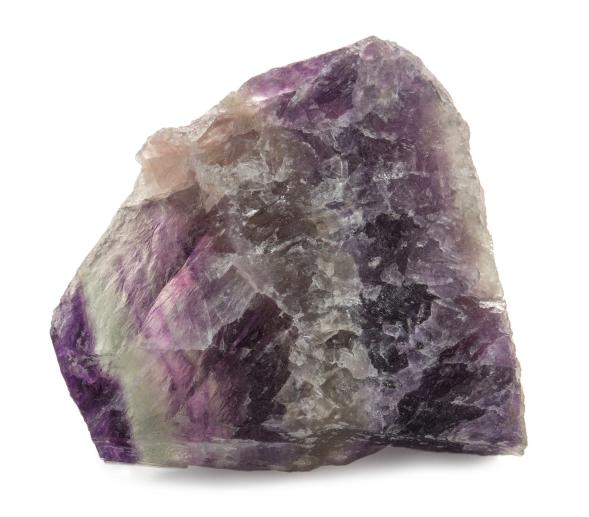
Fluorspar plays an essential role in AI semi-conductor chips, batteries, nuclear power, aerospace, defence, hydrofluoric acid production, steel and aluminium, and fluorocarbon refrigerants.
In the defence space alone, fluorine compounds are considered critical for missile guidance electronics radar and satellite systems; jet engine components and high-temperature alloys; military-grade lithium batteries; uranium enrichment for naval propulsion; specialty optical lenses; submarine electronics; and AI data centres.
According to OD6, Nevada is consistently ranked as one of the world’s best mining jurisdictions providing established infrastructure and hosting successful ASX-listed companies.
OD6’s option is located just north of Las Vegas near Area 51, and to the west of ex-military base US Hawthorne, which offers important road access for potential buyers such as the US Government.
OD6 is now poised to commence groundwork on the site including conducting systematic surface rock chip and channel sampling; verifying historic assay grades; and completing detailed geological mapping and structural interpretation.
It will also undertake soil geochemistry sampling and testing; consider geophysical testing and interpretation; develop drill testing programs; commence permitting requirements for the initial program; and review metallurgical sampling and testing needs.
Australia vs the US
Hazelden expects a faster process from permitting to production than if the project was in Australia, which takes an average of around five years. In Nevada, he’s predicting two to three years.
“The key for this one is it’s not a big processing facility. If you look at fluorspar demand around the world it’s about 8m tonnes. In the US it’s about 400,000 tonnes,” he says.
“If you look at an average-size fluorspar operation, they produce around 100–150,000 tonnes of CaF₂ per annum.
“If you bring that into our grades, you are treating somewhere between 1,000 and 1,500 tonnes a day.”
Demand vs supply
China currently dominates global supply of fluorspar, holding a staggering 63% market share, with global demand forecast to exceed current production capacity by 40–70% by 2035.
“The price is going up. China was a net exporter and is now a net importer. It just goes to all of the supply restrictions going forward,” Hazelden says.
“It’s the right place, right time for us. There will definitely be a lot of US interest and US money available from various departments.
“About a third of the demand comes from fluorite gases. If you look at lithium batteries, the main chemistry is a LIPF6 battery and if you break that down by weight, 75% of that weight is fluorite. Only 4% is lithium.”
Hazelden says there are always exploration challenges: “It sounds good on paper until you go and stick a drill hole on it”.
“It needs to be big enough to get the scale. The first one is getting a JORC resource greater than 2 million tonnes and a grade greater than 30%,” he says.
“Where we see an economic mine is you really need 5 million tonnes greater than a 30% grade.
“Everyone is always looking for a massive project. It hasn’t been found to date … this could be one.”
Perfect timing
Hazelden says current global geopolitics work in the favour of OD6’s plans for the Nevada project.
“It is (globally) better for us at the moment. There are a lot of things happening both in Australia and the US in terms of securing critical minerals with incentives,” he says.
“From a fluorspar project in the US, with 100% import requirements and China having a large percentage of the market, it just really enhances the project.
“Australia is still viewed as a very favourable party. When you look at the mining sector in the US there’s a huge amount of projects there but there’s no ASX-type companies in the exploration space taking those risks and getting out there.
“There’s a big missing portion of funds and expertise which have disappeared from the US. Other Australian companies that have gone over there have had really good results based on being in the US.”
Other projects
In 2024, Hazelden announced OD6 was advancing its 100%-owned Splinter Rock Project about 150km northeast of the port town of Esperance after revealing it had doubled the tonnage and increased the confidence of the rare earth resource there.
The resource increased to 682 million tonnes @ 1,338 parts per million total rare earth oxides (TREO) for 910,000 tonnes of contained TREO, compared to the 344 million tonnes @ 1,308ppm TREO defined in the maiden inferred resource in mid-July 2023.
At the time, Hazelden told Mining.com.au: “That’s the biggest in Australia by a long way, by a couple of magnitudes, and it’s also the highest grade in Australia from a clay-hosted rare earth perspective.”
In his latest update, Hazelden says there’s a “whole heap of work happening at the Australian Nuclear Science and Technology Organisation (ANSTO)” around optimising metallurgical works for the process.
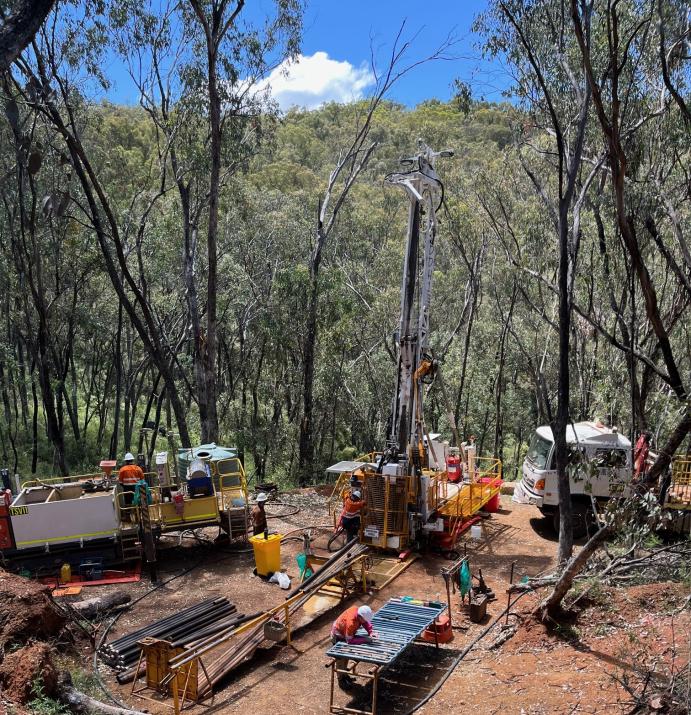
In 2025, the company completed the acquisition of the Gulf Creek Copper Project, a volcanogenic massive sulphide (VMS) deposit near the town of Barraba in New South Wales.
Gulf Creek was mined around the turn of the 20th century and was once regarded as the highest-grade copper mine (2–6.5% copper) in New South Wales until its closure due to weak copper prices in 1912.
OD6 announced its aims to apply modern-day exploration technologies to the site.
Write to Christine Retschlag at Mining.com.au
Images: OD6 Metals, US Department of Energy and Critical Minerals


