



Highlighting just how important it is for the US to reduce its reliance on rare earths supply from China, Q3 was underpinned by the introduction of a support package for the only rare earths producer in the country.
A critical supply bottleneck has emerged over the years thanks to concentrated supply, rising demand and long build times.
Barclays Research estimates global rare earth demand will surge six-fold by 2050. Magnet rare earths are expected to witness a five-fold increase by 2024 due to the anticipated scale-up of electric vehicles, wind turbines and other clean technologies.
Neodymium, praseodymium, dysprosium and terbium are the four key high-demand metals, which out of the total 17 rare earth elements (REE) account for roughly 80-90% of the value of rare earths projects.
They are essential for the permanent magnets that help power electric vehicles, wind turbines, robotics, advanced medical equipment, and defence systems.
Jacob Deysel, CEO of emerging rare earths producer Critica (ASX:CRI), says China currently controls roughly 70% of mining and about 90% of refining, which creates structural vulnerability for Western original equipment manufacturers (OEMs).
“Major manufacturers are contracting earlier in the value chain to secure traceable, ESG-compliant magnet supply,” he tells Mining.com.au.
“The European Union has set 2030 targets for domestic extraction (10%), processing (40%), recycling (25%), and a cap of less than or equal to 65% reliance on any one country,” Deysel says.
“In the US, the Pentagon has mandated that by March 2027, no Chinese-sourced magnets can be used in defence supply chains.”
Pentagon steps in to secure rare earths
This was a key factor in the Trump administration’s decision to provide support to Nevada-headquartered rare earths major MP Materials (NYSE:MP) in July.
At the start of the year, MP Materials, which owns the Mountain Pass mine and processing facility in the US, began producing neodymium-praseodymium (NdPr) metal and trial production of automotive-grade, sintered neodymium-iron-boron magnets.
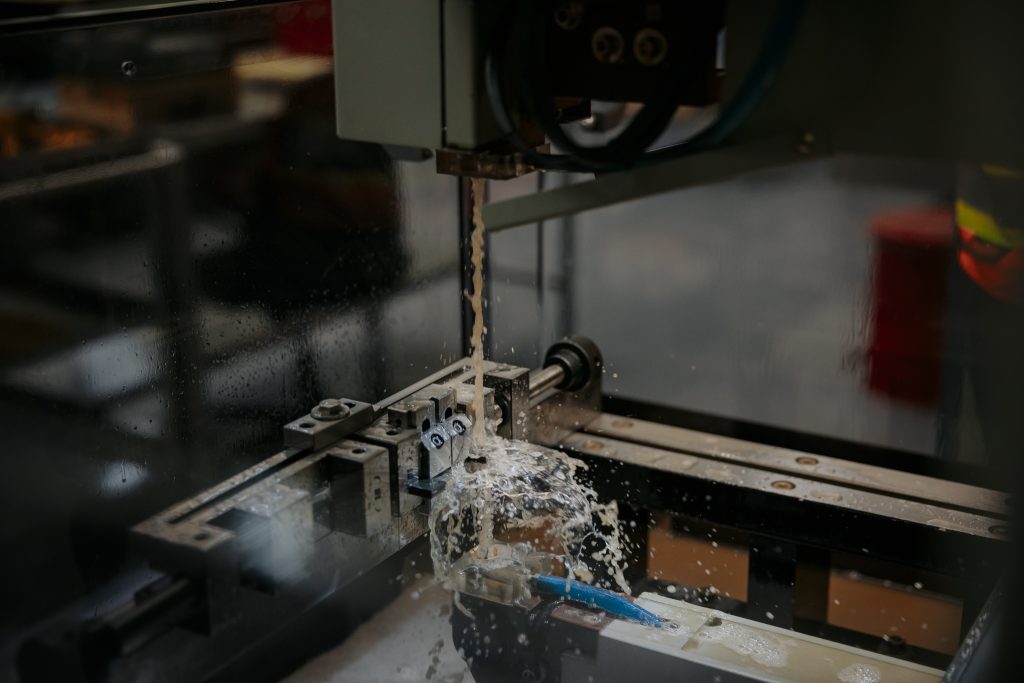
Allister Caird, Head of Critical Minerals at Locksley Resources (ASX:LKY), says the US Department of Defense’s (DoD) investment in MP Materials has been the largest signal to the market that REE supply is vital for national security and economic stability.
“As part of the investment, the DoD set a price floor for rare earths that represent a considerable premium on today’s prices, ensuring favourable market conditioning for industry moving forward,” he tells Mining.com.au.
The floor price was set at US$110 ($166) per kilogram.
“Coupled with Apple’s US$500 million offtake agreement with MP Materials, it demonstrates that manufacturers are willing to back miners to secure supply,” Caird says.
Outside of its offtake deal with MP Materials, Apple (NASDAQ:AAPL) in August allocated an additional US$100 billion, lifting its prior investment to US$600 billion, to increase US manufacturing of its products, from silicon chips to rare earth magnets.
Critica’s Deysel says two other key dynamics were at play in Q3: tightening Chinese export quotas and a strong rebound in European and Japanese demand.
“Both have driven prices higher and reminded markets that rare earths are not just cyclical commodities— they are strategic inputs with structural supply constraints,” he says.
“For Critica, this is important as it underpins premium pricing for non-Chinese supply.”
The US, European Union, Japan and Korea are all prioritising secure magnet rare earth oxide (MREO) supply chains through direct funding mechanisms, including strategic stockpiling programs and government-backed financing.
ABx Group (ASX:ABX) Managing Director Mark Cooksey says there have been significant government investments into companies in the rare earth supply chain.
“For example, the US Department of Defense invested US$400 million to acquire 15% of MP Materials, and also guaranteed a floor price in an offtake agreement,” he tells Mining.com.au.
“Governments are recognising that trade policies alone – e.g. tariffs – are insufficient to produce a rapid growth in new rare earths supply.”
Partnerships are key to success
Cooksey stresses the focus needs to be on establishing Western demand, for example in the downstream stages.
“Simply increasing supply – i.e. more Western mining – will not change the fact that China dominates the refining, metallisation and magnet manufacturing stages,” he explains.
Partnerships are critical to this, according to Cooksey.
“Rare earths is a small and relatively immature market, so parties need to partner to share risk and reward,” he tells this news service.
ABx already has a memorandum of understanding with Ucore Rare Metals (TSX-V:UCU) in Canada, where the plan is for ABx to supply a mixed rare earth carbonate (MREC) to Ucore.
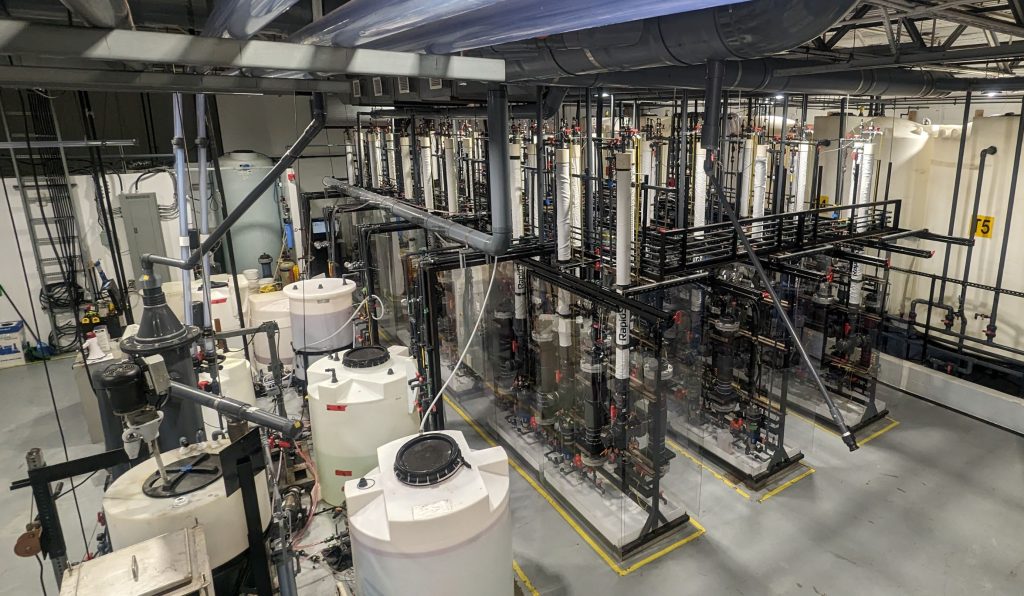
Nova Scotia-based Ucore is transitioning from pilot to full scale commercialisation of its patent-pending RapidSX rare earths separation technology.
The RapidSX technology uses the same proven chemistry as solvent extraction, but requires 70% less floor space, lower capital and operating expenditure, a smaller physical and environmental footprint, and is up to seven times faster throughput, according to Ucore.
“ABx is exploring similar relationships with other potential customers outside of China,” Cooksey says.
In mid-September, the company achieved higher heavy rare earth extraction from larger samples of material taken from its Deep Leads Project in northern Tasmania.
Testing by Australia’s Nuclear Science and Technology Organisation (ANSTO) resulted in rare earths extraction of 60-66% for dysprosium and 55-62% for terbium, as well as 65-72% for neodymium and 63-70% for praseodymium.
ABx expects to produce its first MREC sample from the Deep Leads Project in the final quarter of this year.
“This is likely to have a high proportion of dysprosium and terbium, the two most sought-after rare earths, and low impurities,” Cooksey notes.
ABx will also be continuing its exploration program, metallurgical studies and engagement with potential customers.
Rare earths ‘renaissance’
Locksley’s Caird says rare earths are enjoying somewhat of a renaissance in the midst of current trade tensions.
“This presents an enormous opportunity for both Australian and US explorers, particularly those who already have active projects within their portfolios,” he adds.
“This presents an enormous opportunity for both Australian and US explorers, particularly those who already have active projects within their portfolios”
Locksley has some rare earths ground just 1.4km from MP Materials’ Mountain Pass Mine.
The El Campo Prospect is an 860m long interpreted mineralised horizon that has returned rock chip samples grading up to 12.1% total rare earth oxide and NdPr values up to 3.19%.
In Q3, Locksley expanded its footprint within the Mojave Critical Minerals Corridor in California to more than 40km2, following the staking of an additional 249 claims.
It followed that with news of a substantial ramp up in exploration activity, which was also spurred on by the discovery of historical workings across the Mojave Antimony and Rare Earths Project.
Grab sampling in the area of a historical shaft previously mined in the core of the North Block provided Locksley with a new exploration target known as Hendricks.
The company plans to start a maiden drilling program at Mojave, across both the Desert Antimony Mine and the El Campo Prospect in the coming months.
Renegade Exploration (ASX:RNX) this week revealed its push into the Mountain Pass district with the staking of 39 claims collectively known as the Mustang Project, which sits about 10km northeast of the Mountain Pass Mine.
The project is also located just 3km east of the Colosseum Mine, which was a past-producing gold mine bought by Dateline Resources (ASX:DTR) from Barrick Mining (NYSE:B) and now supported by the US Government for its rare earths potential.

Renegade says its new claims cover similar trending structures to the Mountain Pass Mine – which produced 42,400 million tonnes of contained total rare earth oxides in 2021 – and are in an area covered by shallow alluvium which has not been previously explored.
Chairman Robert Kirtlan says Mountain Pass is a “hot mining neighbourhood”.
“The recent Mountain Pass transaction by the US Government has created significant global interest in the area, particularly from Australia-based companies,” he says.
“The nearby Colosseum Mine is a critical strategic asset and described by the US Department of Interior as America’s second rare earth mine.”
Critica, which is advancing its Jupiter Project in Western Australia, spent the third quarter ramping up crucial technical programs with ANSTO, Minutech and Vietnam’s Centre for Science and Technology of Mineral and Environment (GAVAQ).
In early September, the company appointed GAVAQ in Hanoi to design, construct and operate a closed-circuit pilot-scale beneficiation plant.
The program will process a 3,000kg run-of-mine bulk sample through a flowsheet incorporating magnetic separation and flotation to produce high-grade rare earth intermediate concentrate for downstream testwork and Scoping Study inputs.
Initial bulk metallurgical testwork demonstrated that ore from Jupiter can consistently achieve 95% mass rejection with a six-to-10-fold grade uplift.
Critica says this validates its beneficiation approach on larger samples and provides the technical foundation for downstream testwork and development studies.
The pilot will deliver bulk concentrate to ANSTO and Minutech for leach optimisation and hydrometallurgy work.
This milestone is intended to provide product samples for OEM engagement and data inputs for pilot and Scoping Studies.
Deysel says the company has already received strong interest from OEMs, with talks set to continue in parallel to the completion of product specification and testwork.
OD6 Metals (ASX:OD6), meanwhile, started metallurgical diamond core drilling in Q3 at Inside Centre, which is the cornerstone rare earth deposit within the Splinter Rock Project in Western Australia.
The goal is to deliver bulk samples to ANSTO for heap leach optimisation to produce over 1kg of MREC for customer qualification and to advance offtake talks.
OD6 is aiming to eventually produce over 6,000 tonnes each year of rare earth oxides as either a mixed rare earth carbonate or mixed rare earth hydroxide.
Splinter Rock currently hosts a resource of 119 million tonnes @ 1,632 parts per million total rare earth oxide at the Inside Centre Prospect.
Prior work has demonstrated heap leach recoveries of around 79% magnet rare earths, with consistently high NdPr recoveries of about 80%.
Heading into the final quarter of 2025, the outlook is positive.
Critica’s Deysel says prices may fluctuate, but structural demand for magnet rare earths is only increasing.
“We expect the strategic premium on non-Chinese supply to strengthen as governments double down on critical mineral security,” he says.
Locksley’s Caird does not see trade tensions between China and the US easing anytime soon and is anticipating further tightening in the market, which will drive rare earths prices higher.
“From the perspective of domestic REE supply within the US, with only MP Materials currently producing REE locally, we believe there may be a number of explorers and developers that are fast-tracked through to production in a bid to find a near-term solution to a problem that will likely persist over at least the next decade,” he says.
Write to Angela East at Mining.com.au
Images: Mining.com.au, iStock, MP Materials, Ucore Rare Metals


