



As the mining and resources industry winds down for the year and the festive season settles in, Mining.com.au is unwrapping a 12-day macro series that forces shaping the sector.
Much like the classic carol, each day builds on the last. On the ninth day of Christmas, the focus turns to nine metals enhancing – the quiet commodities that underpin modern life and the global transition.
While metals such as gold, copper, and lithium often capture the spotlight, this two-part series shows that there is an entire suite of other metals that are steadily gaining prominence.
From bauxite to manganese, tin, and graphite, these first four enhancers are essential to everything from construction and transportation, to global manufacturing and electrification.
Infrastructure’s gift
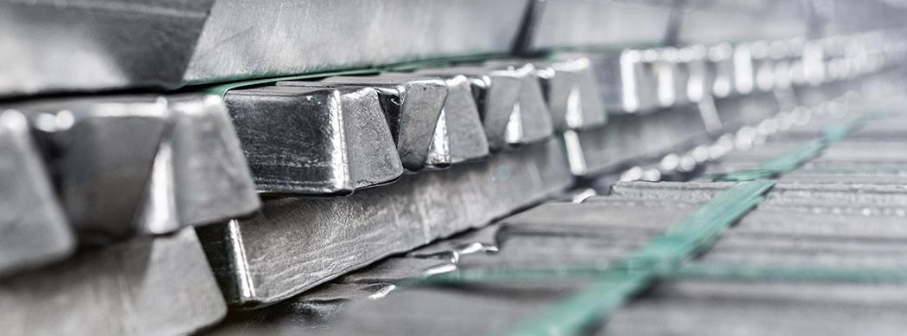
Bauxite, the sole raw material used to produce primary aluminium, is a metal that surrounds the modern world more than realised.
Speaking to Mining.com.au, Metro Mining (ASX:MMI) CEO Simon Wensley says nearly every material needed for modern life begins as a primary resource.
“Imagine you look at a soda can, a window frame, the chassis of a car or bicycle, and the body of a plane,” Wensley says.
“What do they have in common? They are all made of aluminium – a light-weight strong and rust proof metal.”
Metro is planning to further increase its bauxite volumes in 2026 via debottlenecking at the Bauxite Hills Mine in Queensland. During 2025, Metro continuously achieved new records of bauxite shipments, as in August, the company increased its production rate by 6% – totalling 753,101 wet metric tonnes at Bauxite Hills.
ABx Group (ASX:ABX) CEO Mark Cooksey echoes this importance, noting aluminium is the second most used metal globally after steel, forming a backbone in transport, construction, and packaging.
“The transition to the renewable economy is likely to increase the demand for aluminium,” Cooksey says.

According to CRU International, aluminium demand is forecast to grow by 33.3 million tonnes in the following decade, as of 2020, to 119.5 million tonnes in 2030. The transition towards green energy sources strengthens the sector’s demand for aluminium – making it reach 15.6 million tonnes in 2030. China alone is expected to deliver 47% of that growth, as reported by CRU.
Demand for traded bauxite in the Asia-Pacific has risen at double-digit rates for the past four years, and is expected to increase again in 2026 as new coastal refineries in China rely on imported feedstock.
This demand, Wensley says, is likely to be met with bauxite supply out of West Africa and Australia – the two dominant suppliers of traded bauxite.
However, supply is tightening. Export bans in countries such as Guinea and Indonesia, coupled with production cuts and geopolitical disruptions, have driven price volatility.
As Mining.com.au reported, between the end of 2024 and early 2025, global bauxite prices spiked due to supply disruptions from Guinea and reduced production in China.
This comes off the back of Emirates Global Aluminium terminated its bauxite mining operations in Guinea following the government’s expropriation of its mine.
Slow global growth reduced global primary aluminium demand by 1.8% year-on-year to almost 18 million tonnes in Q1 2025.
Over this period, primary aluminium demand in China fell by 2.4% year-on-year to 11 million tonnes. Strong solar installation in China – an aluminium-intensive energy transition sector – partially offset the weakness from other sectors such as construction.
Strength behind the sleigh
The second metal enhancing is manganese, an essential ingredient in the steelmaking process. More than 90% of global manganese demand comes from the steel industry, where it boosts strength, durability, and resistance to wear and tear.
The manganese market is heading for a deficit as high-grade ore becomes scarce and long-running mines reach the end of life. In 2024, several operations were suspended across the globe, which tightened the market.
Brendan Cummins, Managing Director of Black Canyon (ASX:BCA), says the broader manganese market is forecast to remain in a balanced to oversupplied state in 2026.
“Demand for steel in the short term has flattened with a slowdown in construction and infrastructure from China,” Cummins says.
“Demand from EV battery production is slowly growing as the next generation of lithium-manganese-iron-phosphate (LFMP), high lithium manganese (HLM) and lithium manganese-rich (LMR) cathodes evolve but the overall percentage of manganese demand from these new technologies is small but valuable compared to manganese alloys used in steel.”
However, geopolitical factors, export restrictions, and recovery from natural disasters or infrastructure failures may once again introduce volatility and affect supply pushing prices of the current cyclical lows.

Cummins adds that without manganese, steel manufacturing – and by extension, the development and construction of modern infrastructure would be significantly impacted.
“Whilst manganese is not considered a rare commodity, the source of the ores is anchored by only three or four countries that include China and the high-grade ores are restricted to three countries,” he explains.
“The concentration of higher grade ore supply from countries like South Africa and Gabon poses a supply risk to the smelter operators with any disruptions quickly impacting the availability of mid and high-grade ores.”
Australia remains an important supplier given the ore quality and proximity to Asian smelters, though it currently hosts just two producing manganese mines.
Black Canyon is currently preparing exploration across the broader 2,000km2 tenement package in the Balfour Manganese Field in Western Australia, following the discovery of “unique” mineralisation at its Wandanya Project.
In October 2025, drill results had returned some of Wandanya’s highest ever manganese grades, with multiple holes recording grades above 35%.
Some of the results included 7m @ 37.7% manganese from surface, 8m @ 37.4%, and 8m @ 35.5%, alongside intervals of up to 10m @ 61.3% iron.

Ringing in tin’s role
The third metal enhancing – tin – is officially recognised as a critical mineral in many jurisdictions across the world. This is due to its role in electronics, renewable energy, and advanced technologies.
More than half of all tin is used in electronic solders, making it a necessary component of the entire electronics industry.
Tin futures rose to above US$37,000 per tonne in November 2025, as reported by Trading Economics, testing the base metal’s highest level since April 2025.
At the time of writing tin futures stood at US$36,873 per tonne.
Over 80% of global supply comes from China, Indonesia, Myanmar, Malaysia, and Thailand, which creates geopolitical and regulatory vulnerabilities to the rest of the world.
Mordor Intelligence forecasts the tin market size is estimated at 429.24 kilotons in 2025, and is expected to reach 487.78 kilotons by 203 at a compound annual growth rate (CAGR) of 2.59%.
Elementos (ASX:ELT) Managing Director Joe David says this positions the Oropesa Tin Mine in Spain, to become a fully integrated “mine-to-metal” supplier to the European Union.

In addition to Oropesa, the company’s Cleveland Project in Tasmania also offers tin and a growing tungsten resource base, adding diversification and exposure to another critical mineral essential for several industries.
At Oropesa, David says the company intends to continue maturing the project post-Definitive Feasibility Study towards detailed engineering, project financing, final permitting and final investment decision.
“Progressing our mine-to-metal integrated supply chain, via our 50% option over Iberian Smelting’s Robledollano Tin Smelter, will support Elementos becoming the only primary tin mine and metal supply within the EU to supply European manufacturers,” he tells Mining.com.au.
At Cleveland, Elementos plans to expand the tungsten resource and better understand the co-mineralised critical minerals within the tungsten mineralisation.
“We will combine the tin (+copper) and tungsten (+critical minerals) resources into a Scoping Study to evaluate the best techno-economic solution for developing a single mine, with multiple life of mine phases, producing minerals which are not only rare but highly desirable by many global economies,” David says.
As previously reported, Elementos continues to make progress with debt, equity, and offtakers interested in partnering to project finance the Oropesa Tin Mine and smelting assets in Spain.
David previously told this news service that the tin developer has big plans for the next six months, with major project milestones expected.
“We also look forward to achieving some major permitting milestones in the next six months at the Oropesa Tin Project in Spain, with the view of targeting a 2026 final investment decision,” David said.

Powering festivities
Graphite, the fourth metal enhancing, is crucial like all the others, to modern technology. It is a form of pure carbon that normally occurs as black crystal flakes and masses.
With important properties, such as chemical inertness, thermal stability, high electrical conductivity, and lubricity, graphite is suitable for several industrial applications, including electronics, lubricants, metallurgy, and of course, steelmaking, as reported by the US Geological Survey.
Graphite is on the Australian Government’s critical minerals list. Although there are no large-scale producing graphite mines in the country, Australia hosts almost 8 million tonnes of economic demonstrated resources and 5 million tonnes of ore reserves. These reserves and resources are shared between three states – Queensland, South Australia, and Western Australia.
As Mining.com.au reported, China is the largest supplier of natural graphite globally, accounting for more than 70% of production.
However, there are a growing number of graphite mines under development across not only Australia but in North America, Africa, Asia, and throughout Europe.

Globally, total contained graphite from identified resources exceeds 350 million tonnes – or 245 million tonnes of product covering all flake sizes – assuming a mining yield of 70%, as per the European Advanced Carbon and Graphite Materials Association (ECGA).
Benchmark Mineral Intelligence forecasts demand for natural graphite could surge 140% by 2030. This means circa 30 new natural graphite mines and 12 synthetic plants need to come online to fill the void.
E-Power Resources (CSE:EPR) ex-CEO James Cross says graphite production is forecast to reach over four times what it is at present.
“The world has got to come up with four times as much graphite in 10 years as what is being produced now,” Cross says.
“A lot of these projects that are not yet producing have to get into production or there are going to be supply issues in products requiring graphite.”
The western world is expected to be heavily impacted if demand is not met, due to China using the vast majority of graphite.
E-Power’s Tetepisca Project, located in Québec, Canada, has “quite a lot” of larger flake graphite and high-grades, and is positioned to make a “dent” in the supply deficit for North American and European companies and manufacturers, as Cross says.
“It’s physically close to the markets it serves or transportation nodes that can easily carry graphite there,” he explains.
While gold, copper, and lithium dominate headlines, it is these quieter metals – bauxite, manganese, tin, graphite and their counterparts – that strengthen foundations of all industries.
From aluminium and steel to electronics and renewables, these metals’ role in enabling the global economy is undeniable.
Write to Aaliyah Rogan at Mining.com.au
Images: Metro Mining, Black Canyon, Elementos, E-Power Resources & Mining.com.au


