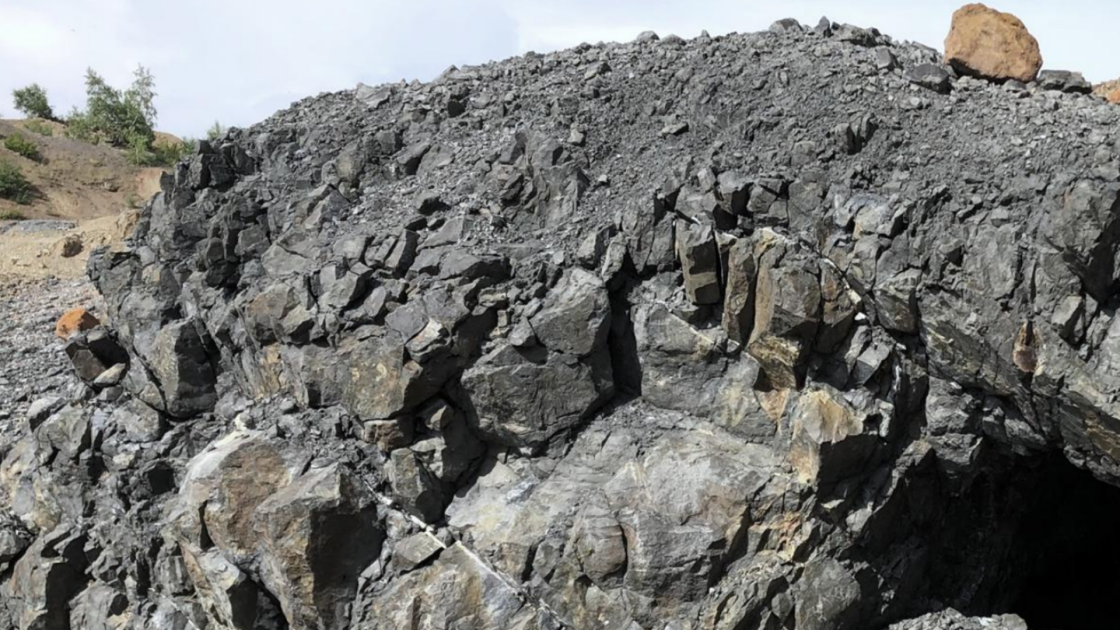
Middle Island Resources (ASX:MDI) has returned assays from an expanded soil and rock chip sampling program at the Tisovik target area within the Bobija Project in Serbia.
The campaign has expanded the Tisovik polymetallic discovery by expanding the silver, lead, zinc, and antimony soil anomalism footprint.
According to the company, assays suggest that the mineralised system remains open along strike, with rock chip sample results up to 12 grams per tonne silver, 5,244 parts per million (ppm) lead, 580ppm zinc, and 28,500ppm antimony.
Soil sampling returned up to 7.1g/t silver, 4,685ppm lead, 969ppm zinc, and 1,049ppm antimony. Middle Island says this confirms a ‘robust’ silver-lead-zinc-antimony system.
CEO Peter Spiers says these results “demonstrate the emerging scale of the Bobija Project” and reinforces the company’s belief that Tisovik represents a significant polymetallic carbonate replacement deposit-style mineral system.
“Defining multiple large zones of strong silver-lead-zinc-antimony anomalism over more than 6km of strike is highly encouraging at this early stage of exploration, particularly given the system remains open in multiple directions,” Spiers says.
“Furthermore, the presence of stibnite mineralisation and high-grade antimony is especially exciting given the increasing strategic importance of antimony globally.”
The company will conduct further soil sampling and plan ground checking while targeting extensions to the open-ended anomalism within untested areas.
Middle Island Resources is a junior mineral explorer focused on copper and gold discoveries in Australia and Serbia.
Write to Maddison Elliott at Mining.com.au
Images: Middle Island Resources