



“I think it’s pretty easy to see we’re in a bull market.”
These are the words of Hedley Widdup, Managing Director of specialist mining investment company Lion Selection Group (ASX:LSX), succinctly summing up the sentiment of the RIU Explorers Conference in Fremantle, Western Australia being held from 17-19 February.
Speaking to Mining.com.au on the sidelines of the event, Widdup says there is general consensus that gold is certainly on a bull run and “mostly everything in commodities is going up”.
“Gold’s an interesting one because it is behaving in an anti-globalisation, anti-dollar. There are so many things driving it at the moment,” he tells this news service.
“When central banks buy it, it tightens the market, and then you have conflict in the world and lots of other people want to. The thing is, how far out does that go?
“In gold bull markets, they tend to last, I think, until you flood the market with supply and you just meet all of that buying demand with gold production. That is a feedback loop all the time.”
However, Widdup doesn’t see many mechanisms how gold production is going to expand rapidly, which tends to make him think this gold bull market still has some way to go.
“Now, whether that means multiples from here, steadily up from here, I don’t know, but I think it’s pretty robust,” he adds.
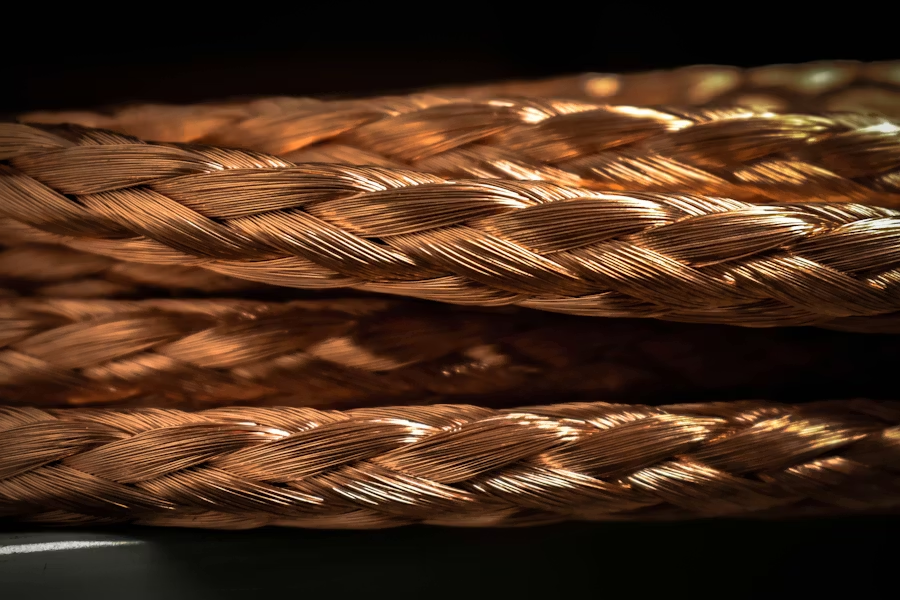
Dr Copper
Meanwhile, Widdup says copper is one of the five big commodity markets, which are diverse in terms of buyers and sellers.
Copper, he says,is very much a supply and demand market with many economic factors affecting it.
“That’s why they call it Dr Copper,” Lion’s Managing Director tells Mining.com.au.
Widdup notes copper is a bellwether in terms of economics and is a leading indicator for market trends.
“For 20 years, copper has been budding up against a level which has been slowly rising, but you get to that level, the people who build power lines go, ‘can’t buy copper anymore, dig into stockpiles, fall away from the market’, then the price comes back,” Widdup explains.
“What we saw early this year, late last year, was pushing through the level of about US$11,500 a tonne. We’ve gone to the first US$13,500 a tonne – that’s a precedent.
“Now, that doesn’t mean that we’re going to be at that level forever or for the next 20 years. It just means that that has happened. We no longer need to think of US$11,500 as a precedent top price where the market will fall away.”
Copper prices hit record levels in Q4 2025 due to a combination of strong demand and recent supply disruptions The price surged to a then record US$11,870 a tonne in the second week of December reflecting tighter supply and improved market sentiment.
High prices are likely to persist through 2026 without a near term boost in supply or weaker demand, according to the Department of Industry, Science and Resources’ (DISER) Resources and energy quarterly: December 2025.
However, prices are expected to ease in 2027 as operations recover from disruptions, and new mines begin production.
The Commodity Exchange (COMEX)-London Metal Exchange (LME) price differential continues to vary as markets try to work out the likelihood of further changes in US tariffs on copper imports.

Thing about tin
Lastly, tin is not a commodity that dominates the headline but is certainly on Lion Selection Group’s radar.
While the investment firm doesn’t go looking for metals to invest in, it generally likes the tin market, and will assess investing in companies with exposure to tin.
“The thing with tin is if you plot a 30 or 40-year price of copper and then plot the same thing for tin and put one over the other, you’re going to find they’re very, very close,” Widdup explains.
“We’ve just been talking about the fundamentals for D Copper. I don’t think you could call it Dr Tin, but it’s like an obscure doctor or something like that.
“Tin is a metal which feeds into many of the same places, and it is going into all the new uses which people talk about. If data centres have squeezed copper, momentarily, tin is getting taken a lot for that ride as well.”
In January, tin hit an all-time-high on the LME, with the three-month contract closing at US$53,462 per tonne.
The International Tin Association says the price is currently buoyed by a broader uplift in the base metals complex amid heightened global tensions and a weakening US dollar.
“While the market has been in a prolonged deficit due to a series of protracted supply disruptions, ITA understands that the metal’s fundamentals are not the primary driver of the recent price rally,” the association reports.
“Over the past two years, the tin price has been increasingly controlled by factors other than core fundamentals. The supply disruptions affecting Myanmar and DR Congo remain largely unchanged from three months ago, but increased investor activity, particularly in China, have pushed prices higher.
“In Indonesia, exports have halted in the new year given the seasonal cycle of export permit renewals. ITA expects the disruption to be limited as regulators will honour existing three-year RKAB mining and smelting licences until the end of March 2026.”
Tin is a relatively small and illiquid market compared with other base metals, and is particularly susceptible to the influence of investment funds, which can drive pronounced price volatility.
The ITA notes that while these flows provide additional liquidity, market participants have raised concerns about the undue role of financial institutions.
“In this context, the Chinese Nonferrous Metals Industry Association (CNIA) stated in late December that the recent price rally was ‘unreasonable’ and urged speculators to exercise caution,” the ITA says.
“Periods of heightened speculative influence increase the risk of sharp price corrections as positions are unwound, particularly when underlying fundamentals imply materially lower price support.”
LME and SHFE data demonstrates there’s been a gradual rise in open interest over December 2025 and then a sharp increase on the SHFE during January corresponding with the price surge (pictured above).
Bull run
In July 2025, legendary natural resource investor Rick Rule told this news service: “Make no mistake, we’re in a gold bull market.”
Rule firmly believes bull markets follow predictable patterns and this means the rest of the mining sector will soon follow.
“We’re going to see a bull market that’s reminiscent of the bull market that we enjoyed in the early part of the decade of the 90s. Bull markets follow predictable patterns. The market is led by the commodity,” Rule explained to this news service.
“We saw that in 2023 in gold. Gold led, but the gold stocks went nowhere. That’s easy to understand. The buyers were foreign central banks and they didn’t buy shares, right?
“So, the asset class that had a buyer went up and the asset class that didn’t have a buyer didn’t go up. Surprise, surprise. But that follows an age-old pattern because gold bull markets are led by fear buyers and fear buyers don’t buy stock, they buy the gold.”
The veteran investor suggests two things happen when gold itself establishes the momentum. First is the inertia of the precious metal reinforces the gold narrative and makes the whole sector around it ‘more interesting’.
Second is the increase in the gold price, once momentum gets underway, is faster than the increase in the input cost to produce it.
As such, the biggest and the best producers start to deliver “absolutely blowout earnings” – something witnessed in 2024 when most gold miners exceeded their own optimistic performances about their quarters. And investors were newly conditioned to that by the increase in the price.
Rule believes the best way to visualise the bull market is by envisaging a circus master’s whip. Picturing the handle of the whip, well the front of the whip moves first, that’s gold. That has to precede.
The next thing that whips past the circus master’s shoulder are the biggest and highest quality companies in the world to move next, pulled by gold.
“Then the best of the rest move. Then the developers move. Then the penny dreadfuls move. This follows a predictable pattern with each stage of the rip whip.”
“When they move, they move faster and they move further. But the whip moves qualitatively.”
Write to Adam Orlando at Mining.com.au
Images: iStock, Unsplash & Mining.com.au


