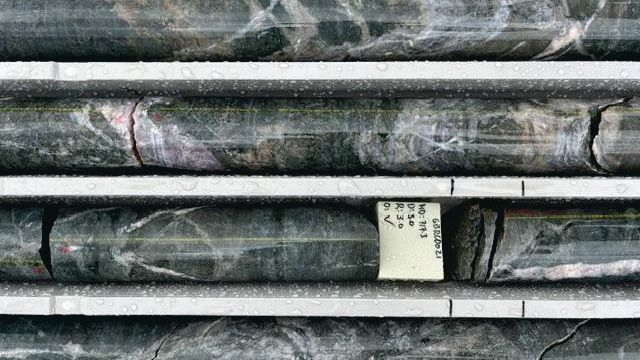
LinQ Minerals (ASX:LNQ) has logged a 429m zone of possible epithermal and porphyry-style mineralisation at its Gilmore Gold-Copper Project in New South Wales.
Hole GBRCD021 reached 750.3m at the Gidginbung South target, approximately 1km south of the Gidginbung pit.
Visual logging indicates high-sulphidation epithermal (HSE) mineralisation from 321–570m beneath younger rock cover. The interval lies 800m south of the previously known southern limit of similar mineralisation at Gidginbung.
Porphyry-style mineralisation, veining, and alteration were observed from 570m to the end of the hole, approximately 1.6km southwest of the Dam deposit.
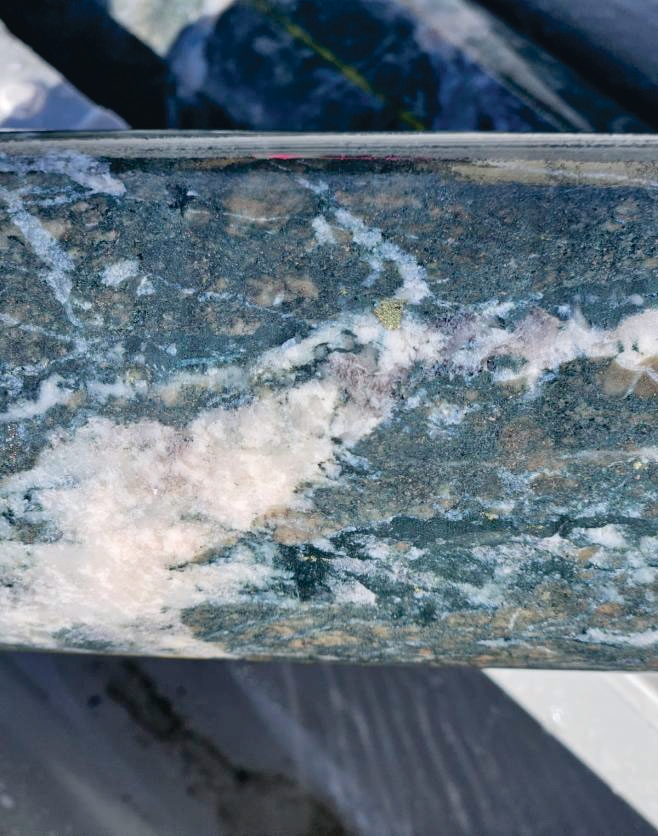
Technical Director John Holliday says the result may indicate a broader mineral system.
“It is possible that LinQ has discovered the core part of a large HSE-porphyry system for which Gidginbung and the Dam are smaller components,” Holliday says.
Visual estimates indicate 5–15% sulphides across logged intervals, dominated by pyrite with local chalcopyrite.
However, visual observations do not determine metal grades or economic significance. LinQ is sampling the core, with laboratory assays expected within six to eight weeks.
Further holes to test the system
GBRCD021 is the first of four proposed holes spaced 200–300m apart and planned to depths of up to 1,000m. The next hole will test the centre of an induced polarisation anomaly approximately 200m east.
The work forms part of LinQ’s 30,000m Gilmore campaign, which began in September, as previously reported by Mining.com.au.
LinQ Minerals is an Australian explorer advancing the wholly owned Gilmore project, which covers approximately 597km2. It hosts a mineral resource estimate of 516 million tonnes (Mt) containing 3.7 million ounces of gold and 1.2Mt of copper.
Write to France Pinzon at Mining.com.au
Main image: LinQ Minerals