



This article is a sponsored feature from Mining.com.au partner Larvotto Resources It is not financial advice. Talk to a registered financial expert before making investment decisions.
Larvotto Resources (ASX:LRV) is on track to be Australia’s next critical minerals producer, accelerating the Hillgrove gold and antimony project in New South Wales toward production in mid-2026.
Managing Director Ron Heeks explains how Larvotto is really a development and build type of company, and that rings especially true with Hillgrove.
“We went in with exploration at the start, but it was always the intention to build as soon as possible,” Heeks says.
Hillgrove was acquired by Larvotto in December 2023 and is a polymetallic play, providing the company with exposure to two key markets.
“We’re pretty bullish on both gold and antimony prices,” Heeks says.
“When we first got the project, antimony was at $9,000 a tonne, which was a good price, but it subsequently went up to $60,000 a tonne, which is extremely good.”
Heeks adds that there’s also some tungsten in the Hillgrove system, which is also currently up, at over $200,000 a tonne.
“At the end of the day, through a little bit of skill and a fair bit of luck, we got involved with the project. We’ve since advanced it through, released initial resources, done a Prefeasibility Study (PFS), released initial reserves, undertook a full Definitive Feasibility Study (DFS) in about four months, raised US$100 million bond within days of finishing the DFS, and within 24 hours of that, undertook a US$70 million capital raise as well.”
Heeks isn’t playing around when it comes to Hillgrove, seeing what a significant opportunity it is for Larvotto and the need to move quickly to get it built and into production.
This aggressive push has brought the company the title of Most Improved ASX company in 2024.
The company has grown from about five people 16 months ago to 200 with an additional 100 contractors on site, focusing on a rapid build up of the project.
“We don’t have too many lifestylers in this company,” Heeks says.
“We’re serious about what we do and that’s flowed through to shareholder returns.”
Having raised a significant amount of capital in this short period is a boon to the company, but also means that they need to get moving quickly.
“Doing the bond was a bit unique,” Heeks says.
“This is one of the first metals bonds in about seven years. Bonds are different from normal mine finance – you need a quicker return, and so need to be in production quicker. We ticked all those boxes.”
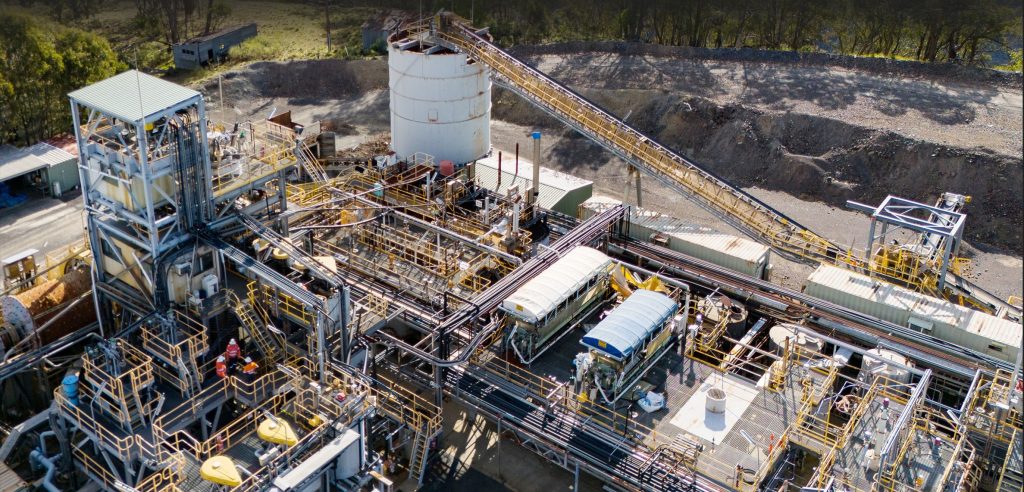
Heeks also notes that the project is largely de-risked already because of the processing plant in place and the underground as well.
Hillgrove is the largest antimony mineral resource in Australia and is ranked eight largest in the world, making it a strategically globally significant project.
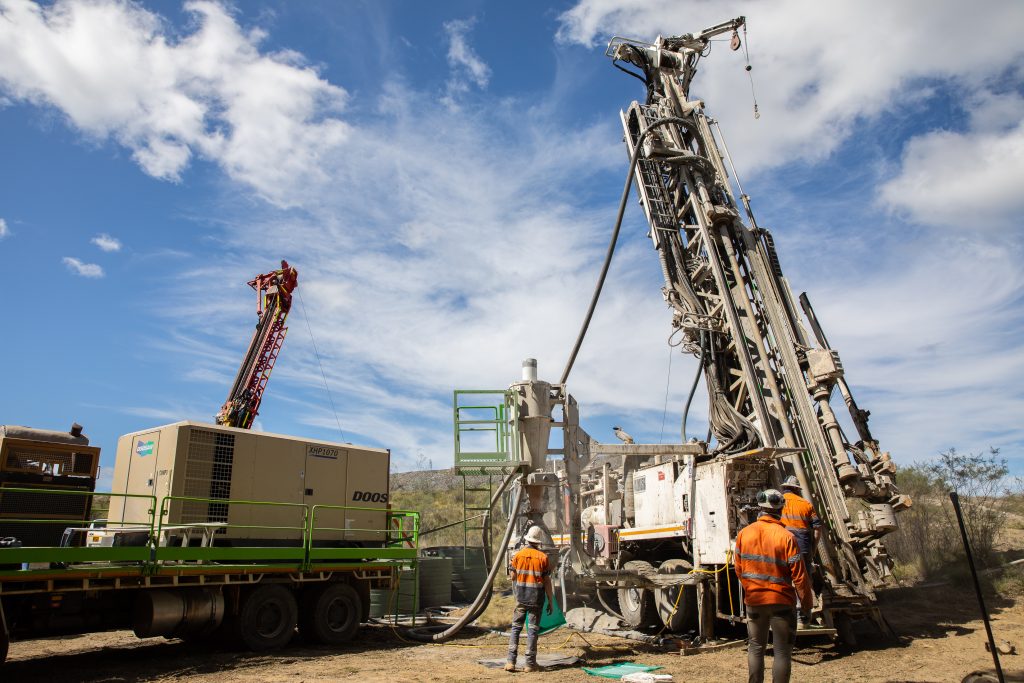
Community roots in Armidale
It’s not only the size and scale that makes the project significant, but the location in which it operates.
Hillgrove sits just 23km east of Armidale in northern New South Wales, close to infrastructure including highways, rail links, and regional airport.
Heeks notes that the community of Armidale is a key factor in Larvotto’s success, points that are echoed by Chief Operating Officer Sonja Neame.
Neame explains that Larvotto has placed a high priority on local employment, noting the exceptional talent from Armidale and the surrounding area.
“We’ve always been committed to having a local workforce, and there are so many advantages to this,” Neame says.
“Our workers get to go home to their families every night. It helps to retain talent and also means that the money stays in town.”
Neame points out that Armidale is a great part of the country to live in, with some of the best schools in Australia, a focus on agricultural education, top-notch universities as well, which helps to retain more senior talent.
In typical mining towns around the country, companies tend to lose their senior staff as their kids get to high school age because of a lack of adequate education and other opportunities.
Another major point is that Larvotto has engaged deeply with their local community, ensuring that there is open dialogue, which is something that locals have pointed out hasn’t always been the case with prior owners of Hillgrove.
“Community engagement is part of our culture,” Neame says.
“We engaged early, started a process just over a year ago where we were meeting with the Hillgrove community.
“We now have our Hillgrove drop-in sessions every other month, which is really a chance to come, meet, and stay updated with what we’re doing. It’s become a bit of a local social event, which really demonstrates how we’ve become part of the community.”
These drop-ins are also a way for Larvotto to communicate company updates for example with permitting or plant capacity, etc.
Apart from these, Neame points out that there are a number of other community-based initiatives that Larvotto is focused on. In December 2025, the company donated a defibrillator to the community as they didn’t have one already. With the closest hospital about 30 minutes drive away, this can potentially be lifesaving for people in the community.
Antimony’s global scramble puts spotlight on Hillgrove
As Larvotto ramps up toward production, Heeks is excited about the potential for the antimony space, but notes that there is currently a lot of disinformation in the market.
“Antimony is a fascinating metal. You can’t count how many things it’s actually used in,” Heeks says.
In January 2026, the Australian Government elevated antimony within its Critical Minerals Strategic Reserve, as previously reported.
Heeks noted that the inclusion of antimony is a “clear validation” of the strategic importance of the metal and the Hillgrove Project.
The main application for antimony is as a metals hardener, particularly for lead. It’s what makes the cells in lead-acid batteries stay together, so if you see a decrease in the amount of antimony in your battery, then you might also see a drop in your warranty as it won’t necessarily last as long.
Antimony is used as a fire retardant for things like military uniforms, firefighter uniforms, and baby clothes as well.
A big change in the market that Heeks points out is the growing demand from the solar panel industry, where antimony goes into the glass itself. Heeks explains that antimony was initially used to make the glass thinner, lighter, and stronger, but the industry has also noted that it can help to clarify glass, removing microbubbles so that it can be used in high resolution optics such as telescopes and night vision goggles.
“We’ve seen a 40% increase in demand because of solar, but also a similar decrease in supply,” Heeks says.
“A lot of this decrease in supply stems from geological reasons because no one’s really been looking for antimony for the past 30 years.
“That said, antimony can actually be found in many places. Orebodies around the world tend to be quite similar.”
Heeks explains that orebodies tend to be narrower, higher grade, and are typically associated with gold, similarly to Hillgrove.
As with most critical minerals these days, China has typically been refining most of the global supply, but with the current export banks to the West, there is a serious scramble to secure supply around the world.
Pushing toward production
With that current drain on supply, a mine of significant scale coming into production, such as Hillgrove, can make an impact on the industry, injecting that much needed supply where needed.
With that goal of production in mid-2026, Larvotto is all in on advancing Hillgrove, with ongoing exploration, plant ramp up, and everything else needed to hit target dates.
As Larvotto drives Hillgrove toward production, its commitment to Armidale’s community also ensures that the project will deliver not only critical minerals to the global markets, but value at home too.
Write to Amy Rotman at Mining.com.au
Images: Mining.com.au and Larvotto Resources


