


Koba Resources (ASX:KOB) would consider partnering with uranium neighbour Boss Energy (ASX:BOE) should it make a major discovery at its large-scale Yarramba Uranium Project in South Australia.
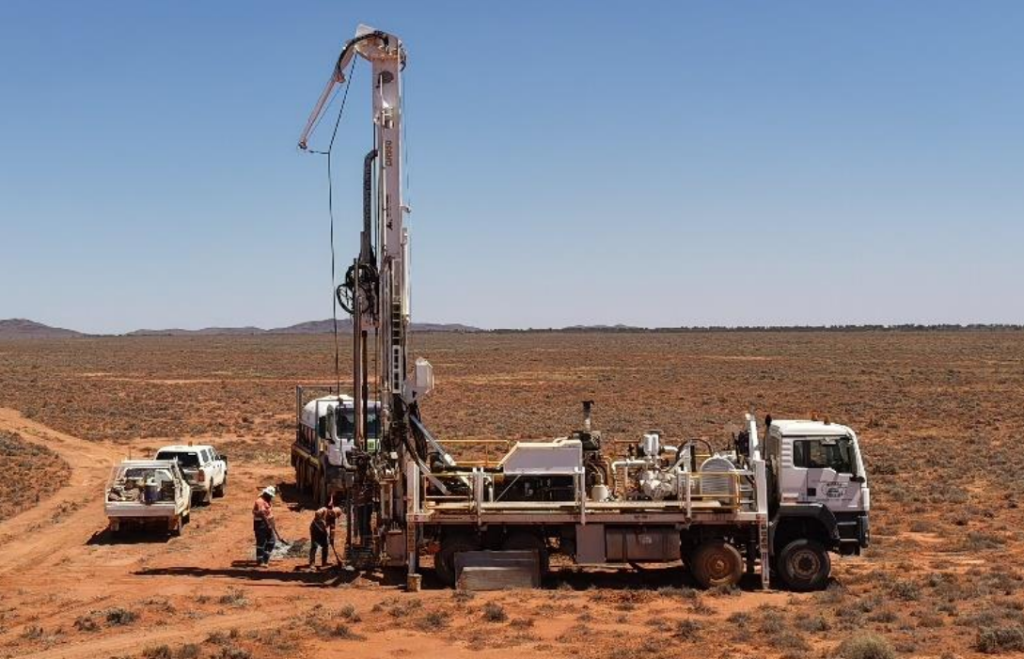
Speaking on the sidelines of the RIU Explorers Conference in Fremantle last week, CEO Ben Vallerine says the company is about to get active with a drilling program starting in March at Yarramba.
The CEO says there’s scope down the line to possibly have Boss Energy come on board in some capacity to potentially help fund Yarramba’s development either as a strategic or joint venture partner.
“Obviously I can’t speak for Boss, but if we were to find something, I think they’d be very interested and it would fit well with their mine plan being so close,” Vallerine tells this news service.
“Boss Energy’s our best neighbour. They’re obviously producing uranium and their Honeymoon mine is just 17km south of our Everest prospect and only 4km south of the Everest prospect.”
The Yarramba Uranium Project is located in a ‘world-class’ uranium district and is 17km north of the Honeymoon uranium operation – where production recently started and resources total 71.6 million pounds of U3O8 at 620ppm U3O8. It’s also 120km southeast of the Beverley uranium operation – with production of more than 40Mlbs of U3O8 during 20 years of continuous operation and where defined resources comprise 165Mlbs @ 2,766ppm U3O8.
Yarramba includes the advanced Oban uranium deposit with a JORC 2004 resource estimate of 8.2Mt @ 260ppm U3O8 for 4.6Mlbs of U3O8.
Vallerine says Yarramba shares the same paleochannel that hosts Honeymoon and the Jason deposit.
Nearology and near-term development
Not only does this ‘nearology’ – sharing the same geology and mineralisation systems – make Yarramba an attractive exploration target “but there’s a clear pathway to development”, the CEO tells Mining.com.au.
“If we find something that’s of any significant size, there’s an option to treat that at Boss (Energy’s operation),” Vallerine continues.
Should Boss Energy express an interest in the Yarramba Uranium Project, it could shorten development timelines particularly for permitting, he adds.
Koba is also advancing two tin-tungsten projects in Queensland the Stannary Hills and Mt Garnet Projects alongside the large-scale Yarramba Uranium Project in South Australia – one of the world’s premier uranium jurisdictions.
The company is kicking off a drilling program in March at Yaramba, and then in Queensland in April.
In October 2025, Koba announced it had discovered a new ‘high-grade’ prospect during a follow-up drilling campaign at its 5,000km2 Yarramba Project.
Vallerine says Koba has advanced its understanding of the controls on uranium mineralisation through its recent drill program. The company is now leveraging this knowledge to re-assess historical data with the aim of mapping roll-front signatures, which will support the delineating and refinement of future drill targets.
The company is also testing the strike extensions of the mineralisation discovered at the Delord prospect. Work along the sparsely drilled 1.5km corridor is also continuing to assess the potential to link the high-grade mineralisation at the Oban deposit to that at the Berber prospect.
Follow-up drilling at Berber is targeting the strike extensions of the mineralisation intersected in the 2024-25 program that included a significant intersection of 1.6m @ 1,026ppm eU3O8. Requisite permits and approvals are being obtained in advance of starting a circa 2,000m follow-up drill program.
During September, the company completed an initial step-out, exploratory drilling campaign comprising 18 drillholes (for 1,818m) to follow-up on the discoveries made during its 2024-25 drilling campaign at the Berber and Chivas prospects.
That program resulted in the identification of a new prospect that hosts ‘high-grade’ mineralisation and associated roll-front signatures.
Rattling the tin
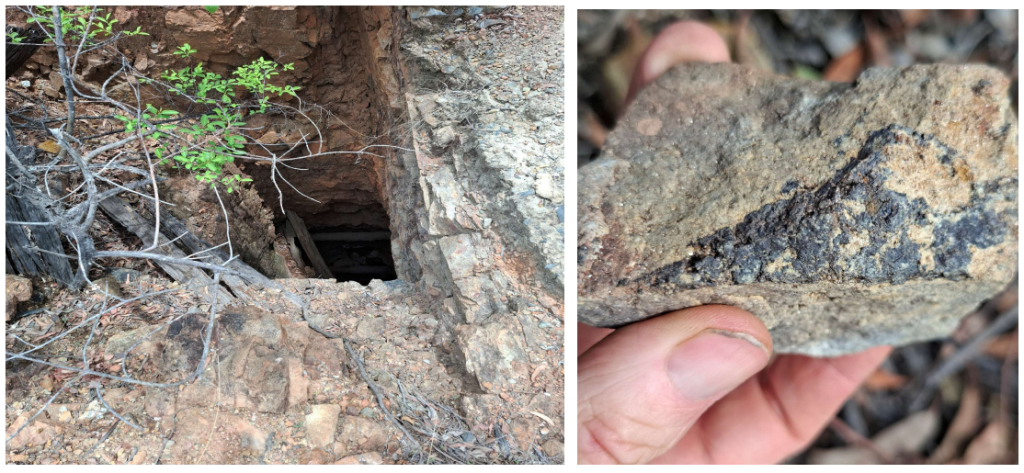
On 28 January the company released results from a reconnaissance rock chip sampling program undertaken at the Stannary Hills Tin-Tungsten Project in Queensland during late 2025. The company collected 51 samples across four high-priority prospects.
With drilling preparations well advanced at both prospects, Koba is well positioned to start drilling in late Q1 2026 positioning itself to unlock the significant potential of the Stannary Hills Project.
Vallerine says the initial field programs at the Stannary Hills and Mt Garnet Tin-Tungsten projects confirm extensive, ‘high-grade’ tin mineralisation at surface.
Rock chip assays at Stannary Hills have returned grades of up to 26.1% Sn. At the Kitchener and Jiminy prospects, widespread ‘high-grade’ tin mineralisation at surface, is supported by strong historical production. At Jiminy a large, untested tin-in-soil anomaly extending over 1.5km coincident with ‘high-grade’ rock chip samples, presents numerous compelling drill targets, the CEO says.
The tin price has risen more than 25% during January 2026, compounding its 30% increase during 2025. This is being driven by supply concerns around Indonesian exports and highlights structural tightness in the market and the increasingly strategic nature of tin metal.
Mining.com.au was an official media partner at this year’s RIU Explorers conference in Fremantle.
Write to Adam Orlando at Mining.com.au
Images: Koba


