


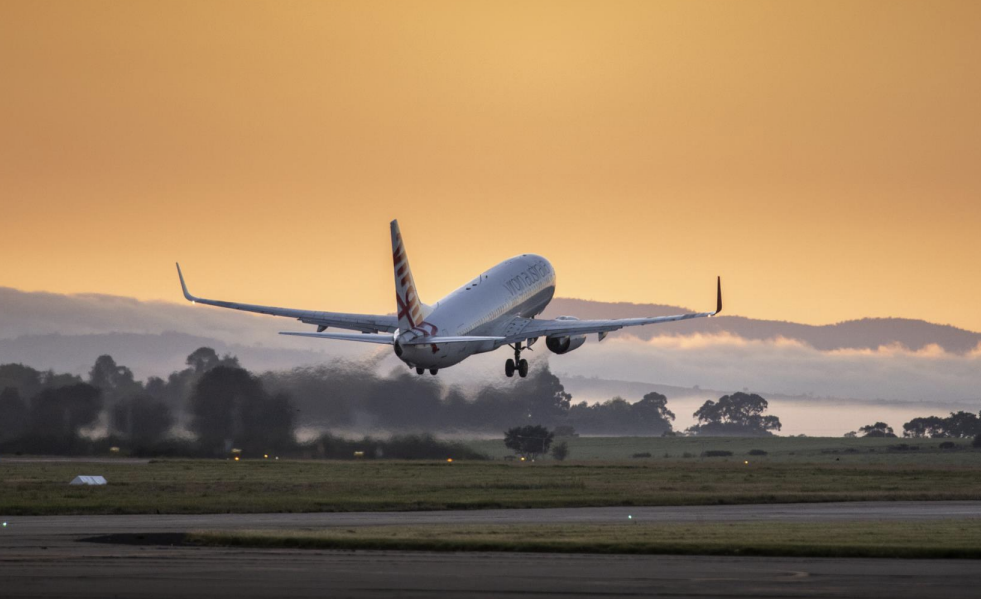
In recent years, Australia has witnessed a surge in mining and tourism activities, particularly across Western Australia, Queensland, and the Northern Territory.
According to the FY24 Australian Aviation Network Overview by Airservices Australia, this boom from the two industries has sparked an increase in domestic flight routes.
Airservices Australia reports that this rise has been a driving force behind the addition of 70 new domestic routes, representing a 21% increase in the nation’s aviation network compared to pre-pandemic levels.
At the Perth Airport alone, 1.39 million passengers were recorded passing through its terminals in January 2024, according to Australian Aviation. The aviation industry says that the passenger movement is largely fuelled by regional travel.
Airservices Australia’s data highlights that in FY24, the nation averaged 3,771 daily flights, equating to 1.164 million total domestic flights.
This expansion in air traffic aligns with the Western Australian Government’s recent investment in critical regional airport infrastructure, contributing over $3 million towards airport projects.
Across Western Australia, regional and remote airports will share $3.6 million through the government’s latest round of Regional Airports Development Scheme grants. The grant aims to bolster safety and accessibility of these airports.
WA Transport Minister Rita Saffioti says 12 airports have been awarded grants through the 2025-27 round, providing critical funding for a range of infrastructure improvements.
“Our government understands how critical aviation is to regional and remote communities, which is why we continue to make record investments that improve access and make flying more affordable for families,” Saffioti says.
The funding comes on top of the $29 million allocated in the 2024-25 State Budget for upgrades at Carnarvon, Onslow, Albany, Kununurra and Eucla and includes an $8 million allocation for the Aboriginal Community Airstrip Renewal Program in the Kimberley region. Regions such as Eucla, Kununurra, Onslow, and Kimberley are well-established mining jurisdictions.
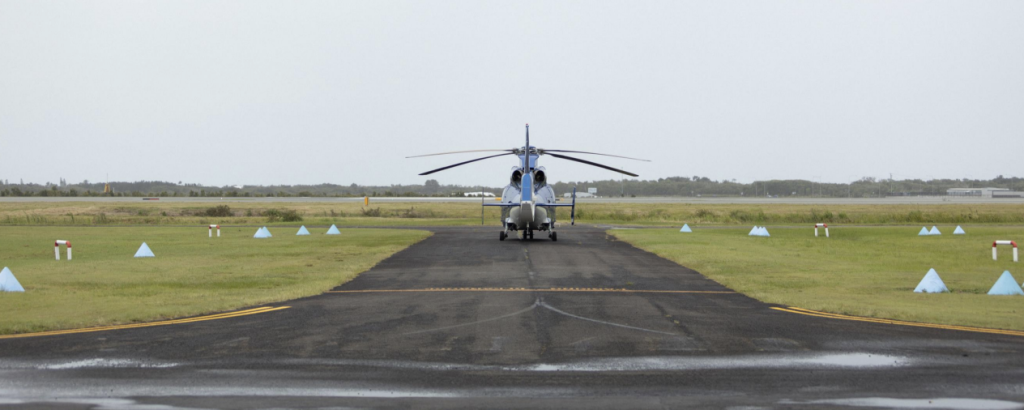
Mining lifts aviation industry
In line with Australia’s growing aviation demand, H1 2024 saw 3.7 million aircraft movements through the nation’s aviation network, which is comparable to pre-pandemic levels.
Airservices Australia notes that 15 airlines collectively, which contributed to roughly a third of the flights in the network, reported double-digit growth rates over the last 12 months in FY24.
The shift in traffic patterns, now dominated by leisure-driven travel followed by mining, has led to a growing preference for point-to-point services, directly connecting travellers to their destinations.
While the increase in flight routes and activity has made Australia’s aviation industry more accessible, it has also revealed some disparities in regional airport performance.
Airports in resource-rich regions have seen higher revenues from fly-in-fly-out (FIFO) and trade activities. Meanwhile other regional airports have faced stagnating or decline.
Alliance Aviation Services is an Australasian provider of contract, charter, and allied aviation and maintenance services currently employing more than 1,400 staff. The company provides essential services to mining, energy, and government sectors, as well as wet lease services for other airlines.
Alliance in August released record results for the financial year ended 30 June 2024, a year that saw Alliance deliver record revenue, a record profit before tax, and record flight hours. Full year statutory profit before tax (PBT) was $86.3 million, an increase of $34.1 million or 65% (FY2023: $52.2 million). Revenue from operations increased by 25% to $637.2 million with significant growth in contracted wet lease revenue.
Alliance’s Managing Director Scott McMillan said at the time flagged continued growth in 2025 after renewing seven major FIFO contracts in FY24.
“The outcomes achieved in FY24 again confirms Alliance as the leading FIFO and wet lease operator in Australia,” McMillan said.

Deloitte says that large and minor regional and remote airport performance is more dependent on the industry they primarily service.
A 2023 report from Deloitte, Taking Flight: The economic and social contribution of Australia’s airports, found that airports in regions with a strong resource sector recorded higher revenues in 2019 on the back of greater (FIFO) and trade activity as commodity prices strengthened. For example, the Perth Airport experiences significant peak periods due to the nature of the resources sector FIFO workforce, as well as connections to international flights.
Airservices Australia says in the early morning at the Perth Airport, there is a departure peak that can result in up to 40 aircrafts departing each hour for a two to three hour timeframe. Meanwhile, in the afternoon, there is an arrivals peak which sees up to 26 aircraft arriving each hour for the same time period.
These peaks can be related to FIFO flights operating during this time.
The growth in regional airports is expected to continue, according to Airservices Australia. The company reports passenger movements are forecast to rise by an average 3.3% per year through 2025, and aircraft movements are expected to rise by 1.7%.
As such, the Western Australian Government is prioritising making airports more safe and efficient. For example, at the Derby Airport in the Kimberley region, the government is awarding $650,000 to reseal and remark the runway, taxiway, and apron pavement areas.
Airports at the remote Aboriginal communities of Warburton, Jigalong, and Punmu, will receive grants totalling $1 million for projects that aim to enhance safety and support royal flying doctor services.
Since 2009, about 338 regional and remote airport projects throughout Western Australia have been awarded grants totalling more than $56 million in support of projects valued at $133 million.
Write to Aaliyah Rogan at Mining.com.au
Images: Alliance, WA Government & Launceston Airport (via Deloitte)


