It’s no secret that Western Australia acts as a national powerhouse for the resources sector, bringing in $220 billion in mineral and petroleum sales over the 2024–25 financial year.
With iron ore and gold being the key drivers for the state’s mineral wealth, areas such as the Pilbara and the Goldfields-Esperance region are well known for their contributions.
One region that is often disregarded is West Arunta … but not for long.
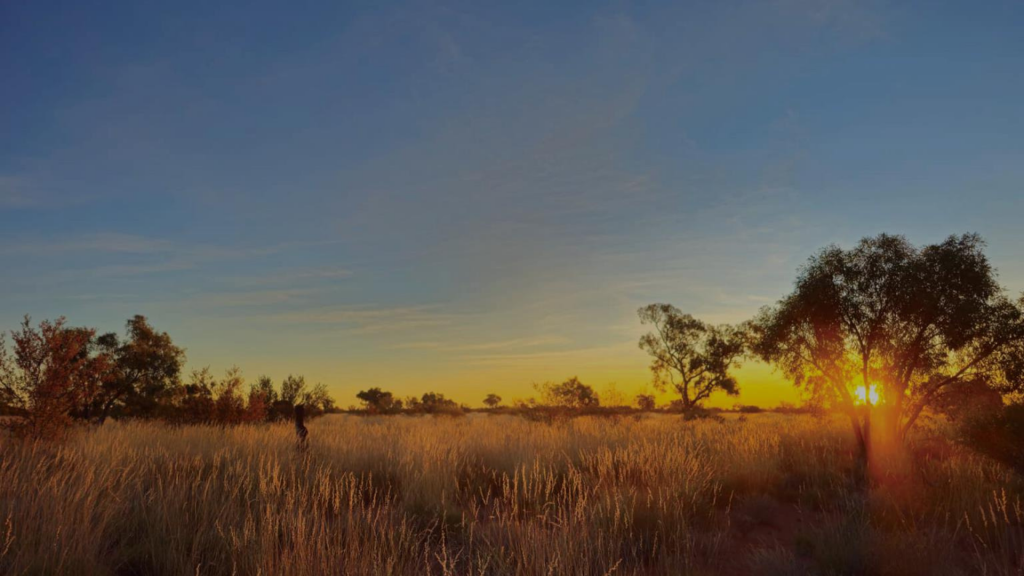
West Arunta is located in the east-central region of the state, nearing the Northern Territory border in the Gibson Desert.
The region is currently under focus by the Minerals Research Institute of Western Australia (MRIWA), a state government organisation.
The University of Western Australia is the lead organisation for this research project. The project aims to strengthen understanding of the West Arunta’s emplacement of carbonatite magma complexes, along with associated development and remobilisation of niobium-rare earth element (REE) mineral systems.
The project began in 2024 and will continue into 2027, holding a total grant value of $1.7 million, of which $366,739 was provided by MRIWA.
The Australian Research Council, the Geological Survey of Western Australia, Dreadnought Resources (ASX:DRE), and Encounter Resources (ASX:ENR) are also sponsoring the project.
Speaking to Mining.com.au, Encounter Executive Chairman Will Robinson explains that the current explorers in the West Arunta are writing the narrative.
“The explorers in the region are drafting the geological map as we go,” Robinson tells this news service.
“And there is now significant focus on the area from the Geological Survey of Western Australia and Geoscience Australia providing new geophysical data, and there are numerous studies underway at Australian universities.
“It’s a huge team effort to unlock this region’s potential. Large, shallow, high-grade niobium deposits have been found fast, but it is highly likely that there will be other commodities discovered in this region.”
With its fully owned Aileron Niobium-Rare Earth Element (REE) Project central to the region, Encounter Resources is focused on advancing it, describing the project as a “globally significant niobium discovery”.
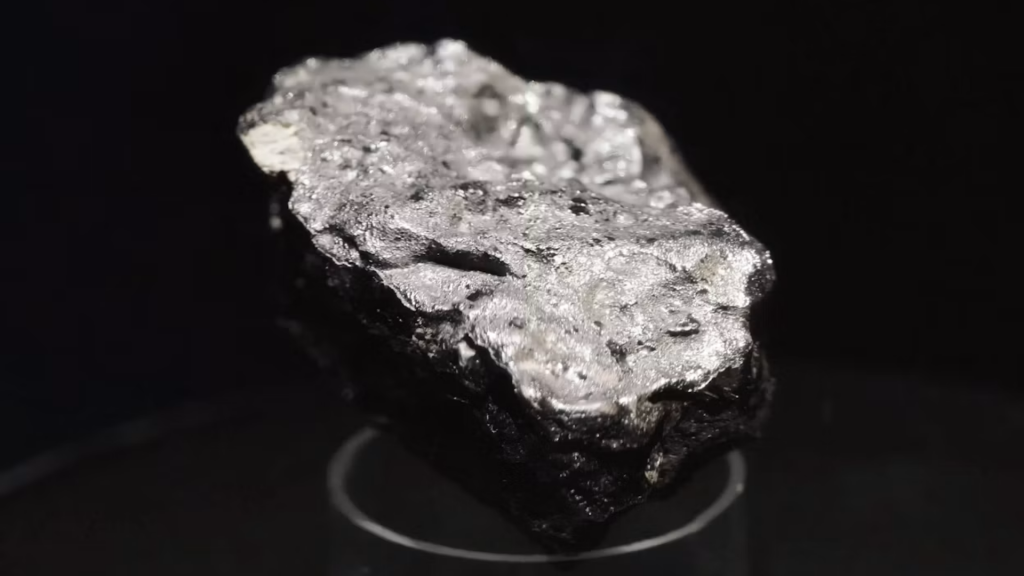
Aileron hosts an inferred resource estimate of 120 million tonnes (Mt) @ 0.77% niobium pentoxide (Nb2O5), containing a ‘high-grade’ resource of 26Mt @ 1.7% Nb2O5.
Encounter says the resource provides a ‘strong’ foundation for a potential long-life mining operation, with the Aileron discovery earning the company the 2025 AMEC Prospector Award.
But this is only the beginning for explorers in the West Arunta.
Prior to entering the region, Robinson says the company had no subsurface information regarding the area’s geology.
“We had next to no idea on cover depth, the age of the various geological units,” Robinson explains.
“We now have a well-tested model for these large carbonatite intrusions, and the understanding of potential for other minerals is rapidly evolving.”
And while the area is currently described as the final frontier of mineral exploration, Robinson sees the region becoming Australia’s “most exciting new mineral province” in the near future.
Niobium in the present
Niobium is one of the leading elements discovered in the West Arunta region, among REE discoveries.
Alongside Encounter Resources, companies such as WA1 Resources (ASX:WA1), Norwest Minerals (ASX:NWM), and Metallium (ASX:MTM) are addressing their own niobium exploration campaigns in the West Arunta.
Currently, there are no mines producing niobium as a primary product in the greater country. The mineral is more commonly produced as concentrate or a byproduct at some lithium or tantalum operations, according to Geoscience Australia.
Often found in minerals of the tantalite–columbite series in pegmatites, granites, carbonatites, and alkaline igneous rocks, tantalum and niobium are always found together.
In July this year, Australian Rare Earths (ASX:AR3) uncovered a niobium-rare earth carbonatite mineral system at the Overland Project, over in South Australia.
The intersection of 19m @ 0.61% total rare earth oxides (TREO) from 86m to end of hole, including 20% neodymium and praseodymium oxides and 1.70% dysprosium and terbium oxides. The result expands Australian Rare Earths’ critical minerals reach to include niobium.
Aside from a few occurrences in South Australia — and sparingly in other parts of the country — the mineral is shining for the West Arunta region.
“The carbonatites found in the West Arunta are some of the largest and most prospective carbonatite complexes discovered anywhere in the world,” Encounter Executive Chairman Robinson adds.
“Multiple carbonatites have been discovered over an area 60km wide.”
The future is bright
Historically, the region’s lack of exploration is often described as a result of its remote location.
Located along the border of Western Australia and the Northern Territory, the region’s closest towns are Alice Springs and Halls Creek, with West Arunta around 500km away from each.
“The West Arunta is one of the most remote parts of Australia,” Robinson tells Mining.com.au.
“Much of the terrain is under a thin veneer of sand, with almost no outcrop to map, and access is difficult, with much of the region sitting on Aboriginal Reserve Land.
“Government pre-competitive geological data was also limited, giving explorers little to build from. Together, these factors meant the region remained virtually unexplored until Encounter drilled the first hole in 2020.”
But with new discoveries continuing to emerge, nothing’s off the table for the West Arunta.
And the region may play a large role in Australia’s growing niobium discoveries.
“I think Australia will become a major producer of niobium,” Robinson adds.
“I think this region is a new mineral province with the potential to be a major contributor to critical minerals production in Australia.”
As of 11 September 2026, niobium tantalum is priced at US$52.76 ($73.6) per kilogram, according to the Shanghai Metals Market.
Write to Maddison Elliott at Mining.com.au
Main image: Mining.com.au