



The uranium market has certainly witnessed an interesting 2024, and it is looking likely the events over the course of this year will play a significant role in shaping the market in 2025.
One of the biggest events of 2024 was Russia’s ban on uranium exports to the US in response to the earlier restriction imposed by the US on imports of Russian uranium.
This will have a big impact on supply for the US given the nation’s substantial reliance on imports of the nuclear fuel.
According to the US Energy Information Administration, the US sources most of its uranium supply from Canada, Kazakhstan, Russia, Uzbekistan, Australia, and six other countries.
Bruce Lane, executive Director of US-focused uranium explorer GTI Energy (ASX:GTR), tells Mining.com.au the US buys around 24% of its enriched uranium from Russia.
“This comes at a time when enriched uranium is already in short supply globally in a market where demand is increasing significantly,” he says.
Canaccord analyst James Bullen says an over-reliance on this historically lower-priced product has “hollowed out the West’s capabilities when it comes to the nuclear fuel supply chain”.
“I think it will have reasonably large ramifications for the market,” he tells Mining.com.au.
“It is a temporary ban, but TENEX has already indicated to Centrus Energy that it won’t be supplying them through 2025 unless it can get its own exception from the Russians. So that’s quite a big deal.”
Reuters reported in November that Centrus had received a notice from Russia’s TENEX that its government passed an order, which cancelled its licence to export low-enriched uranium to the US, effective through 31 December 2025.
Energy Intelligence reported on 2 December 2024 that Atlantic Action II, the ship that was supposed to carry low-enriched uranium (LEU) from St Petersburg to the US for Centrus, left St Petersburg without any LEU on board.
At the same time, US utility inventories are only sitting at around two years’ worth of supply, according to Bullen.
“If you look at the inventory that’s owned by the operators of nuclear power plants, you’ll see that their U308 now is only 21 million pounds,” Bullen says.
“They did get a little bit ahead of the game when it came to UF6 and they’ve grown that up to 53 million pounds equivalent. But that’s still not a big inventory position.
“They’ve probably got two years forward coverage, which is, I think, a little bit lower than what they would prefer to have, particularly given the current geopolitical concerns.”
GTI’s Lane says the east/west bifurcation that has emerged due to the Ukrainian conflict has magnified the global shortage of enrichment and conversion capacity, with uranium (yellowcake) supply already in a 40-50-million-pound annual primary mine deficit against annual global requirements of circa 180 to 200 million pounds.
While traditional nuclear demand is growing, with around 65 new reactors currently in construction in 16 countries, the rapidly rising energy requirements of artificial intelligence and data centres are expected to “supercharge” that growth.
According to the World Nuclear Association, there are currently 440 operable reactors with a combined capacity of about 390 gigawatts-equivalent.
About 30 countries are considering, planning, or starting nuclear power programs.
“If you add on increased demand from the ‘electrification of everything’, COP29 commitments from 31 countries to triple nuclear, reactor restarts, reactor capacity uprates plus the data centre/AI hyperscalers push into nuclear then you have a powerful cocktail that seems likely to drive uranium price much higher in the near to medium term as the fuel supply chain struggles to respond,” Lane explains.
Australia may also potentially look to embrace nuclear power, after Liberal Party leader Peter Dutton in June threw out the idea of building seven nuclear power plants that would start rolling out in 2035 if his party wins the 2025 election.
Tech giants turn to nuclear solutions
The tech giants are also turning their attention to nuclear to power their energy hungry data centres.
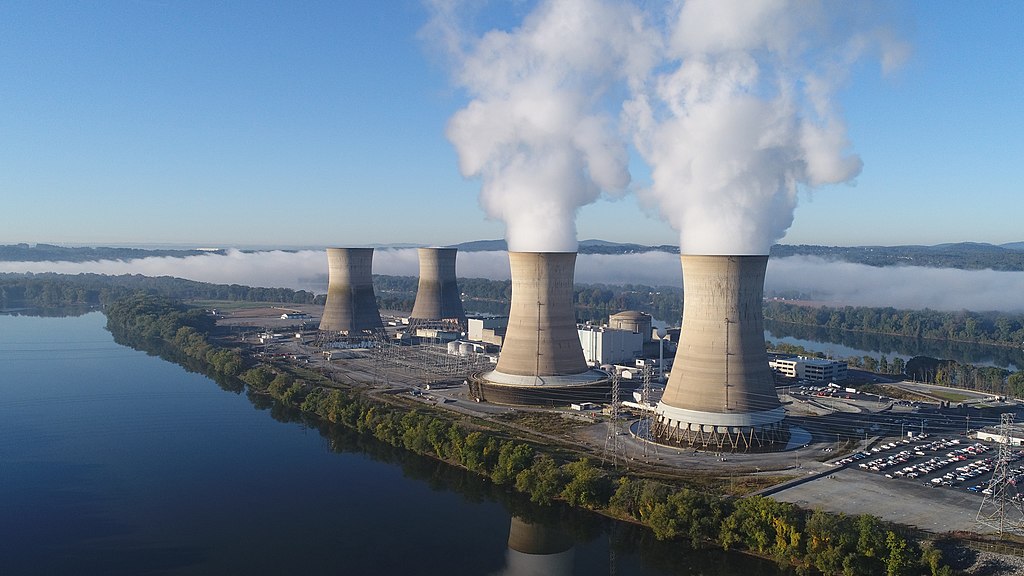
In September, Microsoft inked a deal with clean energy provider Constellation Energy (NASDAQ:CEG) to launch the Crane Clean Energy Center (CCEC) and restart a unit of the Three Mile Island nuclear plant in Pennsylvania.
Peter Lester, non-executive Chairman of Aurora Energy Metals (ASX:1AE), tells Mining.com.au the outlook for the uranium market heading into 2025 and beyond remains highly positive.
“Global demand for uranium is increasing, driven by the growing recognition of nuclear energy’s role in achieving decarbonisation goals and ensuring reliable baseload power,” he says.
“Major economies, including the US, China and India, are expanding their nuclear energy capacity and large corporations such as Amazon and Microsoft are investing in nuclear power to support energy-intensive technologies like AI data centres.”
Lester says it takes around 10 times more energy for a ChatGPT search as opposed to a simple Google search.
“Other research suggests if you start doing more complex inquiries, that’s up to 30 times the energy to answer the same question using AI, and the reason is AI has got to go through so much information to come back with the answer,” he says.
“It does it quickly, but it does it quickly because they’ve got servers the size of small cities, many of which are sitting on the west coast of the US.
“The amount of power in this increasing demand for usage of AI is going to go through the roof.”
Meanwhile, on the supply side the market is facing significant constraints.
Supply is expected to be further impacted by the August 2024 news that Kazakhstan-headquartered Kazatomprom, the world’s largest uranium producer, cut its 2025 production forecast by around 17%.
“Recent geopolitical developments, such as Russia’s restrictions on enriched uranium exports, have heightened concerns about stable and secure supply chains,” Lester adds.
“Additionally, there has been limited new production coming online, which is adding to the supply-demand imbalance.”
Canaccord’s Bullen says there has been over a decade of underinvestment in the sector as a result of low prices, but he acknowledges it’s not just pricing that is creating a bottleneck in the supply chain.
“Uranium projects are quite technically complex. This is an industry which has suffered from probably 15 years of underinvestment because of where pricing has been,” he notes.
“So it’s having to reestablish a lot of that technical expertise. That’s taking time, to source the human resources, getting banks familiar with these projects. Again, the regulators are very slow. So it’s not just about price here in terms of getting the supply chain moving.”
Bullen pointed to the lengthy permitting process for NexGen Energy’s (ASX:NXG) Rook I Project, which hosts the Arrow deposit — the largest development-stage uranium project in Canada.
“They started their permitting in 2019,” Bullen explains.
“This is the world’s best uranium discovery ever. It was discovered in 2014. It is unlikely to be in production until 2028. That’s just how long it takes.
“Compare it to the ticker tape parades that are thrown for lithium developments and the support they get and how they streamline that permitting. It’s a very different situation in uranium.”
Canaccord has maintained its long term uranium price at US$90 ($139) per pound. At the time of writing the spot price was around US$77 a pound.
Since the start of 2024, the uranium spot price has slid over 15% from US$91 a pound.
GTI’s Lane says it looks like floor and ceiling contract prices are in the range of around US$79/80 up to US$150 if the recent deal reported by NexGen is anything to go by.
“This pricing may to an extent reflect the marginal cost of production for the established players, some of the lower cost brownfields restarts and maybe US$80 is attractive to some of the lower cost proposed new mines like NexGen,” Lane explains.
“however it seems unlikely the NexGen will lock in contracts for all of their projected annual production at these prices — bearing in mind that NexGen are not likely to produce much until later this decade at the earliest.
“I would suggest that the incentive price to encourage many new projects to start up will be north of US$100 per pound.”
Lane says 2024 has been a “very, very turbulent year for the nuclear fuel supply chain”, especially in the US and Russia but also for France (Niger coup) and Kazakhstan (acid shortage and transport challenges).
“The industry has not seen this sort of upheaval for decades and is taking some time to work through the various bans, waivers, political interventions, regime changes — including Trump victory — and massive nuclear fuel demand increases from China, data centres/AI, Cop29 pledges, restarts in Japan/US/Korea and the like.
“Nuclear fuel buyers may be in a relatively comfortable short-term position having pulled product forward by flexing existing contracts, borrowing pounds, and drawing on their own inventories.
“however at some point they will need to make moves to secure uranium to cover their ever growing forward needs — this may bite in 2025 and cause a spike in both spot and term contract uranium prices, we’ll have to wait and see.”
Write to Angela East at Mining.com.au
Images: Exelon & iStock


