


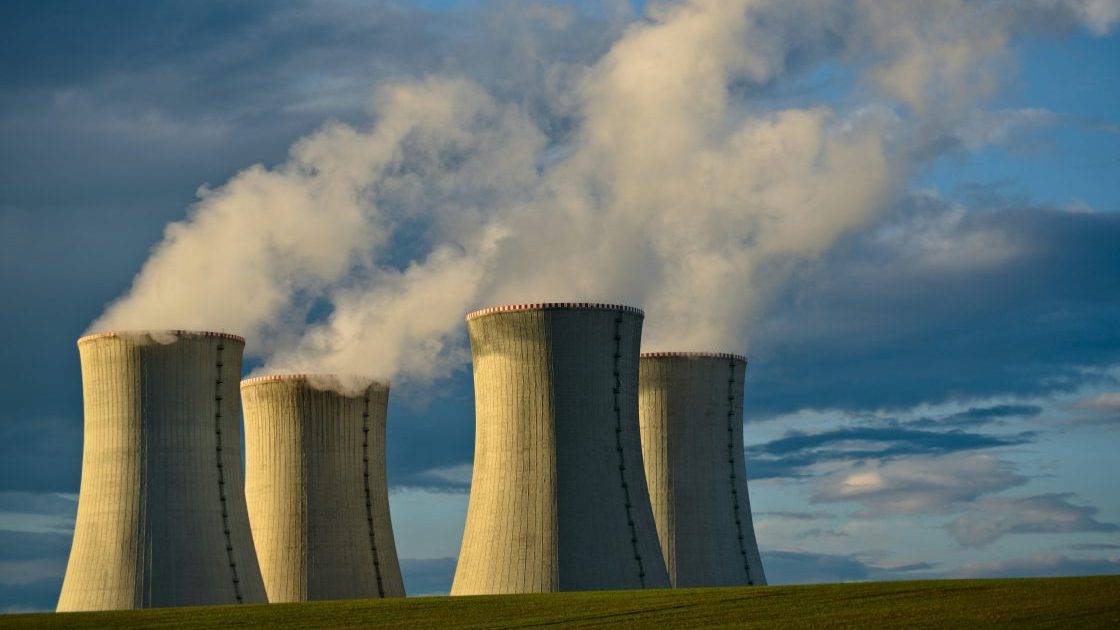
Australian Liberal Party leader Peter Dutton today revealed the opposition’s plan to build seven nuclear power plants that would start rolling out in 2035 if the party wins the next election.
The plan is to build the reactors on the sites of end-of-life coal-fired power stations, including in Gippsland in Victoria, Gladstone in Queensland, Port Augusta in South Australia, Collie in Western Australia, and the Hunter Valley in New South Wales.
“Today we announce seven locations that we have looked at in great detail over a long period of time that can host new nuclear sites and that will be part of an energy mix, obviously with renewables and significant amounts of gas into the system, particularly in the interim period,” Dutton says.
“It will mean that on those end of life coal-fired power station sites, we can utilise the existing distribution network.”
Dutton says that while the Australian Labor Party has promised 28,000km of new poles and wires, there is no transparency about where that will go.
“We’ve been very clear about the fact that we don’t believe in that model,” he says.
“We want to utilise the existing assets that we’ve got and the poles and wires that are used at the moment on the coal-fired power station sites can be utilised to distribute the energy generated from the latest generation of nuclear reactors.
“We have the ability to do that in a way that renewables can’t.”
The nuclear power plants will be owned by the Commonwealth, which will work with experts to roll them out.
“I want to make sure that the Australian public understands today that we have a vision for our country to deliver cleaner electricity, cheaper electricity, and consistent electricity,” Dutton says.
“This is a plan for our country which will underpin a century of economic growth and jobs for these communities.
“There’s no sense pretending that our economy can operate without a stable energy system.”
However, the Mining and Energy Union (MEU) says workers in the coal-fired power industry and communities need viable new industries sooner than can be provided by nuclear.
“We are at a critical moment where workers are facing closures in the next few years,” the MEU says.
“Even if nuclear energy was a popular option, according to the CSIRO, the earliest a large-scale nuclear plant could commence operations is no sooner than 2040.”
The Eraring power station in Lake Macquarie in the Hunter region of New South Wales is set to close in 2027, as is the Collie power station in Western Australia.
The Callide B power station in Central Queensland and Yallourn power station in the Latrobe Valley are set to close in 2028, followed by the Muja power station in Western Australia in 2029.

The Bayswater power Station in the Hunter Valley and Vales Point power station in Lake Macquarie are set to close in 2033, and the Loy Yang A power station in Victoria will close in 2035.
“Power stations in the proposed sites for nuclear would be long closed before the plants would become operational, and if no support is provided, those workers and communities will have already packed up their lives and moved on,” the MEU says.
The union says the focus needs to be on an orderly transition that focuses on jobs, economic activity in affected regions and positive social outcomes for affected workers.
Write to Angela East at Mining.com.au
Images: Stock and Transfield


