


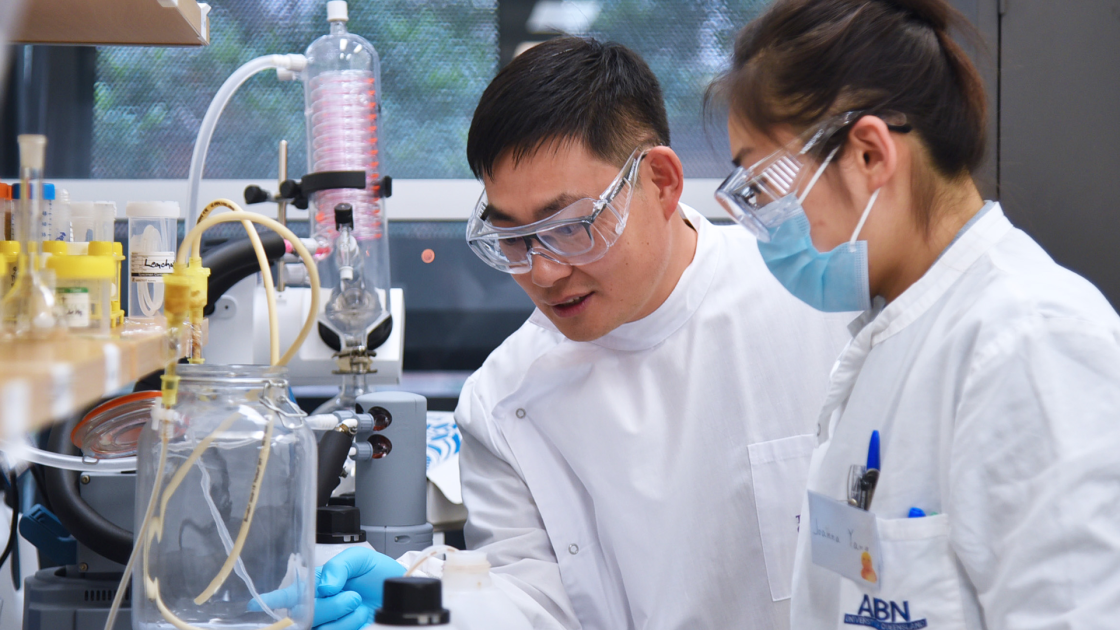
The University of Queensland (UQ) has developed technology which can remove harmful ‘forever chemicals’ from water in order to re-purpose them for use in renewable batteries.
Researchers at the university’s Australian Institute for Bioengineering and Nanotechnology have made a filter that rapidly and efficiently captures per-and polyfluoroalkyl substances (PFAS).
PFAS are synthetic chemicals used in consumer and industrial products due to its ability to resist heat, stains, grease, and water. However, PFAS persist in the environment and have been linked to several potential human health problems.
The filter contains a patented sorbent solution that uses an ion-exchange technique to isolate and remove the PFAS particles as the water passes through it.
Polymer chemist Dr Cheng Zhang says the fluorine-based materials can be harvested from the filter, and he is working on utilising them to then improve clean energy technology.
“People are increasingly aware of the risks that PFAS poses to human health, and how long these chemicals persist in the natural environment,” Zhang says.
“Not only does our filter technology remove harmful particles from water, those captured chemicals are available to be repurposed to help decarbonise the planet.
“The increasing demand for high-performance rechargeable batteries means manufacturers are constantly searching for new materials that improve the energy density, safety, and cycling stability of batteries.”
Zhang, alongside the University of Queensland’s Australian Centre for Water and Environmental Biotechnology Professor Jianhua Guo, will soon begin pilot testing in Brisbane and the US, with $1 million backing from the Advance Queensland Industry Research Projects program.
The testing is planned for several sites, including the Luggage Point Sewage Treatment Plant, with water management company GHD, project management firm OCTA, and the Queensland Department of Environment, Science, and Innovation.
Zhang says these demonstrations will be pivotal to scale up the filter technology for use in industrial water infrastructure.
“If this testing goes as we believe it will, we hope to reach commercial production within three years,” he adds.
The University of Queensland has six main campuses and lies primarily in Brisbane. It ranks among the world’s top 50 universities, delivering knowledge leadership and connecting with partners and communities.
Write to Aaliyah Rogan at Mining.com.au
Images: The University of Queensland


