

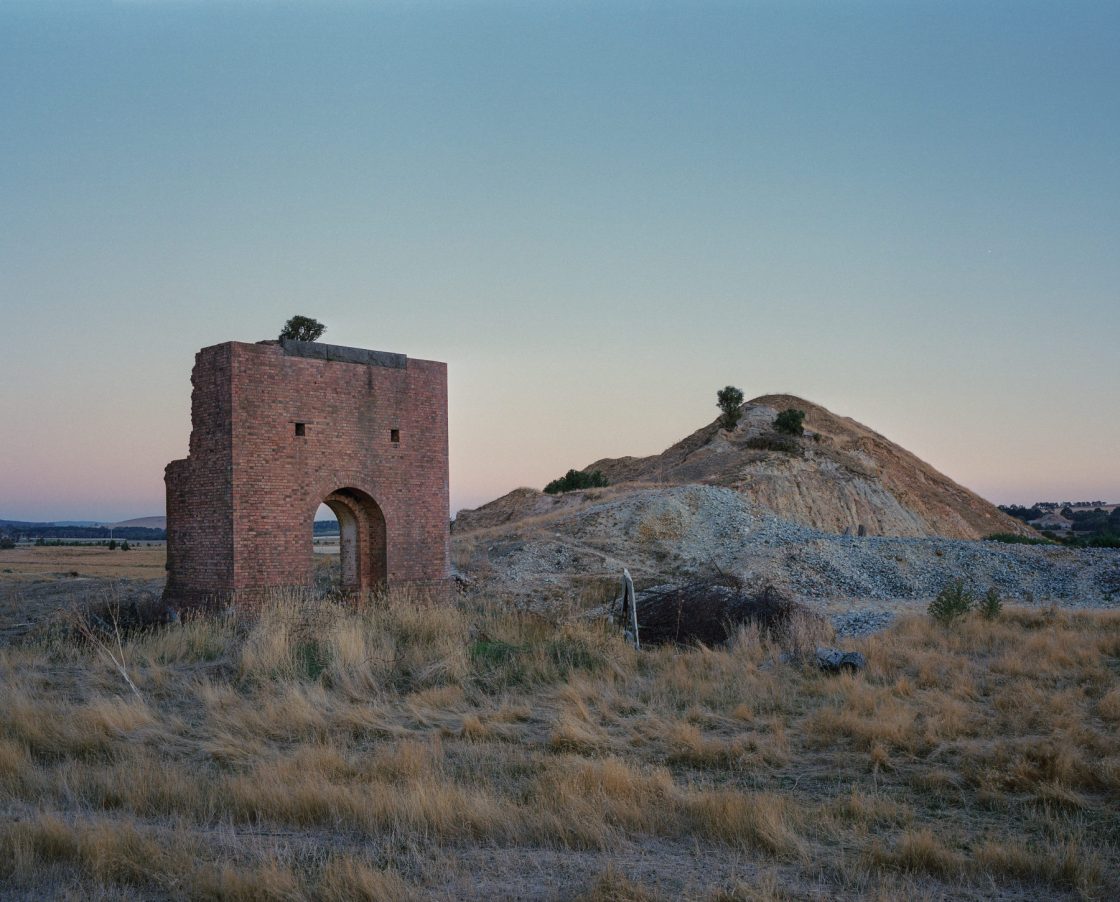
Abandoned mines in Australia are often an after-thought if not a call to action usually abandoned by those who pursue the worthy cause because it gets placed in the ‘too hard basket’.
Yet this week the topic of abandoned mine shafts in South Australia was propelled to the forefront of public consciousness and for all the wrong reasons.
The 60-day-long search for missing toddler Gus Lamont has sent South Australia’s Police to the outback and amid the heartbreaking, treacherous search for the missing little boy another stark reality has hit – exactly how many mines are there in Australia that are abandoned that the public doesn’t know about?
Recently, six mine shafts in the area near Gus’ disappearance have been identified, which has heightened police attention. The shafts are between 5.5km and 12km from the Oak Park homestead, in areas that the state’s police say are “in areas not searched on foot” and are about 40km south of Yunta on the Barrier Highway.
Mining.com.au sought comment from South Australia Police, which declined to comment further on the search for Gus until it has concluded.
In a police statement released on 24 November, police say they were not previously aware of the location of these abandoned mine sites. The broader region around Yunta where the search has been focusing has a long history of mining and prospecting that dates back to the late 1800s and continues to this day, as reported.
Deputy Commissioner of Police Linda Williams says the new searches, which began yesterday (25 November) were part of ongoing investigations as part of Task Force Horizon.
“We are determined to explore every avenue in an effort to locate Gus Lamont and provide some closure for his family,” Williams says.
This phase of investigation by police aims to ensure all locations of possible interest in a wide radius of the homestead are scrutinised to try and locate Gus Lamont. The search is expected to last up to three days and will involve Special Tasks and Rescue (STAR) Group officers and Task Force Horizon officers using specialised equipment to search six mine shafts in the area.
It’s understood that documents published on an South Australian Government mining database refers to early copper mining just a few short kilometres south of what appears to be the homestead on the station where Gus went missing.
A lot more out there
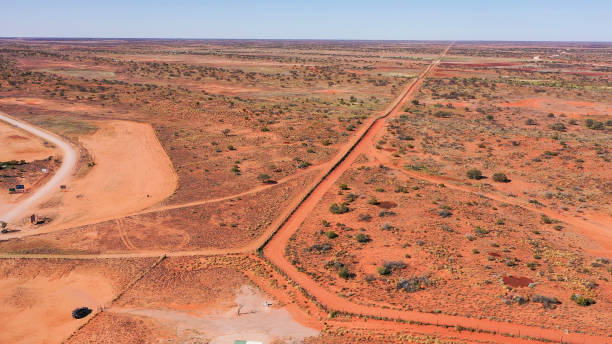
The search in South Australia has propelled the issue of abandoned mines into the public consciousness but it’s not an issue confined to that state. For more than a decade, organisations such as the Geological Survey of Western Australia (GSWA) have been sending teams across the country to identify abandoned mine features.
Speaking to Mining.com.au, Western Australia’s Department of Energy, Mines, Industry Regulation and Safety (DEMIRS) General Manager of the Abandoned Mines Program Tara Read says due to Western Australia’s vast land area – totalling 2.53 million km2 – GSWA had to limit their search.
“It took them 11 years and they managed to capture that data from within 10km of towns and 1km of major roads,” Read says.
The most recent survey, conducted by GSWA, compiled the comprehensive database, revealing there are more than 190,000 abandoned mine features throughout the state.
However, Read notes there is still a lot of data out there that has not been categorised yet.
Data from MDPI reveals that there were more than 95,300 active and inactive mines identified in Australia, as of 2020. Inactive mines constituted the vast majority, totalling 89% of these numbers.
Among the inactive mines, the majority (68%) were characterised as neglected, totalling 58,017.
Western Australia and Queensland were ranked the highest to have the most documented neglected mines, totalling 20,303 and 2,820, respectively, as reported by MDPI.
In South Australia, there are more than 5,000 inactive mines, with more than half (3,759) neglected, abandoned, or unrehabilitated mines in the state.
A catalogue of consequences
What the country is now facing is not just a catalogue of abandoned mine features, but the consequences of more than a century of mining carried out in an area before environmental protections, closure obligations, or modern safety legislation existed.
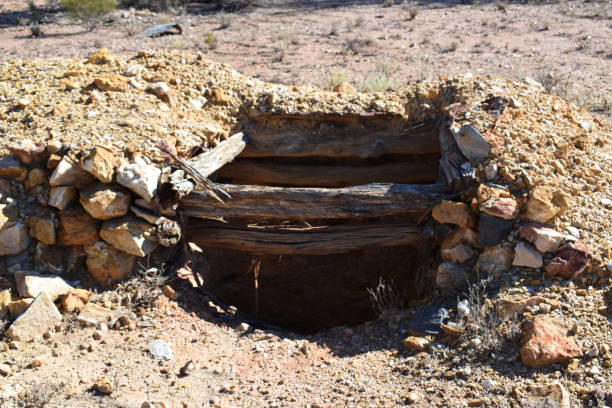
These sites are not just empty pits in the ground. Without proper closure or rehabilitation, abandoned mines can accumulate explosive gases due to poor ventilation, collapse due to weakened structures, and contaminate soil and waterways.
According to Science Direct, an abandoned mine is typically defined as a site where exploration, development, or production has ceased without rehabilitation.
Mohan Yellishetty, an associate professor at Monash University’s Department of Civil Engineering, reports that abandoned mines fall under many classifications and definitions.
Mining legacies are referred to as the umbrella term for previously mined, abandoned, orphaned, derelict or neglected sites. These sites also vary in size, from vast open-cut pits down to individual shafts a few metres square.
However, historically, mines were constructed and maintained to be safe only while in operation.
Some of the hazards of an abandoned or old mine working are openings where someone can fall into an open pit or quarry, deadly gases, cave-ins, unsafe structures, unstable explosives, highwalls, and water hazards – to name a few.
As the search for Gus Lamont continues, it has drawn renewed attention to a largely unseen but widespread issue across Australia. This is the sheer number of abandoned, neglected, or unrehabilitated mine sites left behind.
While efforts are underway to identify and catalogue these sites, vast areas remain under-surveyed. The tragedy unfolding in South Australia is not only a moment of national heartbreak, but a reminder of why the work to identify these sites and address this issue matter.
Write to Aaliyah Rogan at Mining.com.au
Images: Australian Geographic & iStock