

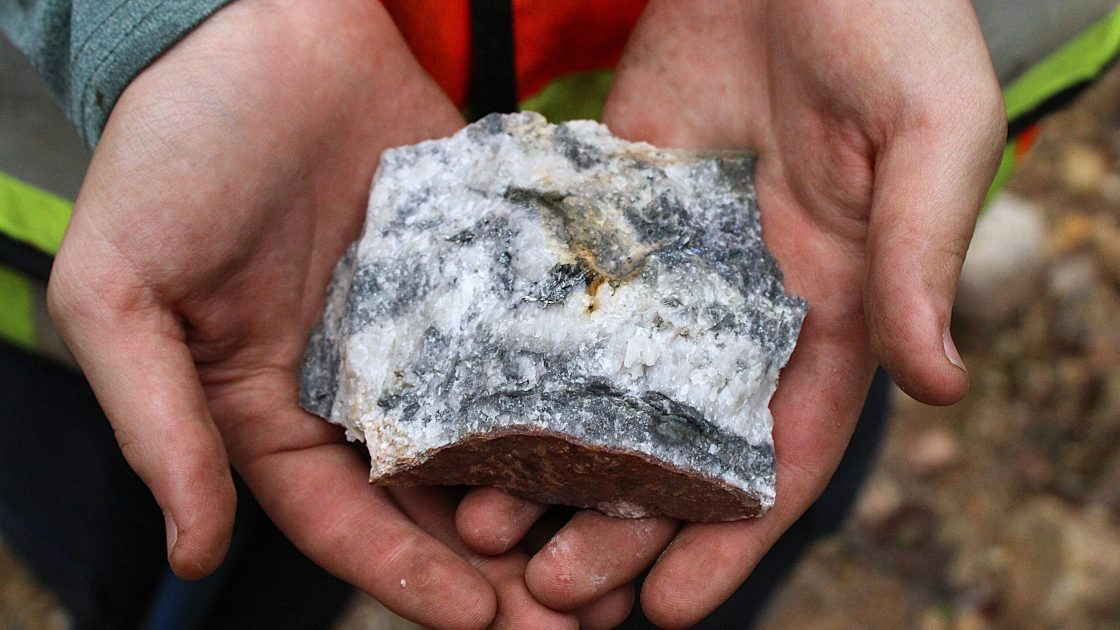
Thistle Resources (TSX-V:TRCG) has recorded portable X-ray fluorescence (XRF) readings of up to 23.04% antimony from initial trench samples at its Brunswick Antimony Project in New Brunswick, Canada.
The company collected 10 rock-chip samples along the edge of the first trench area, targeting disseminated antimony mineralisation, massive blebs, and stibnite masses associated with quartz veins.
Preliminary XRF readings ranged from 4.76–23.04% antimony, with six samples returning more than 10%. The samples have been sent to ALS Global (ASX:ALQ) in Moncton for certified laboratory analysis, including gold and silver assays.
The rock-chip samples comprised between one and six pieces and were not homogeneous. Thistle analysed each sample at three separate points and averaged the readings using Reflex XRF software.
The 2026 trenching program targets the project’s main mineralised zone and the contact between sedimentary rocks and granite, which Thistle interprets as controlling the antimony mineralisation.
Thistle plans to map and channel sample the exposed trenches to determine the orientation of the contact and refine targets for a maiden drilling program.
VP Exploration Gary Lohman says previous sampling identified several styles of mineralisation associated with silicification and quartz veining.
“Once the trenches are mapped and channel sampled, the structural data will help define the azimuth, or direction, of the contact, telling us where to aim our drill holes,” Lohman says.
Previous certified assays at Brunswick returned grades of up to 2.32 grams per tonne gold and 1,300g/t silver, according to Thistle.
The Brunswick Antimony Project is located in the Bathurst Mining Camp, less than 1km from the past-producing Brunswick No. 12 mine. It has not previously been drill tested.
Write to France Pinzon at Mining.com.au
Images: Thistle Resources