



Silver is predicted to become ever more important as the world increasingly adopts the commodity as a critical mineral.
Silver is well known for having the highest electricity conductivity of any metal and it continues to attract strong demand from customers who manufacture solar panels, batteries, electrical components, medical instruments, information technology, and electric vehicles (EVs).
This precious metal is now tipped to play a pivotal “next-generation” role across industries that are critical to the green energy transition and digital transformation over the coming decade.
Oxford Economics describes silver’s unique properties as “indispensable” components in development and expansion activities.
Namely, the white metal enhances energy, accelerates data, and enables both rapid charging and efficient power transmission in EVs.
The element is more thermally conductive than copper, aluminium, or bronze. It is highly resistant to corrosion, overheating, and loss of performance. It also helps to maintain operational performance.
“In the past decade, installed photovoltaic (PV) power capacity has increased more than tenfold,” Oxford says in its Silver Institute report.
“The future outlook for photovoltaics remains strong with the International Energy Agency expecting that solar energy will become the dominant renewable energy source globally by 2030… [and] is forecast to grow at a 17% compound annual growth rate.”
Installed PV capacity has grown more than tenfold in the last decade, led by China (by 51%), Europe (15%), and the US (9%).
Although PV power capacity jumped tenfold, supply has not increased at the same rate due to a rising number of manufacturers reducing silver content in their products.
“In this time period, silver demand in PVs has risen threefold [but] the rise has not been proportional to capacity due to technological ‘thrifting’, reducing silver required per cell,” the report says.
Lowering silver content is predicted to be a temporary cost-cutting measure. Solar manufacturing expenses are expected to ease and become increasingly “cost competitive”, independent of government support.
“This strong outlook is supported by many governments setting ambitious solar capacity goals with supportive funding… [and] significant developments in copper plating technologies have occurred, which will reduce the silver requirement of a solar cell,” the report says.
“Although technological advancements have reduced silver requirements per cell, new next-gen solar cells (tunnel oxide passivated contact as well as silicon heterojunction) require more silver, offsetting reductions.”
Diesel prices accelerate silver uptake
In addition to this, a recent 300% jump in diesel fuel prices has accelerated the adoption of EVs as a mass transport option instead of just a niche automotive market.
Oxford predicts global EV production will grow at a compound annual rate of 13% between 2025 and 2031.
Global silver demand from the automotive industry will grow at a compound annual rate of 3.4% in the same period.
The rapid increase in EV demand and production also means that EVs are forecast to overtake internal combustion engine vehicles (ICEs) as the primary source of silver demand by the automotive industry by 2027, accounting for 59% of the share by 2031.
“The shift from ICEs to EVs is expected to boost silver demand considerably [and] EVs, especially battery electric vehicles, consume on average 67–79% more silver than ICEs,” the report says.
Even if EVs take longer than expected to overtake, ICEs’ demand for silver is still likely to increase due to automotive manufacturers offering more accessories as standard options.
“Technological advancements have led to a rising number of safety features and features for passenger comfort (such as rearview cameras, sensors, and smart displays), which is further increasing silver demand,” the report says.
“The growing sophistication of vehicles is expected to boost silver demand in EVs and the broader automotive sector… [and] the move towards autonomous driving is also likely to further boost silver demand through the increased need for sensors.”
Critical minerals listed
In the US, in recognition of silver’s importance to the global economy, the Donald Trump administration approved adding it to the US Geological Survey’s (USGS) final 2025 list of critical minerals.
The country’s Department of the Interior describes the precious metal as one of 60 minerals that are “vital” to the economy and national security, which face “potential risks from disrupted supply chains”.
“Critical minerals underpin industries worth trillions of dollars, and import dependence puts key sectors at risk,” USGS Director Ned Mamula says.
“This is the most comprehensive, science-based assessment yet of the minerals our nation relies on… [and] this work helps secure the materials needed for US economic growth and technological leadership.”
The final list also adds nine other new minerals, including boron, copper, lead, metallurgical coal, phosphate, potash, rhenium, silicon, and uranium.
USGS made these additions based on new data, public feedback, and interagency recommendations.
This is the third critical minerals list released since President Trump directed federal agencies to strengthen mineral security through his executive order 13817, the Federal Strategy to Ensure Secure and Reliable Supplies of Critical Minerals.
The strategy tasks the federal government with reducing national vulnerability to critical minerals supply disruptions that create “strategic vulnerabilities” for security and affect the affordability of smartphones, hard drives, and advanced defence systems.
“Our miners and producers are currently limited by a lack of comprehensive, machine-readable data concerning topographical, geological, and geophysical surveys; permitting delays; and the potential for protracted litigation regarding permits that are issued,” the executive order says.
“An increase in private-sector domestic exploration, production, recycling, and reprocessing of critical minerals, and support for efforts to identify more commonly available technological alternatives to these minerals, will reduce our dependence on imports, preserve our leadership in technological innovation, support job creation, improve our national security and balance of trade, and enhance the technological superiority and readiness of our Armed Forces.”
USGS is also mapping new deposits and advancing science to better understand how geology influences their quality, size, and extraction viability.
Producing 30% of global supply
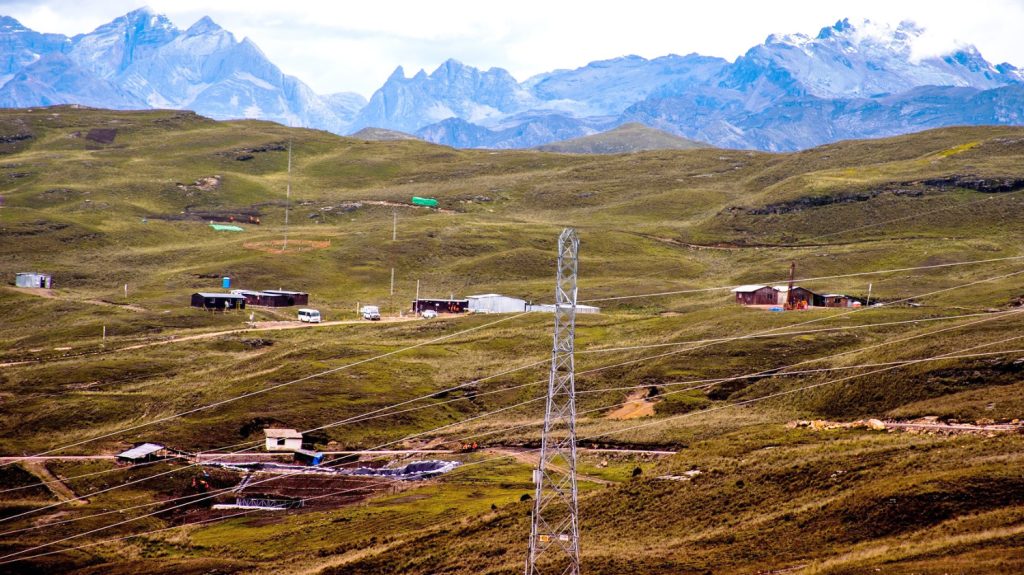
South America produces about 30% of the world’s silver supply. From this percentage, Peru holds 22%, which arguably makes it home to one of the world’s richest silver deposits, according to the Visual Capitalist.
GlobalData reveals that Peru hosts 126 out of 757 silver mines globally. This accounts for 16.6% of worldwide silver operations, according to the industry intelligence portal.
GlobalData, which tracks more than 33,000 mines and projects across more than 150 countries and 100 commodities, ranks the following five mines as the South American nation’s largest in its latest mines and projects database.
Glencore’s (LSE:GLEN) Antamina mine in the Andes Mountains is the largest, producing 12.63 million ounces of silver per year. Antamina is expected to operate until 2036.
Aluminum of China’s Toromocho Project in the Junín region’s Morococha district is in second place, producing an estimated 7.06 million ounces of silver. Production is hoped to operate until 2056.
Hochschild Mining’s (LSE:HOC) Inmaculada mine in southern Peru is the third largest, producing an estimated 5.35 million ounces of silver. The mine is hoped to operate until 2036.
Freeport-McMoRan’s (NYSE:FCX) Cerro Verde mine in southwestern Peru comes in fourth, producing 4.42 million ounces of silver. Cerro Verde will operate until 2051.
Votorantim’s El Porvenir mine in the central Andes is fifth, producing 4.4 million ounces of silver. It will operate until 2028.
Silver price jumps by 236%
The precious metal might often be described as a by-product of lead and zinc concentrate.
However, its 236% spot price increase between mid-May 2025 and late January 2026 to $170.98 an ounce has made it a hot commodity, according to ABC Bullion.
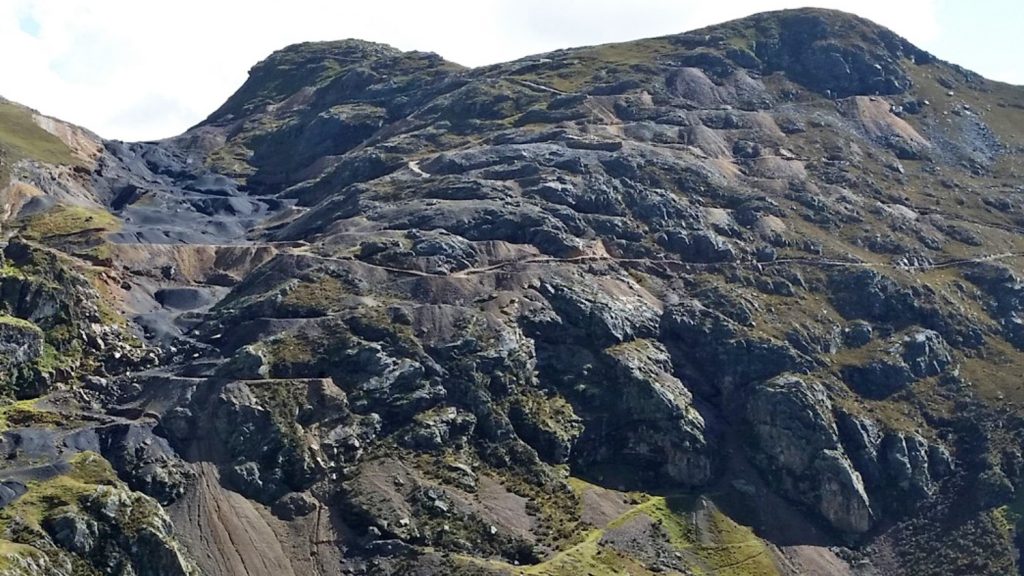
Junior mineral exploration company Tinka Resources (TSX-V:TK), which operates the Ayawilca Project in Central Peru, sees a clear link between silver and gold price movements. There is potential for further price rises in the coming years.
“Within six months, it was $35 an ounce, then it jumped all the way up to $120, and now it has more or less settled to the $75 range. It has mimicked gold largely and it was like gold moved earlier and then silver followed,” President, CEO, and Director Graham Carman tells Mining.com.au.
“Gold is going to be much, much higher in two or three years than it is today ($6,276 an ounce) [and] it is going to be in the order of $7,000, $8,000, and $9,000 an ounce.”
The 43.4% spot price jump could be due to both growing concern about the worsening Iran-Israel conflict and dwindling international confidence in the US dollar and American economy as a whole.
Carman has discovered that central banks in mainland China and other countries are gradually swapping their investments in US currency with gold.
“Central banks do not buy silver and have a big vault for silver, they do that with gold,” he says.
“The retail guys do that for silver and that has had a big impact on the silver price in the last six to 12 months.”
He recalled seeing “huge queues” of investors standing outside of bullion stores at Martin Place in downtown Sydney every day.
“I saw hundreds of people lined up to buy mostly silver from that bullion store,” he says.
“Then, of course, there is the value of silver and its industrial uses, so silver does get consumed unlike gold, which is just stored in a vault somewhere… [and] I am sure [this is] part of the reason why silver prices have run so high.”

$10 million invested
Fellow explorer and developer Unico Silver (ASX:USL) is responding to recent silver spot price rises by investing $10 million in exploration and evaluation work at its Joaquin and Cerro Leon silver and gold projects within Argentina’s Santa Cruz province.
“Exploration costs relate to drill programs at Joaquin, including infill and extensional drilling for the mineral resource and feasibility workstreams,” Unico says in its latest quarterly report.
The company paid $247,000 in staff expenses, and $392,000 in administrative and corporate costs in the three months ending 31 March 2026.
The company also exercised options, resulting in $6.28 million in cash flow.

Unico Managing Director Todd Williams says these projects have returned “strong and consistent” drilling results.
“Mineralisation [is] now extending beyond the March 2026 mineral resource across multiple prospects,” he says.
This hopes to strengthen Unico’s strategy to build a “scalable, high-margin oxide inventory”.
The company will focus on converting resources to “higher confidence categories”, as well as advancing material into the development pipeline.
“At [the] Breccia Puntudo [prospect], the latest results represent the highest grades recorded to date and reinforce the potential of this structure as a key source of high-grade feed for the upcoming Prefeasibility Study,” Williams says.
“At [the] La Negra SE and La Morocha SE [discoveries], step-out and extensional drilling continue to deliver wide zones of oxide mineralisation, confirming strong continuity and supporting further resource growth.”
Potentially ‘higher grade’ zones
Solis Minerals (ASX:SLM) is making progress with drilling at its Ilo Este Silver, Gold, and Molybdenum Project in Peru.
The emerging explorer has been “very excited” about geology, alteration, and visual results after discovering mineralisation across “long intercepts” of about 350m at the project.
“Across multiple drill holes, we have encountered broad intervals of anomalous mineralisation, including zones with strong [silver], copper, and gold grades that support our interpretation of a large, multi-phase porphyry environment,” CEO Mitch Thomas says.
“These datasets will now feed directly into our 3D geological models and targeting refinements.”
Solis believes there is strong potential for identifying “higher grade zones” of silver, copper, gold, and molybdenum.
The company will focus next on exploring its Cinto and Cucho projects.
“Both projects exhibit strong potential for a large-scale discovery… [and] the company remains well funded following a recent capital raising, and [is] determined to deliver,” Thomas says.
Silver supply lasts ‘decades’
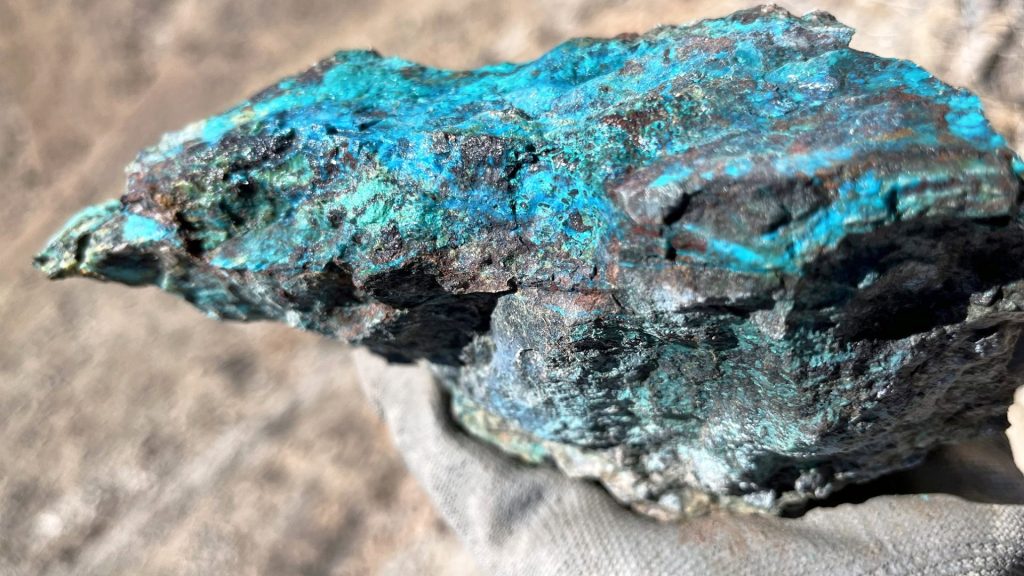
For Tinka, Carman believes that silver will be supplied for decades, and possibly centuries, to come. However, this will depend on whether the precious metal remains affordable for industrial purposes.
“I do not think there is necessarily a shortage of silver out there, but silver is getting consumed,” he says.
“If silver gets too expensive, they might find something else to use for solar panels in its place, so there will be a limit for silver use in industry if it gets too expensive.”
Upward price movements have prompted Tinka to revisit its Ayawilca Zinc-Silver-Tin Project and have a “very, very serious look” at creating a starter pit at the site.
“Higher silver prices certainly make a big difference, and it will make a big difference to the economics,” Carman says.
“We are looking at smaller options now just to see if we can move the permitting process faster and certainly the capital expenditure would be lower… [at between] $300 million and $340 million.”
Tinka now plans to start development in between three and four years’ time.
“Our new directors are pushing us hard to look at a smaller startup business model to get there quicker and that makes some sense,” he says.
“The economic benefit might not be quite so high, but the investment return will certainly be higher because the initial capex will be lower.”
Write to Richard Szabo at Mining.com.au
Images: Willian Justen de Vasconcellos via Unsplash, Tinka Resources, Unico Silver, and Solis Minerals


