

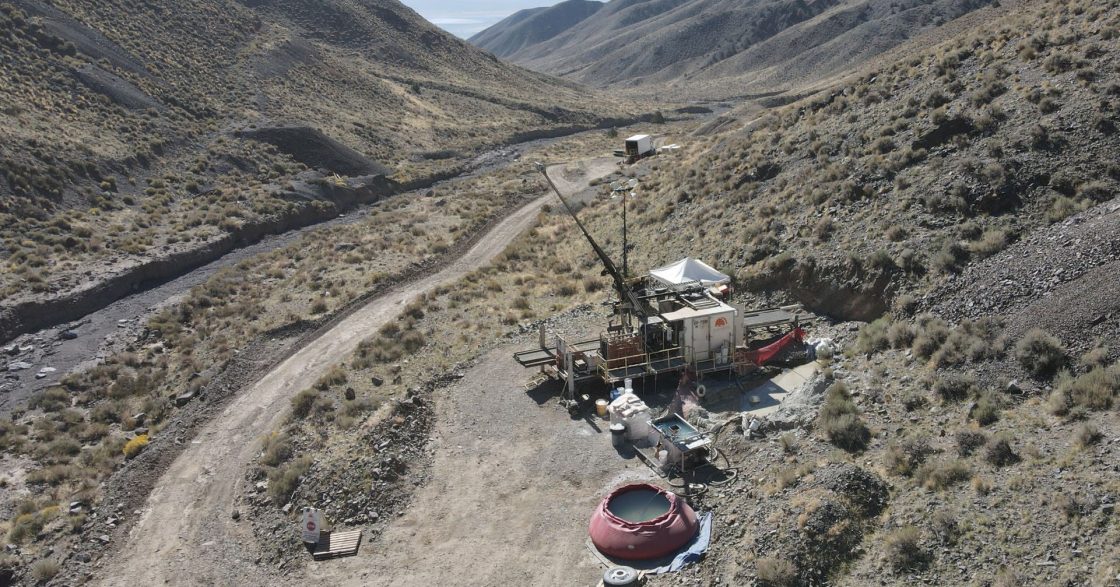
Sierra Nevada Gold (ASX:SNX) is hoping to finalise a joint venture over the porphyry target within its Blackhawk Project in the “next couple of months” to free it up to look more closely at the silver, and polymetallic, potential of the associated epithermal target.
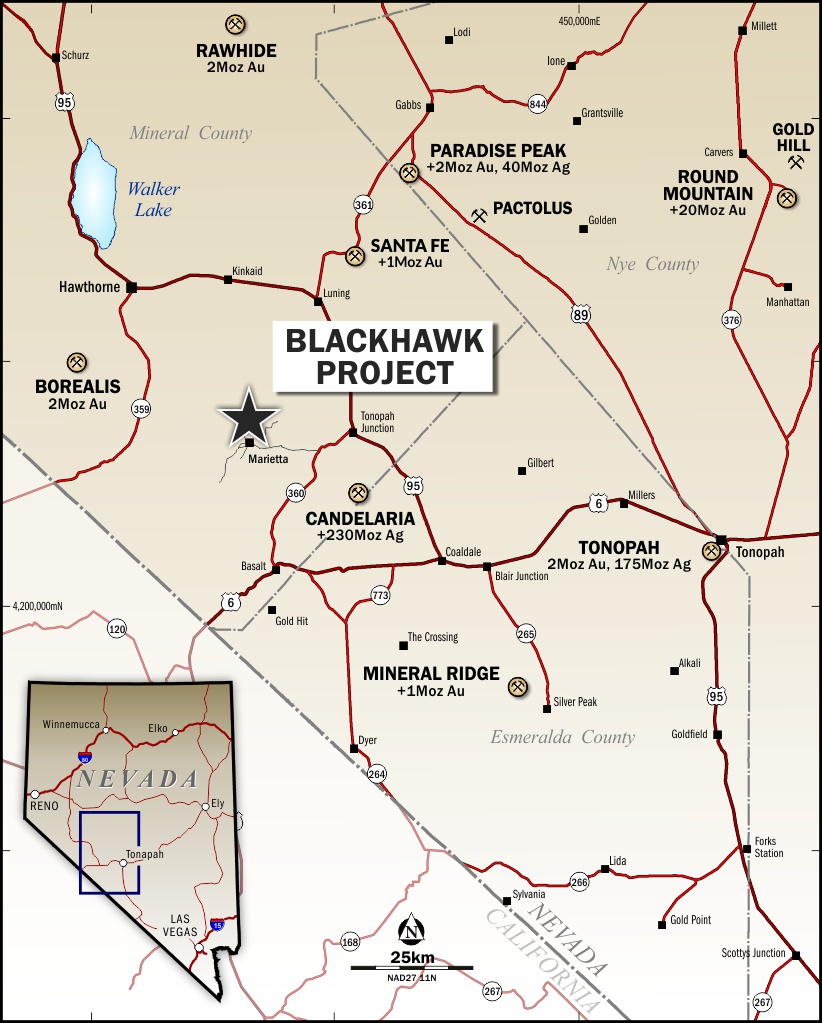
The Blackhawk Project is located in the Walker Lane Trend in Nevada and sits 25km along strike from Silver One Resources’ (TSX-V:SVE) Candelaria deposit, which – under various owners – produced nearly 70 million ounces of silver between the late 1880s and 1999 and has a historic resource of nearly 80 million ounces.
Executive Chairman Peter Moore tells Mining.com.au large porphyry systems often have associated “high-grade” epithermal systems.
“This is a classic scenario of a high-grade epithermal system to the north, which is related to the big porphyry system,” he says.
“The porphyry is clearly too big for a small company like us. It’s 40km across at the moment and it’s open.”
Moore says there is significant historic copper production in the region, including the Yerington porphyry deposits that have over 4 million tonnes in past production and reserves, which is attracting the majors to the Blackhawk porphyry project.
“We had about half a dozen major companies sign [confidentiality agreements] and evaluate data, a couple have done field visits and we’re in discussions with two companies at the moment about a joint venture on that project,” he says.
“So we’re hoping that we can finalise a joint venture on that in the next couple of months and that would then mean it’s not off the books but we’ll have the exploration funded on that.
“Because the next stage of that project is probably 15,000m of drilling and it’s expensive.”
Sierra Nevada’s focus going forward will be on the Blackhawk epithermal project, specifically the silver potential.
At least eight historic mining areas were operated in the Blackhawk epithermal vein system between the 1860s and the early 1900s, with the main mining areas being around the Endowment, Morning Star and Blackhawk mines.
The epithermal vein system covers an area of around 5km2 and contains up to 22-line kilometres of mostly untested veins.
Sierra Nevada realised the silver potential of the project back in 2017 when drilling returned a high-grade intercept of 0.5m @ 1,270 grams per tonne (g/t) silver as part of a broader intercept of 12m @ 219g/t silver, 0.36g/t gold, 3.05% lead, and 8.54% zinc from 250-262m
But Moore tells this news service that there was no market for silver at the time.
In 2017 the price traded between US$16 ($24) and US$18 ($27) an ounce – well below the level required to incentivise new production.
While Sierra Nevada also recognised the gold potential of the Blackhawk epithermal project, its Warrior Gold Project started to emerge as a more appealing and cost effective target to pursue.
“What happened in the interim is that the Warrior Project, which we drilled in 2022, emerged as a really strong gold project. That has got silver as well,” Moore says.
“It was more accessible, it was a bit cheaper for us to drill and to explore.”
Sierra Nevada drilled a “wildcat” hole to the north of the old mining areas and hit 143m of highly anomalous gold and silver about 2km from the old mining centre.
“With mapping and geology we realised that had significant potential,” Moore says.
“We’ve now got a large-scale, high-grade mineral system there that is over 3km of strike length and still open.”
But the company had always planned to revisit the potential at Blackhawk.
“Certainly Blackhawk was never far from our thoughts in terms of being followed up,” Moore says. “We have been wanting to follow this up for a couple of years.”
With Sierra Nevada now having received firm commitments for a $2.6 million placement, the company will use the cash injection to advance exploration at the Blackhawk Silver Epithermal Project.
The company is aiming to refine its drill targets via additional induced polarisation geophysics and an underground advanced light detection and ranging (LiDAR) land survey on the Endowment Mine, which is the site of the high-grade discovery hole.
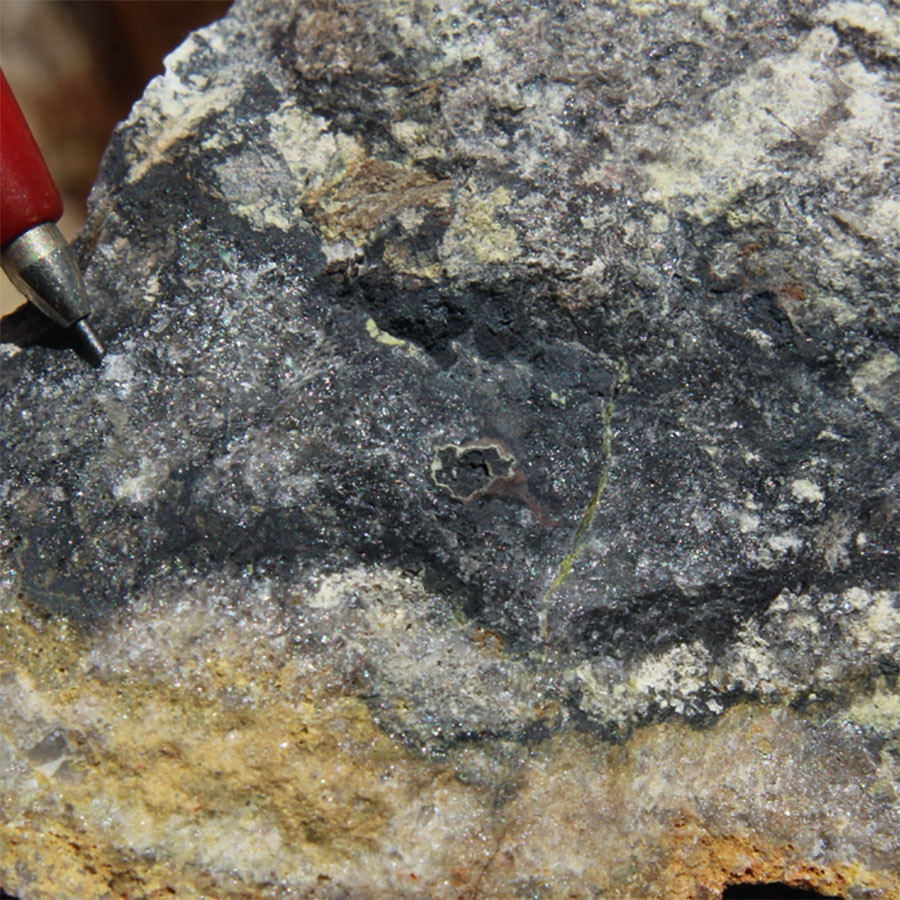
Moore says the historic Endowment Mine reportedly produced around 70,000 ounces of gold equivalent, but is a silver dominant system.
“We have rock chip samples across the vein system, which was identified with geophysics, in the 1% and 2% silver range, so it’s very high grade,” he says.
“We’ve got 22km of mapped vein system that is yet to be tested. The only places they’ve tested really are around the old mines where the veins outcrop, but we’ve actually mapped much more extensively.
“So it’s a big, high-grade system. It’s a vein system which requires a bit of drilling to do it.”
Sierra Nevada also believes there is an underground resource that was never exploited, which will be investigated via the underground LiDAR survey.
Once the company has refined its targets, it plans to drill test them later this year.
Write to Angela East at Mining.com.au
Images: Sierra Nevada Gold