

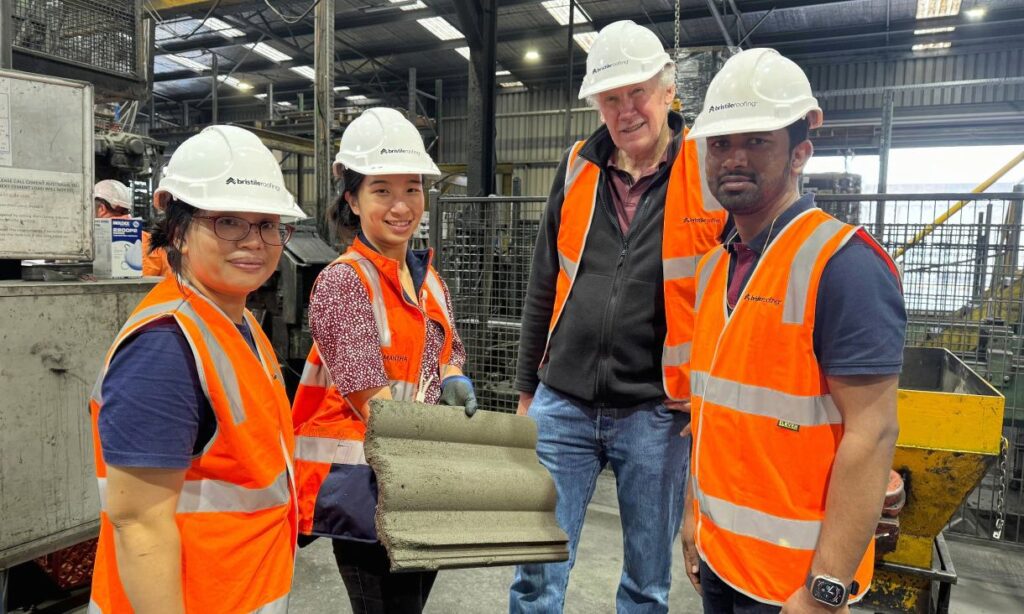
RMIT University and Bristile Roofing have developed sustainable roof tiles using coal ash and recycled glass, cutting CO2 emissions by 13% compared to traditional concrete files.
This innovation addresses the issue of industrial waste management by re-purposing materials that would otherwise contribute to landfill, while also offering consumers a durable, fire-resistant roofing option that meets Australian standards.
In Australia, 12 million tonnes of coal ash are produced annually from electricity generation, with more than 400 million tonnes of coal ash stored in large settling ponds. Meanwhile, over 1.3 million tonnes of glass waste are generated each year, with more than half still ending up in landfills.
RMIT project lead Chamila Gunasekara says this benefit stems from using harvested pond ash and unwashed recycled glass sand, which avoid energy-intensive processing and effectively replace virgin materials.
“By replacing 10% of cement with harvested pond ash and 10% of river sand with unwashed glass waste – a total of 20% virgin material replacement – we not only reduce waste going to landfill but also produce an improved concrete product with enhanced fire resistance, a valuable feature for roofing in Australia’s climate,” Gunasekara says.
Principal research fellow Yulin Patrisia says harvested waste pond ash remains an attractive material due to its abundance and contribution to long-term engineering performance.
“Despite its lower early reactivity, it helps enhance concrete performance over time,” Patrisia says.
The ongoing research is being supported by the ARC Industrial Transformation Research Hub for the Transformation of Reclaimed Waste Resources into Engineered Materials and Solutions for a Circular Economy (TREMS).
Write to Aaliyah Rogan at Mining.com.au
Images: RMIT