



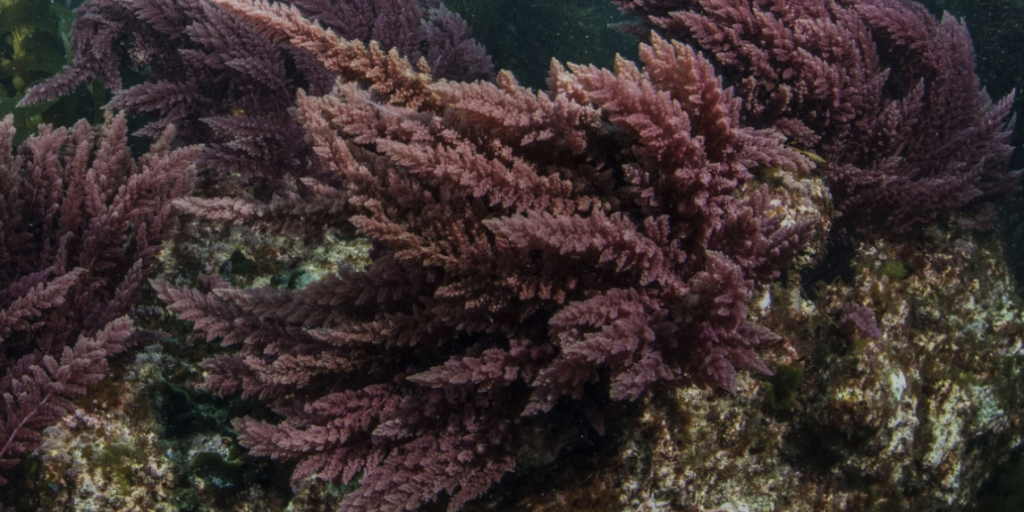
Privately held marine science company SeaStock has entered into an agreement with gold producer Regis Resources (ASX:RRL) to undertake the final Feasibility Study exploring the potential of cultivating Asparagopsis seaweed in mine pit water.
Fremantle, Western Australia-based SeaStock, which specialises in onshore seaweed cultivation and compound extraction, over a 12-month staged study will assess the viability of repurposing underutilised mining infrastructure to establish a large-scale, land-based Asparagopsis production facility.
The agreement is the culmination of more than six months of initial research work, where SeaStock has tested the viability of cultivating Asparagopsis using Regis Resources mine pit water at its Fremantle pilot facility.
SeaStock is pioneering the repurposing of underutilised infrastructure to create a low-cost production system for Asparagopsis, supporting its mission to provide natural methane-reducing feed additives for the livestock industry.
The company is also exploring additional locations that leverage undervalued saltwater deposits to scale its operations in Australia and other global locations.
Regis Resources CEO Jim Beyer says the company is keen to be a partner in this innovative work.
“This project forms a part of our plan to explore innovative solutions to optimise the performance of our assets to create sustainable value for our stakeholders,” the CEO says.
“For a relatively capital-light investment, this initiative has the potential to transform underutilised infrastructure into a commercially viable project that supports Australian Carbon Credit Unit generation while also helping to offset our carbon emissions.
“Additionally, if successful, this project could represent a source of longer-term employment for our local communities, which would deliver an enduring and positive legacy that extends beyond the current life of the mine. We are pleased to be partnering with SeaStock, a local WA-based company, to drive forward this exciting opportunity.”
Regis’s project will progress through three key stages to deliver a final investment decision – optimisation of mine pit water conditions (stage one); biological and engineering design (stage two); and business modelling and commercial development (stage three).
SeaStock Managing Director Tom Puddy says the partnership demonstrates how adjacent industries can work together to drive sustainable innovation.
“With Regis’s ongoing support, SeaStock has the opportunity to establish the world’s largest Asparagopsis production facility, meeting the demand for over 500,000 cattle per day and reducing more than 1,300,000 tonnes of CO₂e annually,” Puddy says.
“Importantly, by repurposing existing mine infrastructure, we can avoid the need for large-scale coastal developments, making production more cost-effective and scalable. We appreciate Regis’s commitment to sustainability and their willingness to back a WA-based innovation company like SeaStock.”
SeaStock’s dual extraction IP enables multiple revenue streams, producing both methane-reducing feed additives and natural pigments. The company says this innovation helps lower costs, making sustainable solutions more accessible and driving widespread adoption across the livestock, food and cosmetics industries.
The company continues to evaluate further sites in Western Australia to scale production and meet growing global demand.
Write to Adam Orlando at Mining.com.au
Images: SeaStock


