

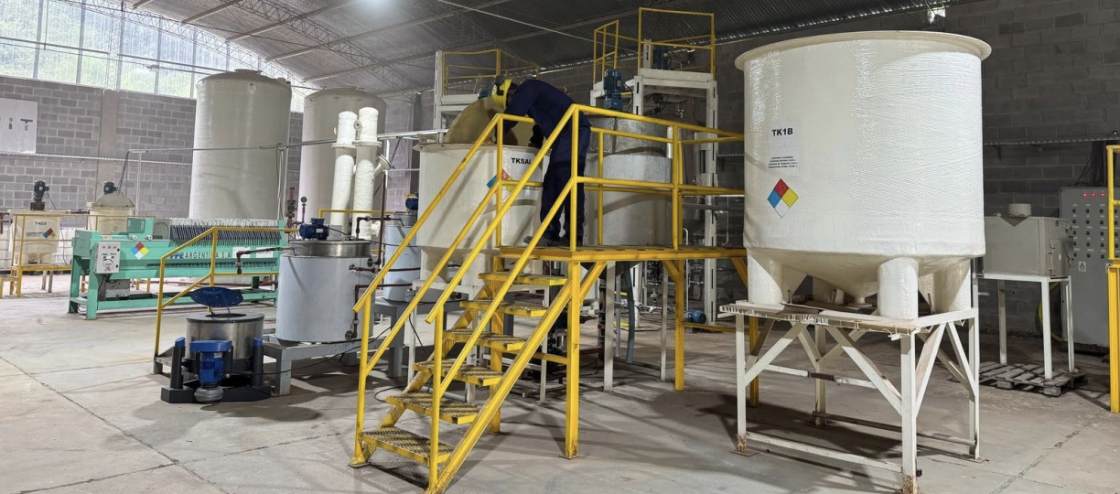
Pursuit Minerals (ASX:PUR) has begun lithium carbonate production, using synthetic evaporated brine, at the pilot plant within the Rio Grande Sur Lithium Project in Salta, Argentina.
The first phase of production will focus on refining processing efficiencies and optimising lithium recovery.
The initial output will include technical-grade lithium carbonate, with further advancements targeted toward achieving battery-grade quality in subsequent phases.
Pursuit says now that production has begun, it is positioned to further develop its strategy, which includes preparing for the relocation of the 250 tonnes per year plant and establishing a pathway for larger scale commercial lithium carbonate production.
The company also intends to engage with potential offtake partners, with several parties requesting product samples. Additionally, Pursuit will advance Feasibility Studies for a scalable production strategy that aligns with global lithium demand.

This news comes after the company completed commissioning at its 250 tonnes per year lithium carbonate pilot plant, which included hydrostatic circuit testing, ensuring seamless operational readiness.
With all systems now validated, Pursuit says the plant is processing synthetic brine that is chemically identical to the composition of naturally evaporated brines from the Rio Grande Salar.
CEO Aaron Revelle says completing commissioning and initiating production represents a step forward in de-risking the processing methodology and proving the commercial viability of the company’s scalable production strategy.
“With global lithium demand continuing to show signs of recovery over the coming years, we are now firmly positioned to transition toward large-scale, low-cost lithium production,” Revelle says.
Pursuit Minerals is a lithium explorer and developer focused on delivering lithium assets to meet surging global demand.
As Mining.com.au previously reported, lithium demand is expected to increase in the near term with a compound annual growth rate of 13% in global lithium carbonate equivalent demand by 2030 — leading to an anticipated supply deficit.
Trading Economics says the outlook that battery inventories for manufacturers will remain elevated limit the urgency for EV manufacturers to start new supply contracts. This is due to lithium miners refraining from closing operations to retain market share and business relationships with governments and battery producers.
Lithium carbonate prices dropped toward about $16,329 this month, according to Trading Economics, while electric vehicle sales in China rose by 17% annually in January 2025.
Write to Aaliyah Rogan at Mining.com.au
Images: Pursuit Minerals