


Pivotal Metals (ASX:PVT) Managing Director Ivan Fairhall says step-out assays and downhole electromagnetic survey (DHEM) results indicate exciting depth continuity at its Horden Lake Project in Québec, Canada.
Speaking to Mining.com.au, Fairhall breaks down the importance of the results from the recently completed 2024 diamond drill program at the 100% owned project.
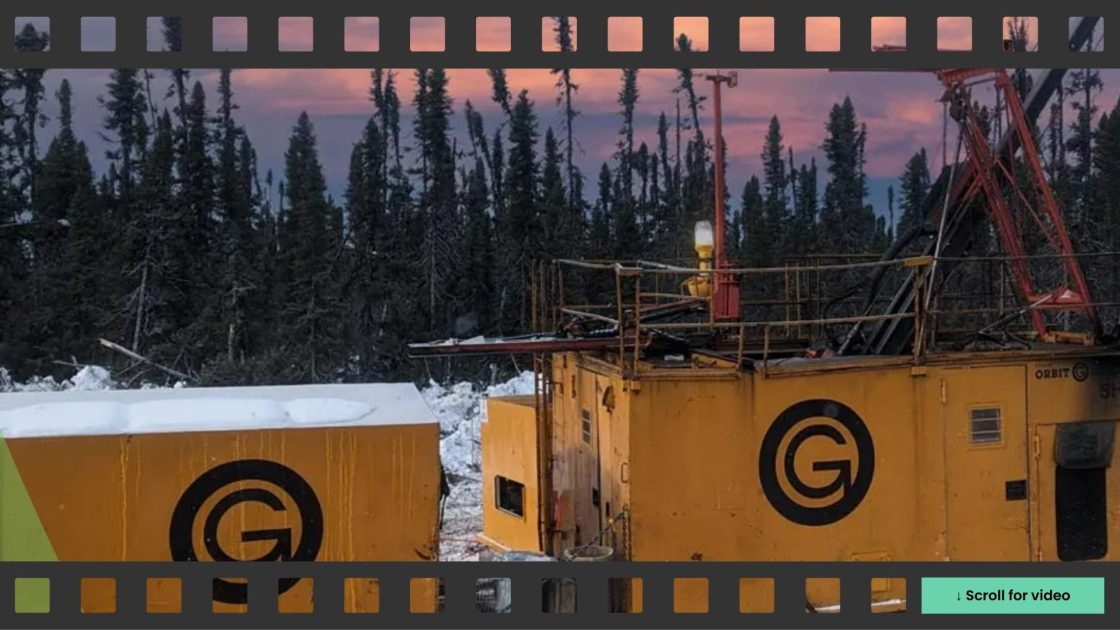
Pivotal has completed a 7,097m and 34-hole diamond drilling campaign. The objectives of the program were to infill missing by-product multi-element assay information, target resource expansion potential (which remains open at depth across its full extent) and collect a distribution of metallurgical sample for a complete test work program.
The MD says the biggest take away from these results is that Pivotal has been drilling in the southern part of the orebody which has only been drilled down to about 220m vertical. In the central part, drilling has returned “good” grades down to about 550m, which kept hitting mineralisation.
“It’s still open. So now we’re seeing these results in the south, replicate what we’re seeing in the north and it just shows the potential that the south, it can be just as good as the north,” Fairhall says.
“The point is that no one ever looked. I think that that is a really important point to take away, that these areas are open. This is step out drilling, and there’s plenty of potential for this to continue until it doesn’t – and we keep hitting holes like this that show the deposit itself is wide open.”
Downhole EM surveys have also been completed to dimension future exploration potential and targeting. The results of drilling in HN-24-98 together with HN-24-93 and HN-24-94, and DHEM across HN24-98 and HN-24- 96 provide strong evidence of substantial resource growth potential at depth.
This southern portion of the deposit has only a couple of holes below 200m vertical depth. In the central portion, drilling has defined continuous zone of resources to approximately 550m.
‘deposit itself is wide open’
“It’s a great deposit and you don’t have many advanced projects of scale on the ASX in the copper space, so really already a very good deposit. And these results that we just put out (yesterday), they’re really quite significant in terms of the upside potential of the project. What we’ve seen, 32 metres at 1.5%, a 1.2 % copper equivalent, 14 metres at 1.8 % copper equivalent.” Fairhall tells this news service.
“We’ve got this zone in a step out hole that we’ve done, blowing out wider than up-dip and clearly showing significant down plunge extension and off scale, given the thickness of this mineralisation relative to other areas on the project.
“We’re able to take this very, very interesting and exciting drill result. But on top of that, we’re also releasing downhole EM results. So, a couple of holes next to each other have had downhole EM on them and in particular, the hole in ’98 showing a very large plate.”
Hole HN-24-98 defined a wide and well mineralised zone to vertical depths of 215m or greater that demonstrates a significant thickening of the zone, together with good continuity of mineralisation at depth and down-plunge.
The drillhole intersected 32.1m grading 1.20% CuEq (0.57% Cu, 0.19% Ni) from 264.25. Included in this intersection is a 20.93m intersection grading 1.57% CuEq (0.72% Cu, 0.26% Ni) from 275.4m, and within that a higher grade 14.0m intersection grading 1.78% CuEq (0.86% Cu, 0.28% Ni) from 275.9m.
Fairhall notes downhole EM 4 model scenarios provided for a single strong in-hole anomaly; a dominant high conductance (15,000 to 27,000+ siemens) in-hole source 280m downhole, centred below and somewhat northeast of the hole.
The modelled plate best fitting the data was with a larger depth of 225m and a plate extent of 300m to 400m. This plate supports the geological interpretation that this wide zone of strongly conductive (chalcopyrite, pentlandite, pyrrhotite) mineralisation extends either direction along strike, and equally up-dip and down-plunge, reinforcing the excellent potential for resource growth in this area.
“What that’s showing is that we’ve got a very large plate that the conductor is skewed below the hole. It suggests the best is yet to come,” Fairhall adds.
“Above it, the plate extends 150, 200 metres into mineralisation, 270 metres below the plate and we see from drilling above, we have continuous mineralisation. We’ve seen that from drilling up – and that’s why we’re so excited to see such a big plate below the hole – because it shows that that mineralisation is very wide zone of mineralisation.
“Mineralisation certainly has plenty of potential to extend down-plunge and in width as well.”
Horden Lake is a copper-dominant Cu-Ni-Au-PGM-Co Project located 131km north-northwest of Matagami, Canada. The project hosts an indicated and inferred mineral resource estimate of 28mt at 1.5% CuEq, as a result of over 52,464m of drilling already completed on the property.
Write to Adam Orlando at Mining.com.au
Images: Pivotal


