



This article is a sponsored feature from Mining.com.au partner Olympio Metals Ltd. It is not financial advice. Talk to a registered financial expert before making investment decisions.
Sean Delaney, Managing Director of junior gold explorer Olympio Metals (ASX:OLY), likens the company’s substantial patch of ground in the Canadian province of Québec to the prolific goldfields in Western Australia.
“It is a Kalgoorlie to Leonora to Laverton type region with incredible mines that keep on delivering,” he tells Mining.com.au.
Delaney is talking about the Cadillac-Lake Larder Fault Zone, also known as the Cadillac Break, located in a region dominated by multi-million ounce gold deposits.
These include Kerr Addison (11 million ounces), Bousquet (15 million ounces), Val d’Or (15 million ounces) and Malartic (10.7 million ounces).
Kerr Addison, which is owned by private company Gold Candle, was once North America’s largest producing mine having historically delivered 11 million ounces at an average grade of 9 grams per tonne.
Gold Candle has since defined a further 3.3 million ounces of indicated resources and 2.36 million ounces of inferred resources.
In the heart of Canada’s gold belt
The mine sits within Canada’s primary source of gold production – the Abitibi Greenstone Belt, which extends from Quèbec into neighbouring Ontario and has produced over 200 million ounces of gold since the early 1900s.
Olympio’s Dufay Project is located within the Southern Abitibi Province, which is renowned for large gold and copper deposits. The company has the option to earn up to an 80% stake in the project.
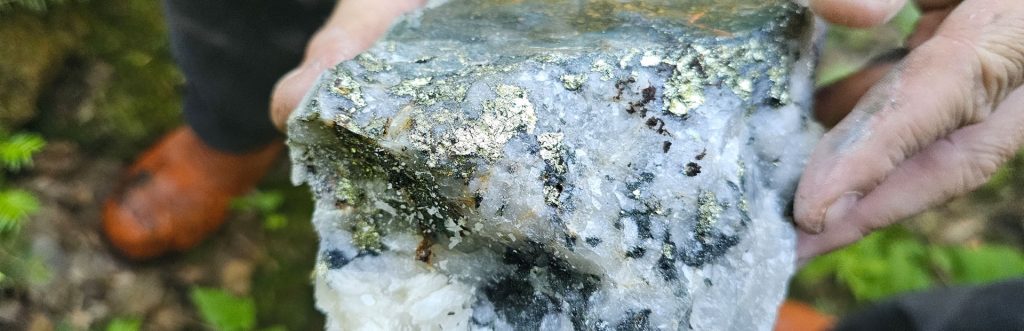
The recently acquired Bousquet Gold Project also sits on the Cadillac Break, 15km west of the Bousquet Mining Camp, which includes the working 15-million-ounce La Ronde and 2.4-million-ounce Westwood mines.
“For Olympio the stretch of the Cadillac Break that runs from the town of Val d’Or to the Ontario border is an unbelievably well-endowed part of the world with over 110 million gold ounces discovered,” Delaney explains.
“It is gold elephant country really when you look at the size of the deposits in the region relative to the amount of exploration along the Cadillac Break and with great infrastructure and access to services.
“The copper and gold mines along the structure speak for themselves in terms of the significance of the Cadillac Break.”
Québec is also consistently in the top 10 jurisdictions for investment attractiveness in the Fraser Institute Survey of Mining Companies.
Like most explorers, Delaney believes it is important to be in a stable jurisdiction that is mining friendly.
“Exploration is difficult as it is, so it is one less factor to be concerned with,” he says.
Unlike the Western Australian goldfields, which have been well picked over by modern day explorers and the old timers, the Cadillac Break still offers plenty of untapped opportunities to make the next big discovery.
Olympio considers the Dufay and Bousquet projects to be significantly underexplored when compared to projects in the goldfields in Western Australia.
“If I am to paraphrase our geology brains Dave Bebbington, exploration targets on major mineralised structures in Western Australia, particularly areas with no cover, are typically very mature ground,” Delaney explains.
“The reason being that most projects have been looked at several times over and also drilled with rotary air blast and reverse circulation and so on, which limits the scope for developing and testing new geological concepts.
“This area along the Cadillac Break has not had as much exploration done over the years so there are opportunities to test targets that stack up geologically.”
Drilling into the data
An induced polarisation (IP) survey undertaken at the Dufay Project in 2011 defined a high-priority resistivity and chargeability anomaly that extends for more than 1.2km at the Dasserat prospect.
A subsequent ground electromagnetic (EM) survey completed by Olympio earlier this year has confirmed multiple EM anomalies coincident with the IP anomaly.
Delaney says the Dasserat target is prospective for porphyry-style gold-copper associated with disseminated sulphide mineralisation, adjacent to a series of mapped syenite porphyry intrusives highly analogous to Fokus Mining’s 1.4-million-ounce gold equivalent Galloway Project just 4km to the north.
Syenite intrusions, including porphyry types, are often linked to gold and copper mineralisation, especially in Archean greenstone belts.
For example, the Galloway Project has returned hits of porphyry gold-copper mineralisation including 322m @ 1.03g/t gold equivalent and 312m @ 1.18g/t gold equivalent.
“There is no surface expression of the anomaly due to it being a topographic low so we are relying on the combined geophysical surveys to generate the targets,” Delaney notes.
Olympio has also identified two vein-hosted copper-gold prospects – Chevrier and Papitose.
Chevrier is a high-grade quartz sulphide lode that was mined in the 1930s and returned rock chip grades of up to 13.3% copper. The prospect has never been drilled.
Papitose is a quartz-hosted sulphide copper-gold target that has yielded rock chip grades of up to 6.88% copper.
A 1,600m diamond drilling program began at the Dasserat and Chevrier targets in mid-March. Three holes for 400m are being drilled into the Chevrier target, while seven holes for 1,200m are being drilled into Dasserat.
Meanwhile, the Bousquet Project includes several advanced gold prospects and numerous structural and geophysical targets that remain untested by drilling or modern exploration.
Historic hits with room to grow
Nearly 60% of drill holes on the project are pre-1947, with all prospects remaining under-explored.
Olympio identified the Paquin prospect as a high-priority target following a review of historical drilling that includes an intercept of 9m @ 16.96g/t gold from 178.5m, including 1m @ 129.25g/t.
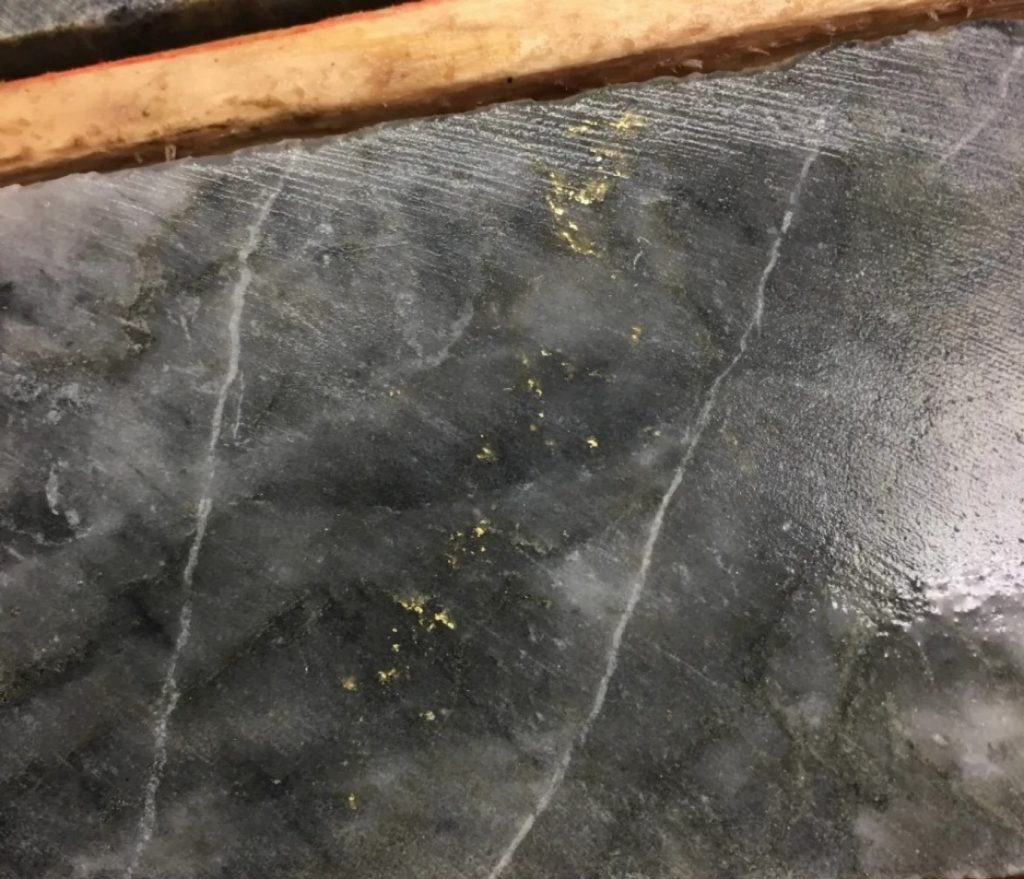
The prospect remains open along strike to the west, having witnessed very little historical drilling and demonstrates similarities to the nearby 1-million-ounce O’Brien Project.
Another key prospect is Decoeur, which has returned significant widths at shallow depths including 21.6m @ 1.14g/t gold.
Olympio describes the Bousquet Project as having “poorly tested gold prospects with significant grade”.
While drilling is already underway at Dufay, Olympio has submitted an application seeking approval to drill at the Bousquet Project, with the program slated to begin in the third quarter of this year.
“We are planning to drill in these new projects and give ourselves a chance of discovery,” Delaney says.
Olympio also has a project in South Australia prospective for carbonatite-hosted rare earth element and niobium mineralisation as well as a gold and rare earths project in Western Australia.
The company is also on the hunt for new opportunities, but has not identified anything “concrete”.
Olympio attended the Prospectors & Developers Association of Canada (PDAC) convention in February to assess the potential for expanding its portfolio.
Olympio is based in West Perth and listed on the Australian Securities Exchange, but sees opportunities in exploration in Québec because of the tightness in the capital markets in Canada and the difficulty in raising funds.
“I think gold and copper are the commodities to be in right now,” Delaney notes.
“The Canadian junior space still seems to be capital constrained so that leads to opportunities for good quality projects that are underexplored.
“We are always looking for good opportunities at the right price.”
Write to Angela East at Mining.com.au
Images: Olympio Metals


