



The New South Wales Minerals Council’s latest Expenditure Survey reveals almost 35,000 full-time equivalent jobs were supported by 31 participating mining companies in the past financial year.
This latest figure represents a 10% increase, or nearly 3,400 more workers, in the previous corresponding period. It is also the highest number of mining jobs reported in the more than decade-long history of the survey.
The survey found participating companies injected $22 billion into the New South Wales economy over the same period. This represents a slight decrease from the previous year’s record figure of $23.6 billion, but is nearly double from the FY2014-15 figure of $11 billion.
NSW Minerals Council says the $22 billion in direct spending includes over $3.9 billion spent on wages and salaries, $14.4 billion for goods and services purchased from more than 7,000 New South Wales businesses, and $3.7 billion in royalties and other taxes paid to the state government.
Further, an economic analysis of the survey results found the regional impact of mining spending of the 31 participating mining companies was equivalent to 25% of the gross regional product (GRP) of the Hunter region and 17% of the Central West region.
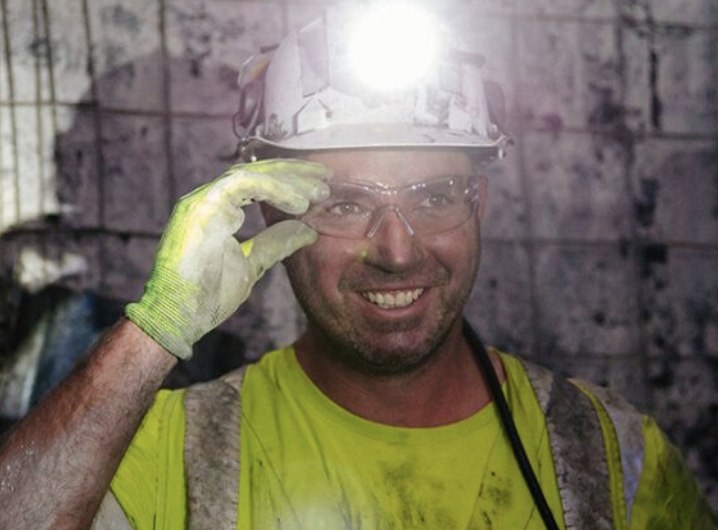
NSW Minerals Council CEO Stephen Galilee says the mining sector continues to make vital contributions to New South Wales.
“These strong GRP results from across the state highlight just how much of regional New South Wales continues to depend on mining for jobs, investment, and economic growth,” Galilee says.
Each year the NSW Minerals Council engages an independent economist to survey mining companies operating in the state to quantify their economic contributions to New South Wales through jobs, taxes, and money spent.
An economic analysis of the survey results found the regional impact of mining spending of the 31 participating mining companies was equivalent to 25% of the gross regional product (GRP) of the Hunter region; 17% of the GRP of the Central West region; 16% of the GRP of the Far West of NSW; and 15% of the GRP of the North West region.
The Expenditure Survey was first conducted for FY2011-12 and has been completed annually ever since.
The NSW Minerals Council is an industry association representing the state’s minerals industry. The council works closely with governments, industry groups, as well as business and community leaders.
New South Wales has world-class deposits of metallic minerals such as gold, copper, silver, nickel, lead, zinc, cobalt and lithium, and industrial minerals like mineral sands, clays and limestone.
Many of the minerals mined in the state are essential inputs for modern energy, communications and transport equipment and the infrastructure that is fundamental to modern lifestyles.
New South Wales is Australia’s second-largest gold producing state, with significant production coming from mining operations near Orange, Parkes and West Wyalong in the state’s Central West, including one of Australia’s largest gold mines – Newcrest’s (ASX:NCM) Cadia Valley Operations.
Write to Aaliyah Rogan at Mining.com.au
Images: NSW Minerals Council


