“Lots of fire.” That’s how Commodity Discovery Fund Researcher Samson Li describes the Chinese New Year for 2026.
Spanning from 17 February through until 3 March 2026, the Chinese New Year is transitioning from the Year of the Snake into the Year of the Fire Horse.
New beginnings is a term often popping up in relation to the Year of the Fire Horse, bringing many rapid changes, fresh opportunities, and overall, a fresh start.
Li has been with Commodity Discovery Fund since 2021, closely following the uranium and battery minerals markets for fund managers, as well as anything related to China and other opportunities that provide discovery potential.
“It represents a new start for everyone,” Li tells Mining.com.au.
“To some people it is a good opportunity to work overseas in the Year of Horse, so maybe, we will see more overseas acquisition and expansion from China in 2026.”
The horse beyond its stable
In 2025, China began its recovery to dealmaking activity with a 22% increase in deal volumes, according to PwC’s 2026 Outlook for Global M&A Industry Trends.
Though China appears to be making a comeback in the dealmaking scene, the 2025 statistics are still well below the country’s peak in 2021.
“On commodities as a whole, the trend should continue to be upwards, as the US will continue to cut rates this year,” Li explains.
“While currently the market is expecting the Fed (Federal Reserve System) will cut rates two to three times this year, they have not factored in that Trump has advocated a few times that he wants to cut the rate to 1%.”
As reported by Mining.com.au, the Federal Reserve Bank kept rates on hold at the end of July 2025, despite US President Donald Trump’s urging to cut the official benchmark.
“While currently the momentum has been strong and more and more people have become bullish on the mining sector, one thing we need to have an expectation about is sooner or later, almost all countries will raise their taxes on precious metals – whether on production, or even trading in physical form,” Li explains.
“All the operating numbers are pretty transparent, and (any) governments will look at the miner’s income statement, see your margin, and think it seems okay to raise the tax rate by at least 50%.
“On the other hand, assuming politicians are being logical, production on critical minerals should enjoy tax breaks.”
From prosperity to protection
Staying true to the group’s name, critical minerals are in dire demand.
Towards the end of 2025, Australian Prime Minister Anthony Albanese met with US President Donald Trump to create a framework to produce a secure supply amid export bans from China, as reported by Mining.com.au.
President Trump has since established a new US Strategic Critical Minerals Reserve with US Export-Import Bank (EXIM) Chairman John Jovanovic, backed by a US$10 billion EXIM loan at the beginning of February.
“I see some massive developments of critical minerals projects in the US being pushed forward which includes the government’s financial and policy aids as well as tax breaks and floor prices – I’m not commenting on how many domestic critical minerals projects will eventually be producing for a long time that can satisfy the US’ domestic needs, but at least the process is worthwhile to participate and try to enjoy the ride but always keeping an eye on the exit,” Li tells this news service.
“The world order with the US being the global leader and world policeman has ended, and a new world order has emerged – and its law of the jungle.
“Not only the US and China, but literally every country will need to ramp up their military spending – which will enhance the demand for raw materials being applied into military arms and weapons (including drones), including tungsten, REE (rare earth elements), antimony, titanium, battery materials, and maybe even platinum.”
Scarcity under the fire horse

Antimony is one critical mineral under specific focus in the US, going from niche to indispensable in short order, following China’s export ban and rising critical minerals policy urgency, as reported by Mining.com.au.
Similar to the US, Australia’s domestic supply is virtually non-existent, with smelting capacity also constrained globally.
Around 90% of global antimony production is controlled by China, Russia, and Tajikistan, which is creating significant supply risks for Western nations such as Australia, Canada, and the US.
In response to this limited supply in Western nations, the Australian Government has shared new details regarding its $1.2 billion Critical Minerals Strategic Reserve.
The reserve seeks to secure the supply of key minerals vital for the country’s economy, national security, and Future Made in Australia ambitions, as reported.
Australia has committed $22.7 billion over the next decade to build a Future Made in Australia program within the 2024-25 budget, focused on maximising opportunities for net zero, securing the country’s place in a changing global environment.
Speaking to Mining.com.au, PC Gold (ASX:PC2) CEO Ashley Pattison says ongoing geopolitical risk, such as rising political concerns between the US and Greenland, is only narrowing market focus on safe metals.
“It increases the focus on geopolitical risk and security of supply, which is supportive for the resources sector,” Pattison tells Mining.com.au.
“It also reinforces gold’s role as a safe-haven asset, and that can help keep investor interest strong in gold equities.”
PC Gold is a gold exploration and development company focused on bringing its flagship Spring Hill Gold Project in the Northern Territory into production.
PC Gold will be attending the RIU Explorers Conference in Fremantle, Western Australia, held between 17-19 February 2026. Mining.com.au is a media partner for this conference.
Old wealth in a new year
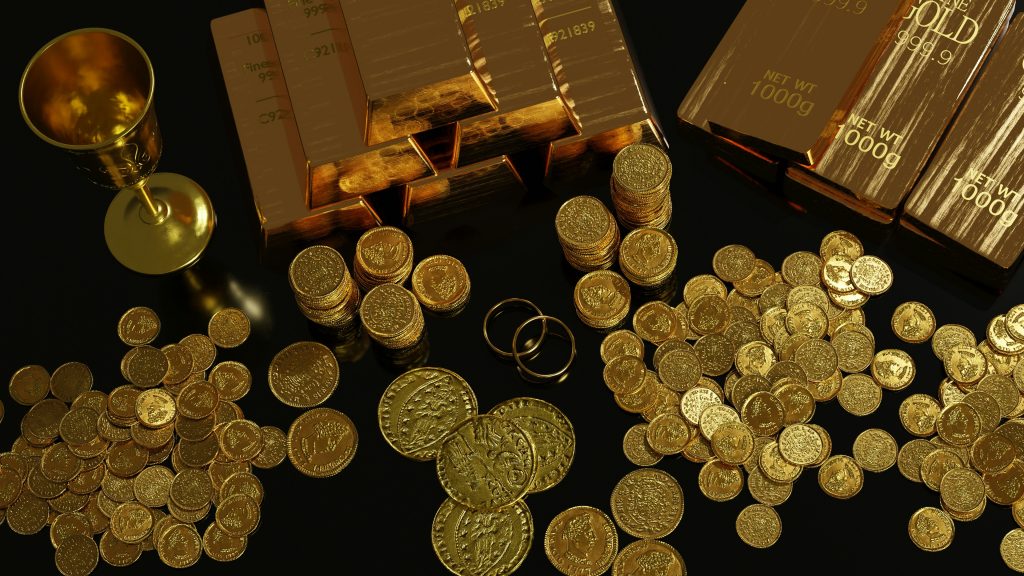
Gold doesn’t fear much when it comes to market interest.
This precious metal ended January with a bang, after hitting another price record on 29 January, surpassing more than US$5,530 ($7,967) per ounce.
While the price didn’t stay that high for long, gold still found itself climbing back above the US$5,000 an ounce mark, after falling below US$4,660 at the beginning of February.
On 5 February, gold was priced at US$4,850 per ounce, representing a 70.31% increase for the year over year, according to Trading Economics.
While Chinese culture is preparing to transition into the Year of the Horse, Chinese investors bought ¥112 billion of gold in 2025, making last year the strongest annual inflow ever, as reported by the World Gold Council.
“The Chinese New Year is probably the most important festival in a year to the Chinese,” Li adds in his conversation with Mining.com.au.
The Year of the Horse represents vibrant and fiery energy, symbolizing adventure, vitality, and momentum, according to Chinese New Year.
Write to Maddison Elliott at Mining.com.au
Images: Mining.com.au & Unsplash