



Monash University has assembled a cross-disciplinary critical minerals initiative aimed at securing Australia’s place in the global supply chain amid demand surging and geopolitical competition intensifying.
The initiative brings together more than 40 researchers from the university’s faculties of Business and Economics, Science, Engineering, and Arts. Its work spans the full minerals value chain, from resource discovery and extraction technologies to environmental stewardship, supply chain modelling, investment policy, and social licence outcomes.
Monash University says the initiative is built around six research pillars: new mineral resources, future processing technologies, mine rehabilitation, environmental and social impact systems, policy and economics, and national security.
The minerals in focus are predominantly rare earths, lithium, and cobalt, which are essential for technologies such as electric vehicles (EVs), batteries, wind turbines, solar panels, and defence capabilities.
Researchers will work alongside partners including the Commonwealth Scientific and Industrial Research Organisation (CSIRO), Geoscience Australia, Resources Victoria, the International Energy Agency (IEA), and the ARC Research Hub for Carbon Utilisation and Recycling.
Rare earths
Monash University reports that Australia is sitting on some of the world’s richest reserves of the critical minerals needed to power the global clean energy transition. Yet exploration rates have fallen, processing capacity remains heavily concentrated offshore and domestic capability is fragmented across institutions and sectors.
According to the IEA, critical minerals demand is expected to double, or even quadruple, by 2040.
For rare earths, permanent magnets account for around 95% of consumption by value, reflecting their strategic role in EVs, wind turbines, industrial motors, and AI data centre infrastructure.
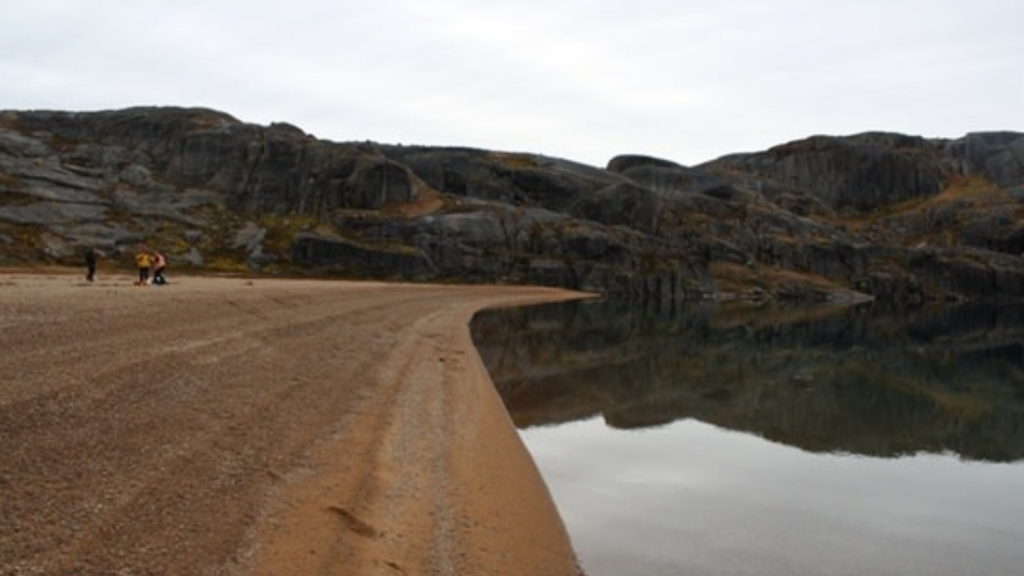
Dalaroo Metals (ASX:DAL) is an Australian mineral explorer focusing on rare earths in Greenland. The company owns the Blue Lagoon Rare Earth Project, which has returned key results from a field program including a coherent mineralised trend extending around 2.7km, with a peak total rare earth oxide (TREO) value of 0.81%, zirconium values of up to 4.42%, and hafnium values up to 99 parts per million.
“If Blue Lagoon continues to demonstrate scale and favourable metallurgy, we believe it could ultimately contribute feedstock into European and North American critical mineral supply chains, supporting broader diversification efforts and improving supply security for strategically important industries,” CEO John Morgan says.
Dalaroo is focused on improving its geological understanding of Blue Lagoon, as well as assessing potential economic pathways. Key near term milestones include starting the 2026 field season, ground penetrating radar surveys across key areas, bathymetric surveying to better understand sediment accumulation, auger drilling, and sediment sampling.
“The objective is to move beyond simply demonstrating mineralisation and begin understanding scale, continuity, mineral hosts, and potential processing characteristics,” Morgan says.
“We believe this next phase will be critical in unlocking the broader value potential of the project.”
OD6 Metals (ASX:OD6) is another Australian explorer, which owns the Quinn Fluorspar Project in the US, Splinter Rock Rare Earth Project in Western Australia, and Gulf Creek Copper Project in New South Wales.
Splinter Rock hosts a resource of 682 million tonnes (Mt) at 1,338ppm TREO, with a ‘high-grade’ inside centre of 119Mt at 1,632ppm TREO indicated.
The project has also produced a ‘high-quality’ mixed rare earth carbonate (MREC) of around 56% TREO and a ‘high-quality’ mixed rare earth hydroxide (MREH) of around 59% TREO.

Lithium
Meanwhile, lithium is known for its application in batteries, medication, and industrial manufacturing. The lithium trend has been on the uprise, experiencing a 166.1% uplift year-over-year as of 3 July 2026, priced at ¥165,250 ($1,459) per tonne, according to Trading Economics.
At the time of writing, lithium carbonate prices fell to ¥154,000 per tonne, testing its lowest levels since March 2026.
TG Metals (ASX:TG6) is a lithium explorer focused on advancing its Lake Johnston Project in Western Australia.
In June 2026, the company lodged a mining lease application for the deposit, which was modelled from wide spaced drilling to produce an exploration target between 15.6–20.1Mt @ 0.97–1.19% lithium oxide.
CEO David Selfe says the primary drivers of lithium demand are the increase in battery energy storage system (BESS) applications and lite-use EV battery consumption, coupled with supply disruptions in Africa.
“The growth in BESS batteries has been the highest and is looking like continuing with demand from energy backup systems for the high growth in data centres seen worldwide,” Selfe explains to this news service.
TG Metals has completed extensive work to define pathways to production at Lake Johnston. This includes a processing flowsheet for direct shipping ore (DSO) products from simple crushing and ore sorting onsite.
“Metallurgical test work and the shallow nature of the Burmeister pegmatites support the potential for a high-grade and low-capital DSO development pathway at Lake Johnston,” Selfe told Mining.com.au.
Selfe explains that TG Metals has been receiving a lot of interest from third parties on the potential for DSO product from the Burmeister deposit in the near future.
“We’ve previously put some of the ore sorting for a front-end pretreatment, which worked out really well,” Selfe says.
Cobalt
Global cobalt demand is forecast to hit over 292,000 tonnes, resulting in a market deficit of 10,700 tonnes, as reported by Fastmarkets. The EV sector remains the primary consumer for cobalt demand, through aerospace, medical, and defence superalloys.
The top three producers of cobalt include the Democratic Republic of the Congo (DRC), accounting for around 76% of cobalt mining, followed by Indonesia (10%) and Russia (3%).
For cobalt refining, China is the leading refiner, accounting for 74%, followed by Finland (6%) and Japan (4%), as reported by the IEA.
CMOC Group (SSE:603993) owns the largest cobalt mine in the world in the DRC, which produces roughly 25,500 tonnes of cobalt per year, as reported.
Australia also hosts the 10th largest cobalt mine in the world, owned by Glencore (LSE:GLEN).
The Murrin Murrin mine in Western Australia’s northeastern Goldfields region is the country’s largest cobalt producer and one of the few high pressure acid leaching operations in the world to have run continuously through the 2024 nickel-price collapse. It produces both class one nickel briquettes and cobalt sulphate, feeding battery-grade material into Western cathode supply chains.
Write to Aaliyah Rogan at Mining.com.au
Images: iStock, Dalaroo Metals, & TG Metals


