


There is an evident gap between how work is structured and performance is sustained when it comes to the health of a workforce and the individual worker.
In the mining sector, this disconnect is particularly pronounced. Multiple reports and surveys consistently highlight fatigue and safety across mine sites as one of the industry’s most pressing challenges.
According to MPI Recruitment’s most recent survey, only one in four fly-in fly-out workers say their roster is sustainable beyond six months without change, representing more than half of the respondents saying their current rosters are unsustainable long term.
But beneath these headline figures lies a deeper issue. As MYNWELL Director Mario Causevic explains, many health concerns across the workforce are not being addressed until it is too late.
“By the time someone is injured, they’re burnt out, or mentally struggling, there has usually been weeks or months of smaller signals that just went unnoticed and were not acted on,” Causevic tells Mining.com.au.
“Mining has traditionally been very strong at responding to incidents, and of course, that is very important. But relying on response alone means you’re always dealing with the consequences instead of the real root causes of these incidents.”
From reactive to proactive
Against this backdrop, MYNWELL — Canadian healthcare provider for the mining industry — is reframing how worker health is approached.
The organisation refers to mining workers as ‘industrial athletes’, applying athletic therapist mindsets — performance, injury prevention, and recovery — to mining and heavy industry workers.
Causevic says mining roles demand consistent physical output, cognitive focus, decision-making under fatigue conditions, and that closely resembles a high-performance environment, just as of an athlete.
“If you had a hockey team and five of your players showed up for the game fatigued, haven’t slept for days, chronically injured and in pain, would you put them in the starting lineup or would you even have them play the game that day,” Causevic says.
“The reality is no, the coach and the team would deem them not fit. But in mining, this is a normal shift.
“When sites begin treating their workers more like industrial athletes, the focus shifts to readiness and recovery. It introduces a performance-based lens, which is very important — where output is directly linked to sleep quality and mental readiness.”
Rather than labelling current systems as outdated, Causevic says the model exposes a critical shortfall.
“It’s not that the systems are obsolete, but they’re incomplete.”
Embedding care onsite
Ahead of World Day for Safety and Health at Work (28 April), Causevic explains how MYNWELL’s programs are designed entirely for miners, offering customised healthcare services built around the specific demands of mining operations.
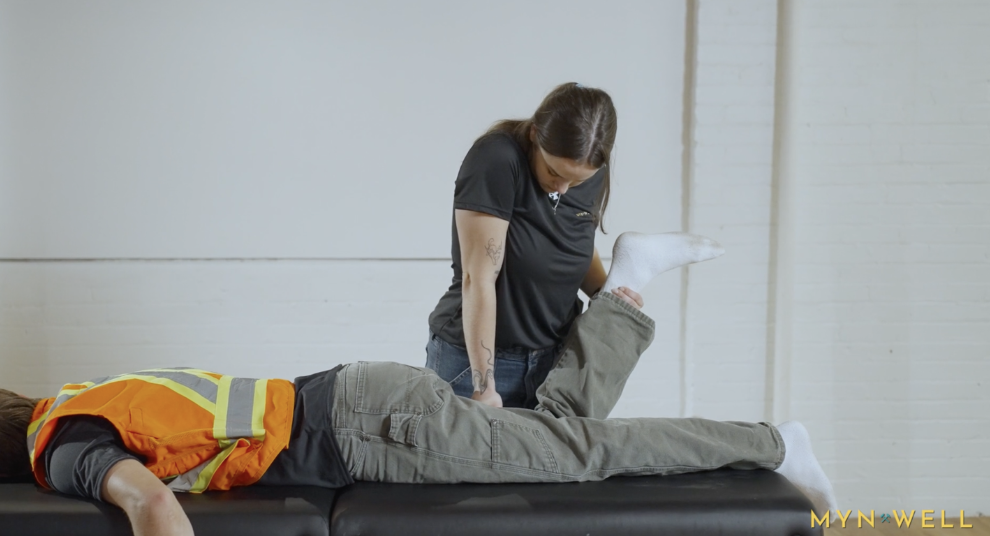
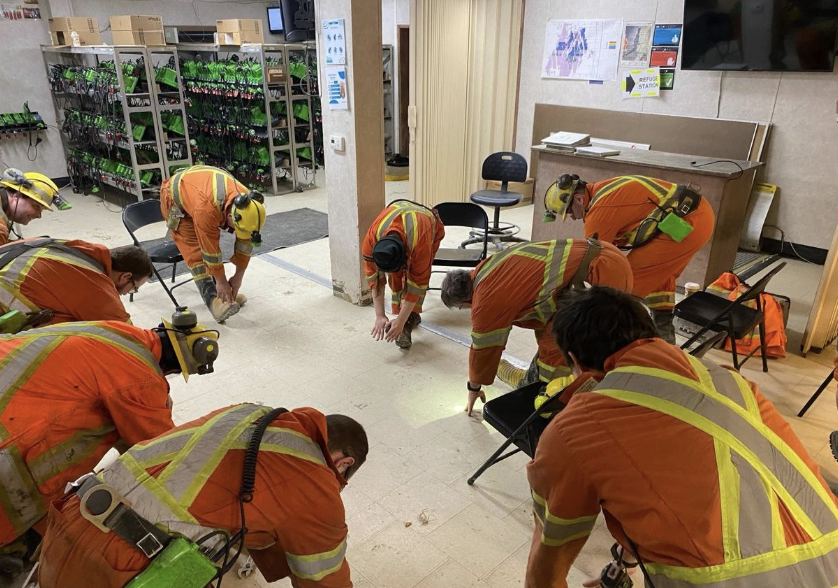
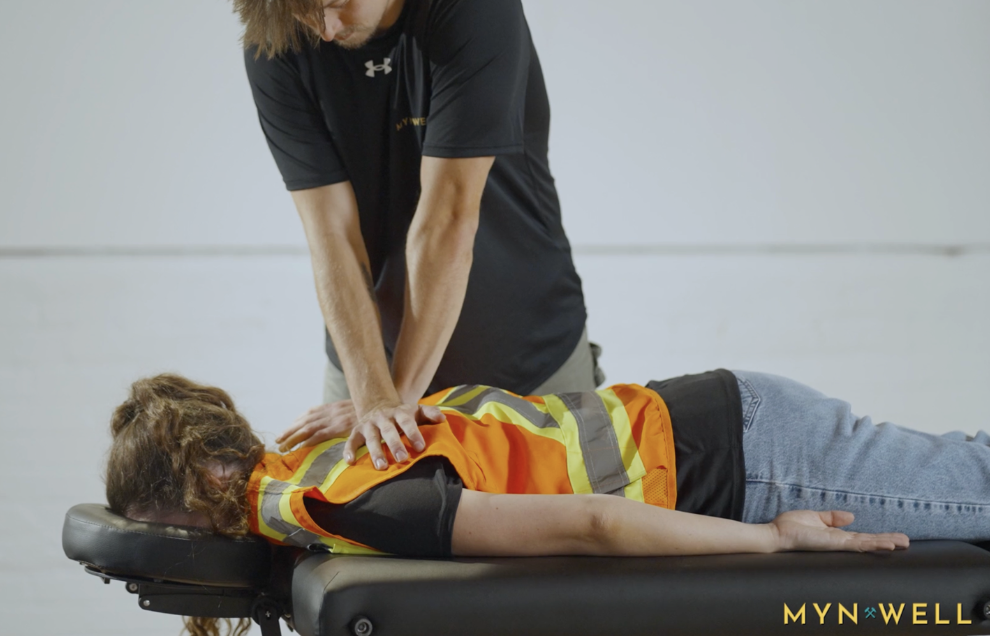
On the physical health side, the company provides onsite physical therapy, physical demand analysis, huddles, return-to-work programming, ergonomic task assessments, and stretch classes.
Complementing this, MYNWELL also delivers a comprehensive mental health offering, including one-on-one appointments, grief counselling, peer support groups, and supervisor training.
Crucially, the model shifts away from reactive care toward early intervention.
“We’re asking these mining companies that we partner with to pay attention to trends that are less obvious,” Causevic explains.
“Fatigue, burnouts, stress levels, physical wear and tear, chronic pain and disease, and to take them seriously even though they’re not affecting the mindset currently and affecting the output.
“What we’re trying to do is look at it from a performance lens through health.”
With MYNWELL embedded onsite, interventions can be tailored in real time based on how workers move and perform.
Causevic says that the company prevents workers from having to go offsite and see an external medical professional that is not connected to the site or does not correlate to what needs to be in the programming.
“We’d prefer that they get the care at site and be in constant connection with their HR team, with their health nurse, with our team, and with their supervisor about the timelines of getting back to work,” he tells this news service.
The impact of this approach is already measurable, as MYNWELL reports a 77% reduction in injury recovery duration, as well as a 68% acute injury mitigation rate with return to full duties within seven days.
In one case, a site recorded its safest quarter for musculoskeletal injuries in its history after MYNWELL’s introduction, while sprains and strains were reduced by 42% within six months.
Culture and access
The effectiveness of onsite care is further reflected in workforce engagement.
From a physical health perspective, MYNWELL reports an average of 7.26 sessions per worker, indicating that employees are proactively engaging with services for ongoing maintenance rather than one-off treatment.
“We don’t just see people for one session,” Causevic says.
This trend is considered significant for MYNWELL given that many workers are managing long-standing conditions.
“These are injuries people have been dealing with for years. We’re not seeing how much has been lingering across the workforce,” Causevic adds.
According to the company’s findings, only 11% of employees are using external services for physical health, highlighting the ongoing challenge of access — particularly in remote regions.
“Every remote site struggles with access to healthcare services,” Causevic notes.
“That is the number one trend that I am seeing, that every site is struggling with the access to these services.”
On the mental health side, 94% of the workforce have never used an outside therapist — a statistic that underscores both limited access, as well as persistent cultural stigma.
As previously reported, mental health is still plagued by stigma, particularly in male-dominated and high-stress industries such as mining.
Although toughness has always been a part of mining culture, Causevic believes that it is not inherently negative.
“The real challenge is when the toughness is interpreted in a way that possibly discourages people from acknowledging their own limits and asking for support,” he says.
“When the mindset carries over into areas like fatigue, mental health, physical health, chronic pain… It can lead to people staying silent when they really shouldn’t and that is when the real risks start to increase.”
A turning point
For Causevic, World Day for Safety and Health at Work is more than a symbolic moment — it is considered a critical checkpoint for an industry still catching up on the ‘health’ side of health and safety.
“Physical safety systems are well established in mine sites, but health, especially things like physical fatigue, chronic pain, and mental well-being, are still catching up in terms of how proactively they are managed at sites,” he explains.
The opportunity lies in shifting how health is viewed within operations.
“When organisations begin to quantify these relationships, linking all these fatigues to incident rates, health becomes then a controllable variable rather than just an abstract concept,” Causevic adds.
For MYNWELL, sustainable safety performance is directly linked to workforce capacity — and that capacity depends on consistent, proactive investment in health.
As the industry reflects on safety this month for World Day for Safety and Health at Work, the challenge is no longer about prevention, but rather about recognising that the foundation of safer, more predictable operations starts long before they occur.
Write to Aaliyah Rogan at Mining.com.au
Images: MYNWELL


