



Each year, World Mental Health Day (10 October) invites global communities to put a spotlight on an issue that is often overlooked – mental health.
While conversations are growing louder, the reality remains that mental health is still plagued by stigma, particularly in male-dominated and high-stress industries such as mining.
The mining sector, a critical component of the Australian and global economy, is facing a silent crisis. As Mining.com.au reported in honour of R U OK? Day, 75% of those who commit suicide are men aged between 40 and 59 years.
These figures are alarming for the mining sector where suicide rates are 80% higher than the national average, as reported by MATES in Mining.
Behind the drill rigs and other heavy machinery, workers are battling somewhat invisible yet dangerous challenges – from isolation and fatigue to depression and suicidal thoughts.
But, how the world normalises a human response to distress is the overall message.

Recognising mental health as wealth
Mental health, though universally relevant, poses a higher risk in specific environments.
At the Future of Mining Australia conference held this year in Perth, Breakthrough Mental Health Research Foundation’s training manager Sharn Elder and philanthropy manager Brooke Williams revealed that statistics were begging an obvious question.
Why is the mining sector more heavily affected than other Australian industries?
“I’d love to be able to tell you it’s because you’re FIFO. I’d love to be able to tell you it’s because of remote locations, isolated work away from families – any of these risk factors that we’ve identified,” Elder says.
“But the reality is, the truth behind it is that we don’t know. We don’t have enough data.”
On top of that, statistics from Breakthrough dated back to 2019 and represent the latest figures available.
“I’d guess that if you were to invest in a new mining operation, you wouldn’t dare touch the ground if the geological data that you have is seven years old,” Williams says.
“But we’re doing that every single day with the lives of our people, our most valuable asset.”
Speaking to Mining.com.au, Frontline Mental Health co-founder Matt Newlands says certain sectors, including mining, emergency services, and the military, face common stressors that amplify mental health challenges.
“Our team predominantly has a service background of first responders or military space,” Newlands says.
“I think that there is a lot of crossover with some of the similar challenges. What we, in particular, have been doing with mining and resources is almost taking a step back.”
Indeed, Australia’s fly-in fly-out (FIFO) and drive-in drive-out (DIDO) models – while necessary for operational efficiency – have been linked to increased stress and elevated suicide rates.
According to a report by Drill Down, a study from 2011 to 2019 indicated that male mining workers in Australia experienced suicide rates ranging 11-25% per 100,000 workers, with an adjusted estimate closer to 25% per 100,000.
Drill Down says these mental health concerns have sparked multiple government reviews and industry interventions, highlighting the need for systematic change.
Life saving connections
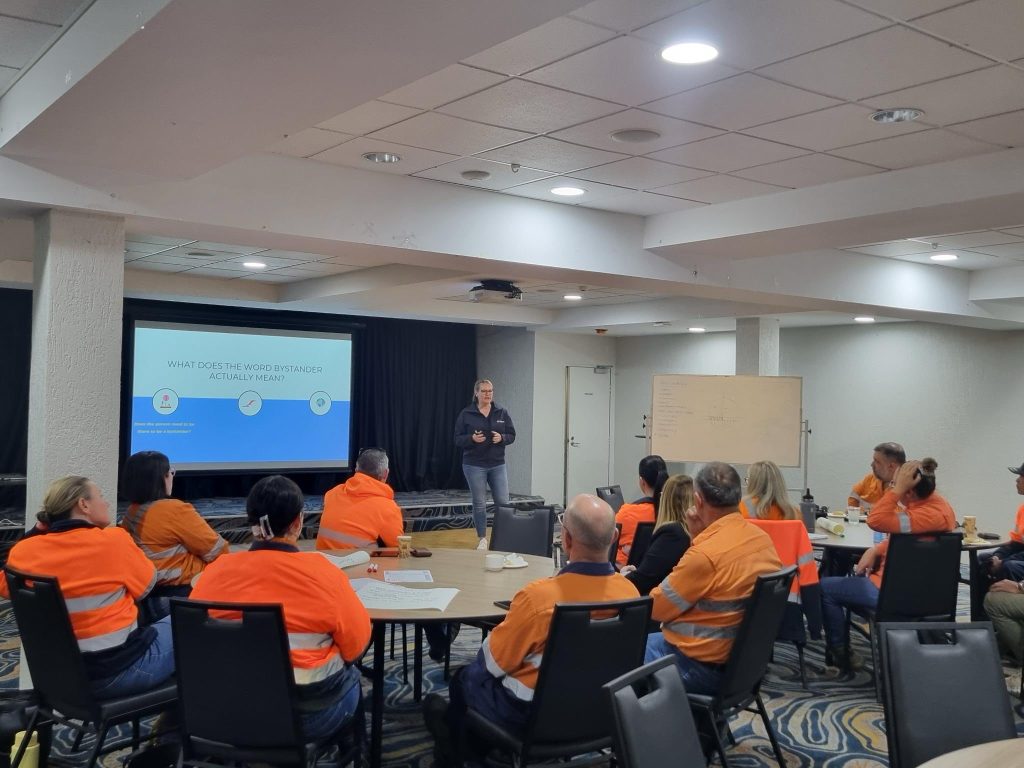
One of the most prominent organisations at the frontline of this issue is MATES in Mining, a peer-based suicide prevention and mental health support group.
General Manager Amanda Braddock emphasises the power of normalising conversations in reducing stigma.
“They’re afraid of being seen as weak or not capable, whereas if we’re normalising conversations, if we’re saying, you know what? this happens – this happens for a lot of people and lets talk about it – that is where we stand the best chance of saving lives,” Braddock tells this news service
MATES in Mining partners with companies for a minimum of three years, running awareness sessions and connector programs across mine sites.
Braddock says the organisation seeks to train workers to recognise signs of distress and connect with their peers, while also offering professional support services.
“Typically, what will happen is we go and visit a site once they’ve newly partnered with us and we do as many of the general awareness sessions to cover as many employees as possible,” she says.
If a company is not partnering with MATES, there is a dedicated platform for FIFO and DIDO workers, offering proactive resources to assist with the unique challenges that go with working in remote or isolated locations.
Suicide Awareness (START) training is also available for services who provide support to FIFO and DIDO workers, family members and workers who are not able to attend face-to-face MATES training.
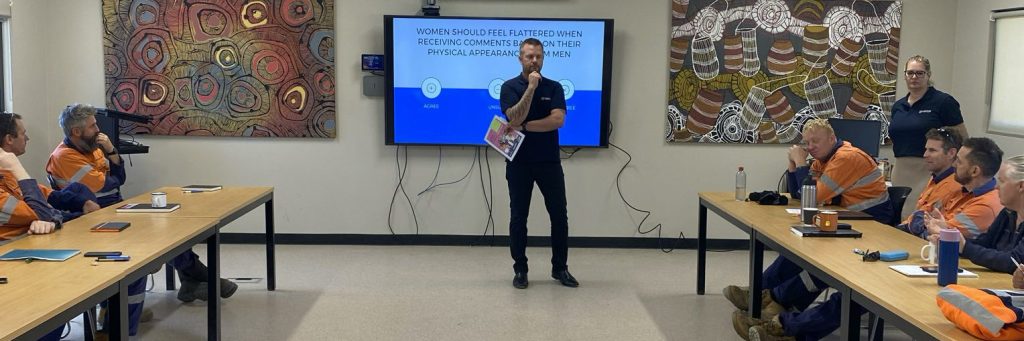
Newlands explains that Frontline Mental Health partners with organisations in the mining industry to promote inclusive and productive workplaces. These partnerships have included the likes of Agnico Eagle (NYSE:AEM) and Rio Tinto (ASX:RIO).
“If we can create a psychologically safe environment for people to feel comfortable to speak at work about any challenge that they’re experiencing, we know that then that builds trust and credibility in the workplace,” he says.
“Our focus is on delivering tailored or customised mental health training and education programs that do lean into that awareness.”
Through education, Frontline teaches workplaces about trauma-informed, leadership, in-person delivery, leaning into difficult conversations, and ongoing partnerships.
Since World Mental Health Day’s inception in 1992 by the World Federation for Mental Health, the day has served as a global reminder that mental health is health.
This year’s theme is no different – urging for communities, industries, governments, and individuals alike to break down stigma and promote open dialogue.
For the mining and resources sector, where the pressures are unique and stakes are high, investing in mental health is not a compassionate move, but rather a life saving one.
Lifeline: 13 11 14, lifeline.org.au
Headspace: 1800 650 890, headspace.org.au
Beyond Blue: 1300 224 635, beyondblue.org.au
SANE Support line and Forums: 1800 187 263, saneforums.org
Write to Aaliyah Rogan at Mining.com.au
Images: Mining.com.au, MATES in Mining, & Frontline Mental Health


