



On International Women’s Day (8 March), this year’s theme ‘Give to Gain’ feels particularly relevant to the mining industry. The theme signifies a simple, yet powerful truth: process is an exchange.
The more invested in people, in opportunities and in inclusion, the greater the returns for industry and society alike.
“We can’t keep celebrating the status quo and expecting something different,” Leigh Staines, Managing Director at Banksia Minerals Processing, tells Mining.com.au.
At its core, the mining industry is built on giving the world what it needs to grow. From the copper wiring the energy transition to the lithium powering electric vehicles, and so on.
But the equation extends beyond commodities. The industry’s strength depends on what it gives back: safe workplaces, meaningful careers and community investment for diverse talent to lead the next wave of workers.
As previously reported, for much of the 20th century, women’s involvement in mining was restricted by safety concerns and prevailing societal norms.
As late of the 1970s, female participation was considered an ‘exceptional occurrence’ – a rare anomaly rather than the beginning of a larger shift, as reported by the Australian Women’s Register. That history makes today’s progress more significant.
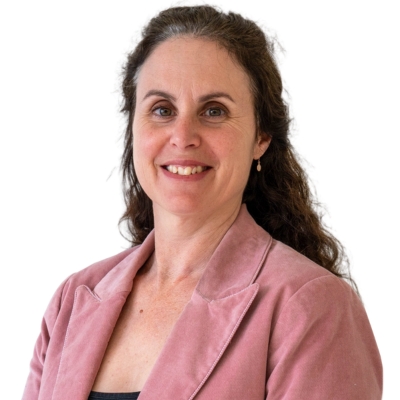
Speaking to Mining.com.au, Chamber of Minerals and Energy Western Australia (CMEWA) Director of Policy and Advocate Anita Logiudice recalls when she first entered the sector, it was deeply male-dominated.
“Over the more than 20 years I’ve worked in the resources sector, the biggest change I’ve seen has been the increase in women’s participation,” Logiudice says.
At a national level, the numbers show significant change. Tania Constable, CEO of advocate for the resources sector the Minerals Council of Australia (MCA), explains that in 2020, roughly 17% of Australia’s mining workforce were women.
“That has gone to 22% and that is incredibly powerful in terms of just the progress,” Constable tells this news service.
“Going back to early 2003-2004, we had about 9,300 [women]. Now we’ve got over 52,000 women in a workforce of 280,000 direct employees. That is a 480% increase in that time.”
These figures are more than a statistic. They represent structural change in an industry historically defined by male dominance – proof that when companies give attention and investment to inclusion, they gain access to a broader talent base.
Purpose keeping people
That shift has not happened by accident, as Jo Bergamin, co-founder of Women in Sustainable Energy and Resources (WISER), says that when she first started her career, female representation was low – but change has accelerated.
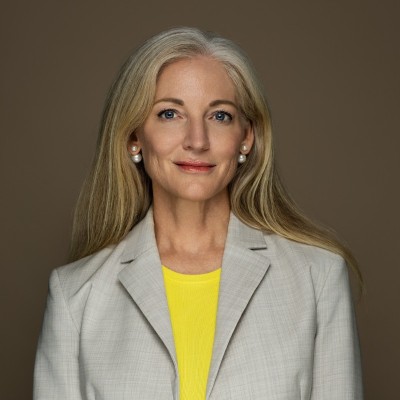
“Large operators and contractors have invested in recruitment, flexible rosters, cultural programs and networks like WISER have created vital support systems,” Bergamin tells this news service.
“Strongest progress has been in entry-level and operational roles, and in large companies setting ambitious targets.”
One example is mining giant BHP (ASX:BHP) which reached 40% female representation in its global employee workforce in April 2025.
In early 2024, the company was the first mining company to surpass 40% female representation, specifically across its Chilean operations including in Escondida, Spence and Cerro Colorado.
This news comes after BHP committed to achieve gender balance by 2025 in 2026. At the time, BHP only had 17.5% female presence globally. Again, proof that when companies focus on recruitment, flexibility and cultural reform, they gain measurable progress.
Beyond representation, however, retention depends on something deeper – purpose.
Bergamin says it is the intersection of purpose, people and emerging technologies that has kept her in the industry for more than two decades.
“This constant evolution keeps the work intellectually stimulating and deeply meaningful,” Bergamin says.
“This constant evolution keeps the work intellectually stimulating and deeply meaningful”
“The resilience of the industry, the brilliant minds I work with, and the opportunity to contribute to meaningful change keep me motivated everyday. The industry shapes economies, communities, and the future of energy. It’s dynamic, challenging and never static.”
Sara Couperthwaite, affiliate of the University of Queensland Technology, echoes Bergamin’s belief as she says that she is drawn to the intersection of scale, complexity and impact.
“And the opportunity to inspire and bring others on the journey of building a more sustainable future for the sector,” Couperthwaite explains.
Constable also shares a similar attitude as she explains that she has “great pride” in the mining and resources industry.
“It contributes to something meaningful and tangible. There isn’t anything that we do that mining has not created through its raw materials,” Constable says.
“I’m not the first person to say it, but people that work in this industry love the work.”

For Shayaan Belluzzo, Corporate Secretary of Brunswick Exploration (TSX-V:BRW), transitioning from private wealth to mining was transformative.
Belluzzo, a licensed paralegal, has over eight years of experience of board governance and compliance, corporate restructuring matters for various global entities and investment vehicles.
Recently, she has held roles as Corporate Secretary of Windfall Mining Group and Assistant Corporate Secretary of Osisko Mining, supporting both companies during a $2.16 billion acquisition with Gold Fields (NYSE:GFI).
“The exciting thing about the mining industry is that it is always changing,” Belluzzo tells this news service.
“The industry is changing and it’s always a new day or a new role and a new task. That was something that I was chasing after, especially working in corporate law in a law firm setting.”
Here, the ‘Give to Gain’ theme becomes cultural as much as structural. When the industry gives professionals dynamic work, intellectual challenges and purposes, it gains loyalty and long-term commitment.

Broadening leadership
While the 22% figure is not parity, the trajectory is unmistakable. Mining – once synonymous with exclusion – is actively broadening its talent base worldwide.
Globally, representation is increasing across regions including Australia, Canada and Latin America.
In Canada, Belluzzo says there has been meaningful change in which there is a stronger focus on diversity and inclusion in hiring practices.
“Visibility matters, and it’s encouraging to see companies being more intentional about building diversity leadership teams,” she says.
According to Bluemoon Group, the presence of women in mining has increased to 12.5% in Argentina, as of 2023, showing growth from 7.5% in 2007. This progress has also translated into the incorporation of more than 4,500 women into the sector, with a year-on-year increase of 19.7% as of June 2023.
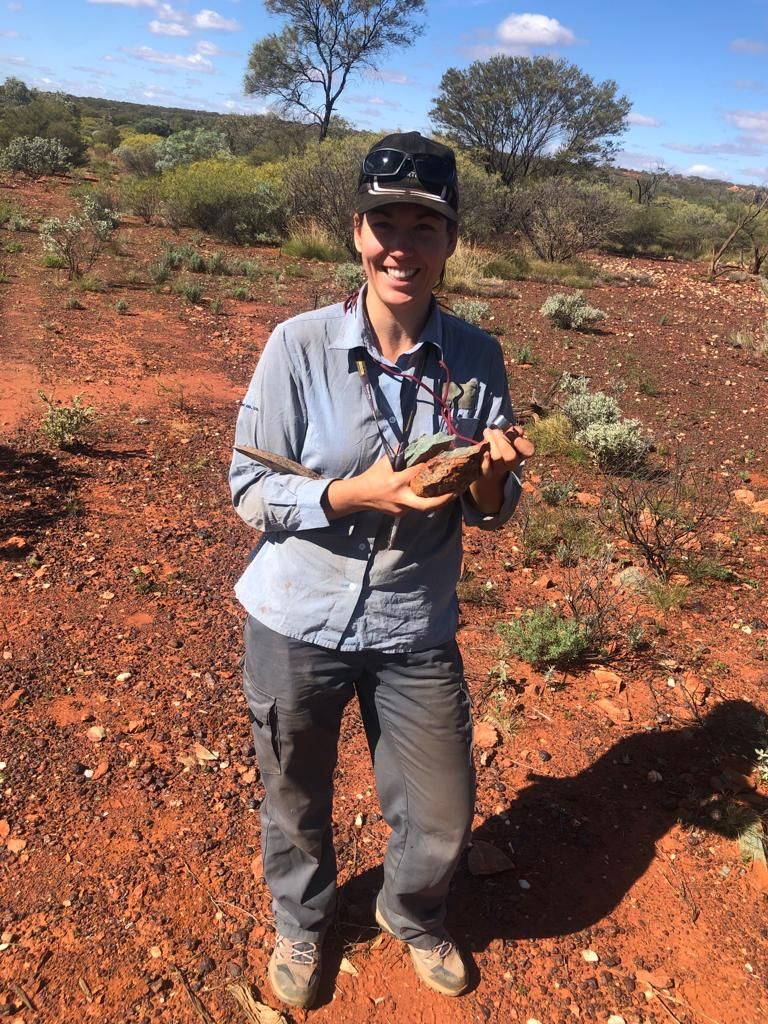
Coraline Blaud, Executive Director and Head of Exploration for Lodestar Minerals (ASX:LSR), tells this news service that particularly in Chile, the mining sector has been “fantastic”.
“Chileans have been highly supportive to women and to women working,” Blaud says.
“There are more women’s rights and I’ve had less issues as a woman and less judgement of being a woman in Chile than I have been in Australia.”
Despite the progress being made across the globe, leadership gaps still remain.
Couperthwaite says that there are still long-standing traditions, and although cultural change is happening there is still a long way to go.
“You will likely find yourself in rooms where you are the only woman, have your expertise questioned, your ideas overlooked, or experience moments that are simply frustrating and unfair,” she tells Mining.com.au.
“I’ve certainly had those experiences, from being mansplained in my own area of research to seeing ideas dismissed and later praised when repeated by someone else.”
In 2025, nine out of 10 CEOs were men according to data from Chief Executive Women (CEW) while one in four new CEO appointments were women. CEW data also reveals that 27 CEOs were women in the ASX 300, up two from 2024.
“There are more women’s rights and I’ve had less issues as a woman and less judgement of being a woman in Chile than I have been in Australia”
However, Deloitte Insights research into gender equity in leadership roles in financial services institutions globally shows that Oceania is leading in regard to the proportion of women in financial services leadership roles, as Mining.com.au reported.
Forecasting reveals that the current 25.2% share of women in C-suite roles is projected to grow to 34% by 2030 – higher than any other region. Similarly, women in next generation roles is expected to reach almost 37% by 2030, indicating an increased pipeline of women in financial services.
For Blaud, a pivotal career moment came when she decided to step forward for a director role following the departure of Lodestar’s previous Managing Director.
“I decided to reach out to the other directors and was like, I want the position,” Blaud tells Mining.com.au.
“I’ve never been a director before and it’s been fantastic to have that support. The big pivotal moment was to accept that I was wanting to be back into the industry and being able to do more and actually recognise that I could do more.”
Blaud’s experience reflects a broader shift. Progress for women in mining is no longer only about entering the industry, but rather it is about being encouraged to lead within it.

Mentorship and momentum
This year marks the 115th year of International Women’s Day. Since 1911, International Women’s Day has belonged to all who care about gender quality.
As Gloria Steinem, renowned feminist, journalist and activist, reportedly once explained “the story of women’s struggle for equality belongs to no single feminist nor to any one organisation but to the collective efforts of all who care about human rights”.
Belluzzo says clear leadership pathways and mentorship are critical to sustaining progress.
“I think it’s really important that we boost people up because talent is in demand,” she adds.
“I think that it is really important that there are clear modes of communication, access to mentorship that allow women into these senior roles, whether it’s in technical, legal or executive roles.”
Constable argues that the sector is going to need more minds in the next two decades across the world to meet the demand that modern day life expects.
“If we look after the industry, we improve the industry, and after all, our industry meets every regulatory obligation, we are governed by a rule of law, then this is an industry that people continue to take pride in and want to join,” Constable says.
Couperthwaite adds that the world needs International Women’s Day to see successful women in these sectors laying the foundations for others to follow and be inspired.
“We can’t have mining as a big mystery box that will deter those who are unsure, we need to show them a way and the value we will bring,” she says.
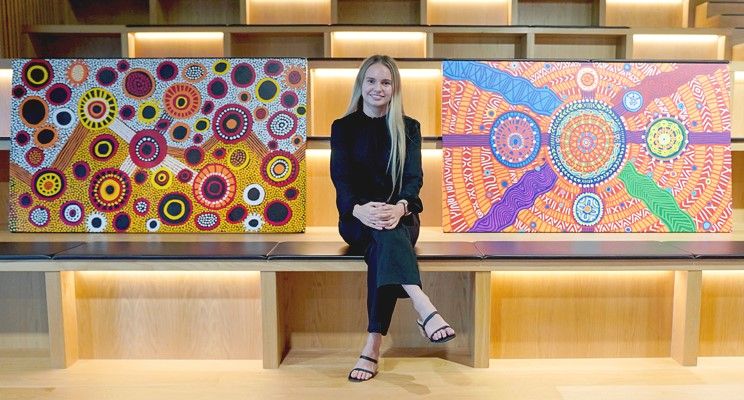
For Jamieka Maddock, 2025 Queensland Resources Council (QRC) Indigenous Awards winner for Indigenous Rising Star, backing yourself is essential.
The sector, she says, is “ever-growing and ever-changing”, and that change requires people with different backgrounds, experiences, and ways of thinking.
“You don’t need to have your career mapped out from the start. Being open to opportunities, even those that don’t perfectly align with your original plan, can lead to meaningful and unexpected pathways,” Maddock tells Mining.com.au.
Logiudice agrees that diversity strengthens culture and performance.
“That is why I’m confident women’s participation will continue to grow at all levels within organisations,” she says.
“Success for me, is a future where any girl can see a rewarding career of her choice within the resources sector”
“Success for me, is a future where any girl can see a rewarding career of her choice within the resources sector.”
The mining industry has always operated on exchange. Resources for growth, effort for return. International Women’s Day 2026 theme ‘Give to Gain’ reminds the sector that this principle applies equally to people.
When companies focus on recruitment, they gain representation. Companies give flexibility and mentorship, they end up gaining retention and when the sector give women the confidence and opportunity to lead, they gain resilience, innovation and long-term sustainability.
Stories show impact and together, demonstrate that inclusion is not considered a side initiative. Rather, it is a strategic investment.
Write to Aaliyah Rogan at Mining.com.au
Images: CMEWA, Brunswick, WISER, Lodestar & Mining.com.au,


