


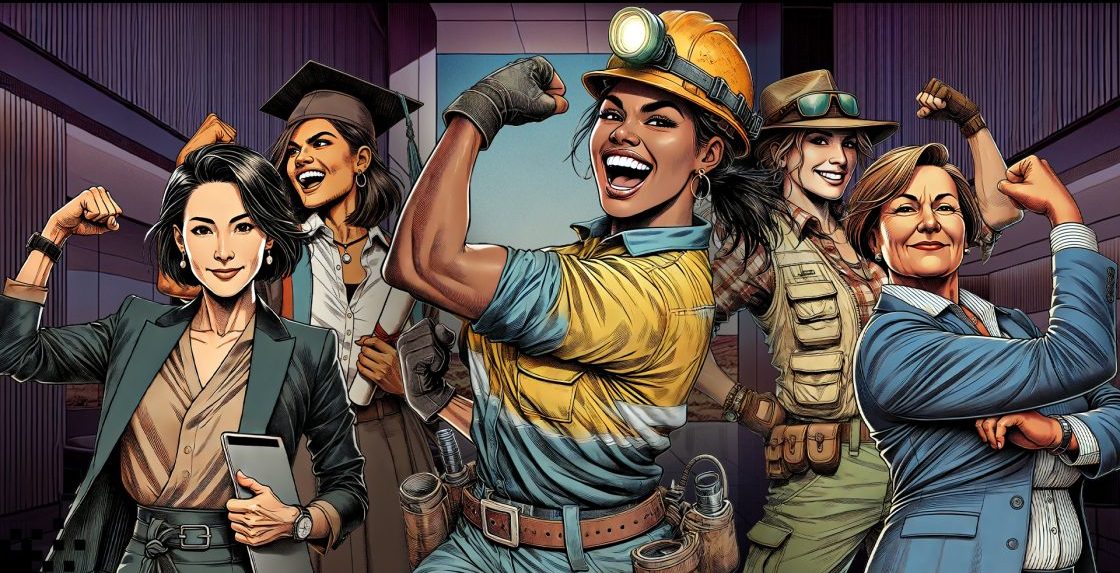
For too long, women’s contributions in the workplace, particularly in sectors like mining, have gone unrecognised.
However, there is now a growing acknowledgement of the ways women shape company culture, drive performance, and influence the overall work environment — contributions that were once overlooked or unnoticed.
As International Women’s Day approaches this week (8 March), more women are helping shape strategic decisions and bring fresh perspectives to traditionally male-dominated boardrooms.
Pacgold (ASX:PGO) non-executive Chairman Caoilin Chestnutt tells Mining.com.au that the influence women have in the workplace cannot be understated.
“The value that women bring in terms of collaboration, mentorship, coaching, and creating a warm environment to work in where people thrive is something that is not always captured in KPIs — but it makes a huge difference,” Chestnutt says
Q2 Metals (TSX-V:QTWO) CEO Alicia Milne shares a similar stance. She tells this news service “women bring fresh perspectives and innovative approaches to the mining industry” in particular.
“Companies continue to recognise that diversity drives better decision-making, improved financial performance, and stronger stakeholder relationships,” Milne says.
While the number of women in the mining industry has soared over time, reaching more than 45,000 as of 2023, the presence of women in top executive roles still remains minimal.
Chestnutt, reflecting on this disparity, states: “The statistics speak for themselves.”
Despite the increasing number of women entering the sector, the barriers to top-level leadership are still formidable.
Gaps in leadership roles
The latest data from Chief Executive Women (CEW) highlights a troubling disparity in leadership roles within the Australian mining industry, pointing to a stagnation in gender equality in the top companies on the Australian Securities Exchange (ASX), with 91% of CEO positions still held by men.
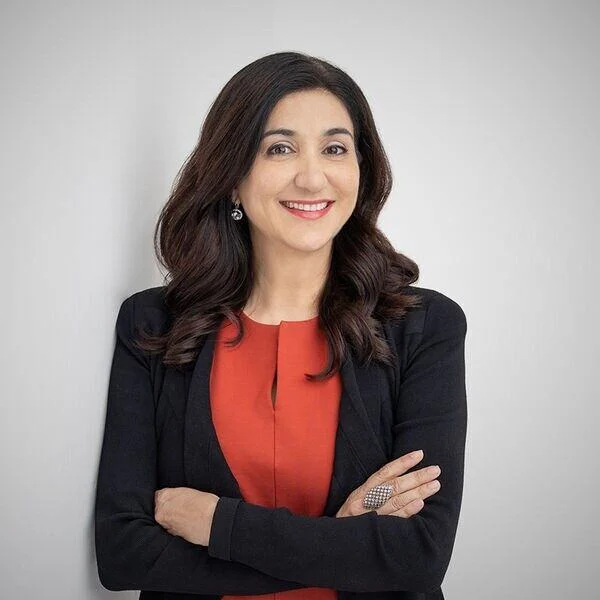
Lisa Annese (right), Chief Executive of CEW, paints a bleak picture, noting that the majority of the CEO pipeline is overwhelmingly male.
“There are still 20 ASX 300 companies with no women in executive leadership,” Annese says.
“This imbalance in leadership pathways shows that progress will only happen if organisations intentionally work to address these disparities. It’s not about lack of talent, but failure to create systems and cultures that enable women to advance.”
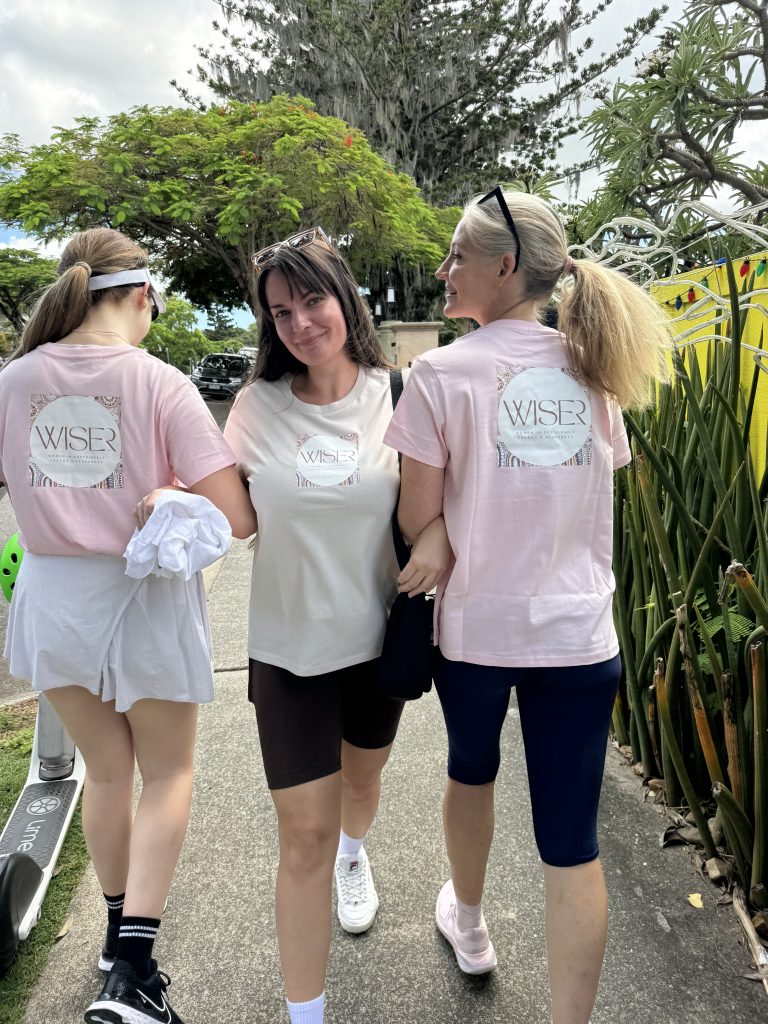
Sunshine Metals (ASX:SHN) non-executive director Jo Bergamin, who is also founder and Chair of WISER, (Women In Sustainable Energy & Resources) echoes this sentiment, citing a lack of opportunity for women to progress to senior management and board-level positions, particularly within small to medium sized companies.
“In Queensland, there are so few women on boards of ASX-listed resource companies,” Bergamin says.
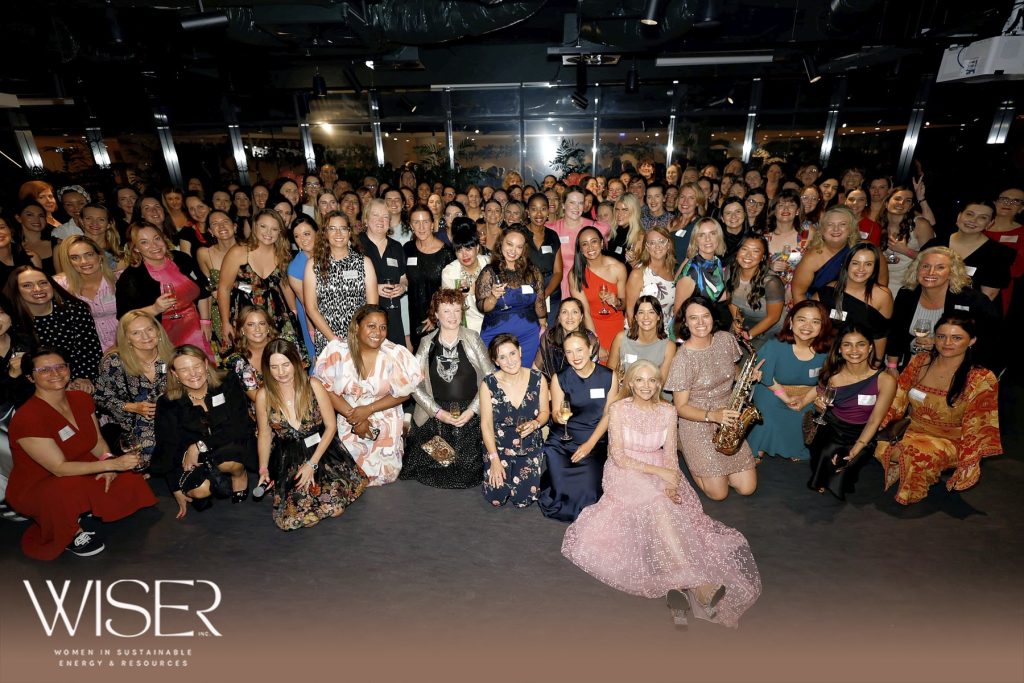
WISER is an inclusive industry network of women in sustainable energy, resources, and related industries in Australia. Established in Queensland by a group of like-minded women keen to increase representation, WISER’s mission is to support and advocate for women working at the forefront of these transformative industries – from graduates to senior leaders – by providing opportunities to network, educate, celebrate, and share ideas.
CEW’s 2024 Senior Executive Census underscores this trend of few women on boards, revealing that the number of women CEOs in the S&P/ASX 300 had decreased from 26 in 2023 to 25 in 2024.
This decline further highlights that the path to leadership for women, particularly in the C-suite, appears to be narrowing rather than expanding.
According to the World Economic Forum’s Global Gender Gap Report 2024, women account for nearly half of the global entry-level positions in the workforce. However, they fall short of representing just one-quarter of C-suite roles.
Since the data started being recorded in 2021, women’s hiring into leadership roles has actually deteriorated. The forum found in 2021, women represented 37.5% of C-suite roles and had dropped to 36.9% in 2023. This again has dropped to 36.4% in 2024.
Annese says the decline in female CEOs is the second time recorded in the census’ history, which is a stark reminder that progress in gender equity is not always linear.
“While there’s been a lot of conversation about diversity and inclusion, many organisations are still failing to translate awareness into action,” Annese says.
“This leaves some of our best talent untapped, which is a risk for Australia’s competitiveness and future economic growth.”
This gap at the leadership level raises an important question: while the industry has made significant strides in increasing the number of women entering the sector, why are so few women making it to the top?
The answer likely lies in ingrained biases and structural barriers that continue to hinder women’s advancement to leadership roles in mining and beyond.
A history of blockading women
Historically, mining, like many other industries, was built on deeply ingrained gender norms. For centuries, a lot of doors have been shut for women and activities and opportunities were limited due to their defined roles in society with rigid boundaries.
Mining, a traditionally male-dominated field, is a perfect example of this exclusion.
The International Labor Organization reports that the history of women in the mining sector can be inextricably linked to assumptions regarding masculinity and femininity.
For much of the 20th century, women’s involvement in mining was restricted by safety concerns and prevailing societal norms.
The Australian Women’s Register reports that as late as the 1970s, female participation in mining was considered an ‘exceptional occurrence’ — a rare anomaly rather than the beginning of a larger shift.
Chestnutt says when she first joined the sector, being a woman in remote camps — which were “long, unfavourable, and family unfriendly stints” — was difficult.
“People didn’t really think that was a place for women,” Chestnutt tells this news service.
As International Women’s Day approaches on 8 March, there is a focus on the changes still needed to happen, as well as the progress from changes that have occurred so far.

Bridging the gap and accelerating action
For Erin Martin, President of Women in Earth and Environmental Sciences in Australasia (WOMEESA), International Women’s Day is about acknowledging the changes already made, as well as what still has to change.
“It’s not just women who need to fight this fight, we need men who understand the importance of diversity, the importance of diversity in C-suite and executive roles,” Martin tells Mining.com.au.
This year’s official International Women’s Day theme ‘Accelerated Action’ emphasises the importance of urgency and making effective strides toward gender equality.
In essence, the IWD organisation says that the theme is a call for urgency, inclusion, and transformative change.
“It signals that equality cannot wait, and that all sectors of society must work together to quicken the pace of progress for women’s rights and empowerment,” the company says.
“It signals that equality cannot wait, and that all sectors of society must work together to quicken the pace of progress for women’s rights and empowerment”
Speaking to Mining.com.au, Queensland Resources Council CEO Janette Hewson says to increase the amount of women in CEO roles in the resources sector, there needs to be a strong pipeline of women to begin with.
“While we have strong numbers in many executive roles, what will move the dial is to continue to support executive women in operations, profit and loss, and finance roles which is a common pathway to CEO roles,” Hewson says.
Australia’s mining industry has been working hard to mentor young women, as well as provide pathways to senior leadership roles, with women now accounting for 28% of executive roles. Although there is still a wide gap, this represents a 2% increase since 2022, according to the Queensland Resources Council.
Meanwhile, Sunshine Metals’ Bergamin says International Women’s Day is all about supporting, celebrating, and advocating for women working at every level in the energy and resources sector.
“Perhaps with our growing numbers across the industry, it’s time to amplify our voices, being a bit more bold in our push to break down barriers, and to ensure that women are at the forefront of driving change in these pivotal sectors,” she says.
Real progress requires real change
Many organisations, governments, and companies are now fostering internal women’s networks and mentorship programs to ensure more women have a voice and access to leadership development.
For instance, BHP’s (ASX:BHP) Women Without Limits Program targets women with technical and professional backgrounds, offering them the tools and experienced needs to pursue careers in mining.
Hewson says mentoring programs are powerful tools to provide clear pathways for leadership and give emerging leaders the confidence and support to fulfill their career aspirations.
“Personally, I have benefited from mentors over the course of my career and now I enjoy mentoring other professionals during their careers. It’s a rewarding experience and one that provides invaluable insights into what barriers younger generations are facing when seeking to progress into executive roles,” she says.
Bergamin believes knowledge is key for young women when it comes to deciding what career path or industry to pursue.
“You don’t know what you don’t know,” she tells this news service.
“On a more strategic level, WISER has partnered with UNIQ You whose vision is to enable high school girls to understand the career opportunities available in under-represented sectors like ours.”
With the support of 20 advisors from WISER, UNIQ You was able to scale up across energy and resources to help boost its advisor library. As a result, students were able to schedule live video calls with women working in certain professions and get their burning career questions answered.
Alongside mentor programs, there are several community-led celebrations for International Women’s Day.
The Northern Territory Government has awarded more than $108,000 in grants and scholarships to help deliver a diverse range of events across the territory. These initiatives help to ensure widespread participation and recognition of women’s achievements.
Chamber of Minerals and Energy Western Australia also hosts a Women in Resources Awards annually to celebrate the achievements of women in the sector.
CEO Rebecca Tomkinson says the awards, which is now in its 16th year, is an annual reminder of the value of diversity and the increasing prominence of women in the sector.
“Western Australia’s resources sector has long benefited from the passion, commitment, and expertise of women workers filling roles from frontline mining operations right through to the C-suite,” Tomkinson says.
Pacgold’s Chestnutt says all of these awards that run concurrently are celebrating success and role models and provide inspiration to the next generation.
Q2 Metals’ Milne agrees, saying with scholarships, mentorship programs, and professional networks supporting career development, the pipeline of female talent in the sector has never been stronger.
“It is amazing to attend women in industry type of events and see full rooms, to see the number of women joining boards, running companies, in management or leadership positions and being given the opportunity to take on what was once deemed men’s work,” Milne tells this news service.
On top of this, Chestnutt adds that there has been a necessary overcorrection within the industry.
“We’ve got quotas that have been introduced to try to lift female participation in the workplace,” she says.
Bergamin says there has been a step change in mining giants and large contractors in terms of gender equality in the sector.
“It’s no coincidence that these companies have significant and vibrant internal women’s networks and leadership programs,” she continues.
BHP is one example of this, which is striving to achieve a gender balance within its organisation. In 2016, the company had a female representation of 17.6% — now BHP has grown that representation to 37.1% and has employed more than 10,000 women.
CEW’s Annese says companies that set gender targets are 3.6 times more likely to achieve balanced representation.
“Real progress requires clear, measurable targets and leadership accountability. There is plenty of opportunity for executives to step up as sponsors and advocates for emerging women leaders, actively opening doors and championing their talent,” Annese says.
The World Economic Forum states a similar argument as LinkedIn research has indicated that worsening economic conditions are linked to a decrease in hiring women into senior leadership roles.
As such, the higher women’s representation in the workforce is, the greater the resilience to retrenchment during economic downturns.
Although women’s representation in C-suite level roles remains an elusive frontier, the mining sector is working hard to eliminate the deeply ingrained biases and structural barriers that continue to hinder women’s advancement in the sector.
Write to Aaliyah Rogan at Mining.com.au
Images: WISER, WOMEESA, Sunshine Metals & Chief Executive Women


