



The attraction of mining companies listing on multiple exchanges has not shown signs of slowing down in the first month of 2026, as investors continue to demonstrate a strong understanding of exploration and mining production.
While there is no single, real-time database tracking all dual-listed mining companies globally, the Toronto Stock Exchange (TSX) and TSX Venture Exchange collectively host around 40% of the world’s publicly listed mining companies.
From that base, a large portion interlist on offshore exchanges, such as the Australian Securities Exchange (ASX).
The ASX is home to more than 860 mining companies, with a combined value exceeding $600 billion, many of which have also turned to dual listings as a pathway into global capital markets. The exchange also ranks as the world’s top market for initial public offerings (IPOs) and capital raisings, having hosted 306 transactions worth more than $52 billion in the past 10 years.
By comparison, the TSX has conducted 76 IPOs in the past decade, valued at $28.5 billion, while the New York Stock Exchange (NYSE) has conducted 13 valued at $22.5 billion.
Against this backdrop, the question remains: why are dual listings becoming more prominent – particularly in the US?
The US pull
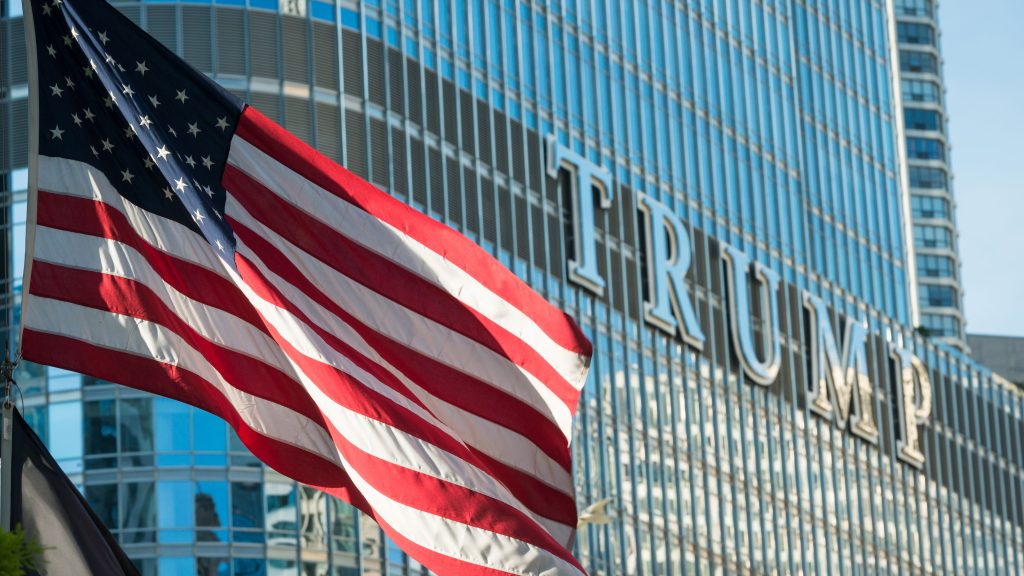
Speaking to Mining.com.au, Simon Rear, partner at law firm Gilbert + Tobin, says the growing appeal of US markets is driven by government incentives and loans to critical mineral explorers and producers, as well as the “frothiness” created around critical mineral extraction and refining.
According to HWLE Lawyers, dual listings have been a strategy used by companies to expand their market for a long time. The key benefits include liquidity, longer trading hours, flexible conversion, and reduced exposure.
“With a re-allocation of investment funds out of other industries such as technology into resources, now would be a good time to enter the US,” Rear tells this news service.
“However, it needs to be the right project which US investors will understand and it is critical that a dual listing strategy does not result in poor liquidity and investor support on two exchanges.”
Since President Trump’s re-election in January 2025, the emphasis on critical minerals as a national security pressure point has continued unabated.
According to Herbert Smith Freehills Kramer, a series of government and legislative initiatives have since been rolled out to strengthen US economic resilience and secure supply chains.
In mid-January 2026, the US Department of Labor announced the award of US$22 million in funding to strengthen the critical minerals supply chain.
Awarded through four cooperative agreements, the grants support efforts to eliminate labour exploitation in key mineral supply chains in Indonesia and the Democratic Republic of Congo that are essential to US manufacturing, energy production, and national security.
The US Department of Labor awarded US$7 million to Winrock International, US$7 million to Pact, US$5 million to World Vision, and US$3 million to the Center for Advanced Defense Studies.
Hurdles and realities
Despite the rising popularity of US listings, Rear notes that the pathway is far from straightforward.
“The US listing process is document heavy with intricate disclosure on the project, operations, risks, and particularly the management discussion and analysis section of the prospectus,” he tells this news service.
“In addition, the exploration results, resources and ore reserves need to be converted into SK-1300, which is the SEC standard for mineral reporting. SK-1300 differs from JORC, so some forward planning on putting together these reports.”
Recent examples of companies highlight the breadth of dual-listing strategies now being deployed.
In the end of January 2026, Mayfair Gold (TSX-V:MFG) began trading shares on the NYSE, following ceasing trading on the OTCQX market.
As reported, the uplisting to the NYSE marks an advancement in Mayfair’s strategy to expand its US shareholder base and increase US capital exposure.
Eastport Critical Metals (TSX-V:EVI) is another company that has recently deployed that strategy of increasing visibility and accessibility for US investors via listing on the OTCQB Venture Market.
For ASX-listed companies, Power Minerals (ASX:PNN) is among the many that have begun trading on the OTCQB Venture Market in the US this year.
Managing Director Mena Habib says listing on the OTCQB exchange will provide the company with better access to the “world’s largest capital pool” while expanding visibility with North American investors.
“An OTCQB listing scales our presence in the US as we continue to explore and develop critical mineral projects in South America, including our Santa Anna and Salta projects,” Habib says.
“An integrated capital markets strategy, including our US listing, is aimed at helping deliver greater long-term value for our shareholders.”
As previously reported, Power Minerals began the process to list on the market in October, aligning with the company’s greater strategy to become a “globally recognised developer of heavy rare earths”.
Delta Gold Technologies (AQUIS:DGQ) also initiated the application process to list on the OTCQB Venture Market in the US earlier this year, reflecting the company’s aim to grow the business internationally.
CEO Michael Jones says applying to list on the OTCQB is a strategic step to broaden the company’s investor base and enhance liquidity.
“It also underscores our commitment to expanding global relationships and expertise, advancing groundbreaking quantum intellectual property and delivering value in this high-growth sector,” Jones says.
Meanwhile, American Tungsten & Antimony (ASX:AT4) is streamlining its Nasdaq application with the appointment of Deutsche Bank as a depositary for the American depository receipt (ADR). Deutsche will act as a service provider for the company to achieve the necessary ADR outcomes required to list on the exchange.
The company is progressing towards submitting a registration statement to list on the Nasdaq exchange in March 2026.

Falling short
Although there is a plethora of companies undertaking dual listings, not all endure.
Elevra Lithium (ASX:ELV) is moving from the OTCQB Venture Market over to the OTC Markets Group as an unlisted quotation from 30 January 2026, listing on the OTC as of 2 February.
The transition was made with consideration of the cost of maintaining a sponsored listing and the low trading volumes by securities holders on that particular market.
These examples are only a few of the many that have conducted dual listings this year.
Despite the growing trend, Rear says that he believes this is not a “permanent shift”, but rather a signal that the US is more interested in minerals and the global supply chain of minerals.
“This stems mainly from a geopolitical concern over the domination of the Chinese in the global supply chain of minerals such as rare earths,” he adds.
As of early 2026, the US is seeking to break its dependence on China for rare earths following the nation continuing to restrict exports of these materials.
China currently accounts for more than 90% of the rare earths global refining capacity, and the US relies on the nation for roughly 70% of its rare earths imports. These materials are vital for the defence industrial base, including fighter jets, missiles, and radar systems.
Early last week, the US Government announced plans to invest US$1.6 billion in a critical minerals firm USA Rare Earth (NASDAQ:USAR), marking the latest push to reduce China’s dominance over the rare earths sector.
USA Rare Earth controls deposits of heavy rare earths that are often used for defence technologies.
Commerce Secretary Howard Lutnick says the investment ensures the US supply chains are resilient and no longer reliant on foreign nations.

This news comes after the US intended to implement additional 100% tariffs on Chinese exports to the US in response to China’s threat to further restrict exports of rare earths.
As Mining.com.au reported, OD6 Metals (ASX:OD6) Managing Director Brett Hazelden told this news service that Trump is changing the way governments work with the private industry.
“He’s taken politics and business and blurred the lines there, but to some extent what he’s done is he’s allowed governments to invest into companies,” he said to Mining.com.au.
“What that’s doing is reshaping how some governments work and how obviously government and private partnerships can work in an investor scheme as well.”
This led to the US$400 million investment by the US Department of Defense (DoD) in Nevada-headquartered rare earths major MP Materials (NYSE:MP) in July this year in exchange for a 15% stake – a deal that also included an offtake agreement with a set floor price at a premium to current market prices.
As capital, policy, and geopolitics collide, dual listings have emerged as a strategic bridge rather than a structural shift.
For mining companies, listing across multiple exchanges is about positioning to access deeper pools of capital, aligning with government priorities, and meeting investors where critical minerals are now most valued.
Write to Aaliyah Rogan at Mining.com.au
Images: Unsplash, Power Minerals, OD6 & American Rare Earths


