



This article is a sponsored feature from Mining.com.au partner Mammoth Minerals. It is not financial advice. Talk to a registered financial expert before making investment decisions.
Gold stories tend to follow a familiar script. Big grades, bigger intercepts, and headlines built around standout numbers. In Nevada, though, the equation is a little different. Value is not just about grade, it is also about how the gold gets out of the ground.
That is where Mammoth Minerals (ASX:M79) starts to stand out.
“The numbers in the ground don’t look sexy, but the numbers with the dollar sign next to it are,” says Mammoth Minerals CEO Glenn Poole.
It is a simple observation, but one that reflects a broader reality in Nevada, where mining outcomes are often shaped as much by processing and cost structure as by grade itself. That distinction sits at the centre of Mammoth’s strategy at Excelsior Springs.
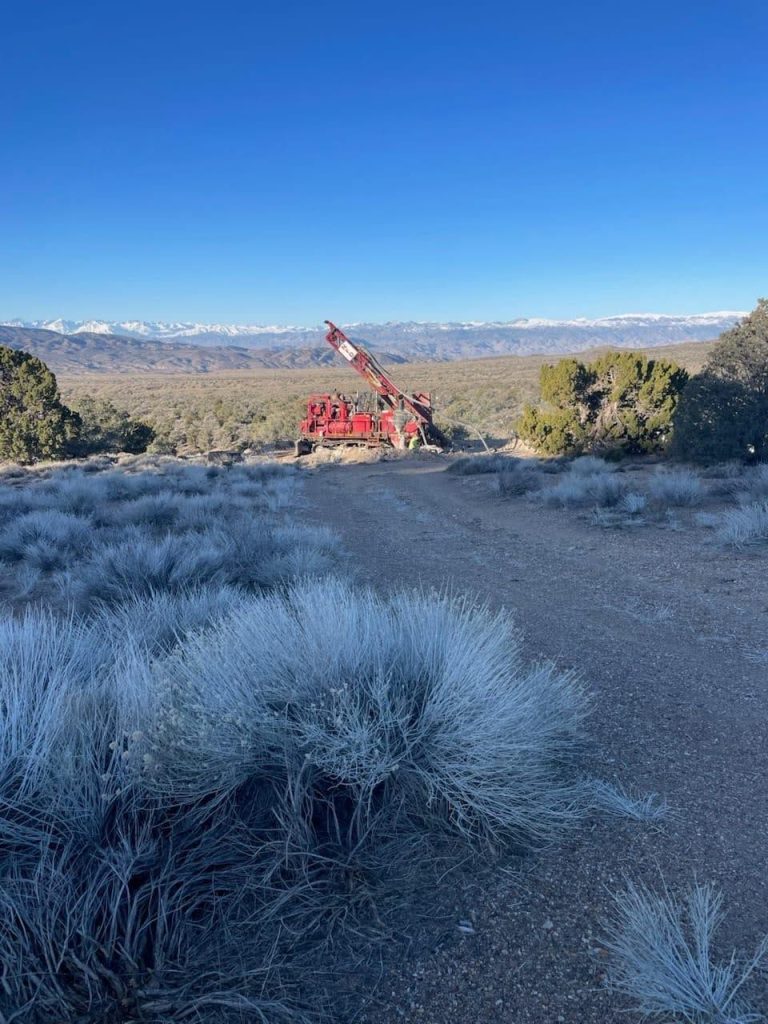
Desert ground, long mining history
Excelsior Springs sits within Nevada’s Walker Lane trend, a well-established mineral province known for precious metal systems and a long history of mining.
It is classic Nevada terrain. Arid desert, sparse vegetation, and historic workings scattered across the landscape. Long sightlines stretch toward the Sierra Nevada mountain range.
Despite the remote feeling, access is relatively straightforward. The project lies around a two-and-a-half-hour drive from Las Vegas, with established roads, nearby infrastructure corridors, and access to power. A local town about 30 minutes from the site supports operations.
For Mammoth, that combination of geology and logistics supports efficient exploration and reduces some of the friction often associated with remote projects.
“It’s an easy jurisdiction to do work in. We have walk-up drill targets and there are opportunities hanging out of the ground”, Poole says.
The company is directing most of its efforts toward Nevada, with Excelsior Springs acting as its primary focus.
That focus follows a broader shift. Originally exposed to battery metals, Mammoth pivoted toward gold to align with the experience of its leadership team and to pursue opportunities in a jurisdiction where projects can be advanced quickly and with fewer constraints.
Heap leach and the Nevada model
Understanding Excelsior Springs starts with understanding heap leaching. It is standard practice in Nevada, but less so in Australia. While many Australian gold operations rely on mills (crushing, grinding, and processing ore through tanks), Nevada leans heavily on a simpler approach.
Heap leaching.
“You mine it, you truck it, you crush it, and stack it in a big pile and squirt cyanide over it. It strips out the gold into a solution”, Poole explains.
It is a lower-energy, scalable process that relies on gravity and rock characteristics rather than intensive mechanical treatment. It is a difference that matters, because it lowers capital, lowers operating costs, requires simpler infrastructure, and creates faster pathways to production.
“It also changes the threshold for viability”, says Poole.
“In Nevada, heap leach is the dominant model. Four out of five miners are running a heap leach.”
In fact, operations with mills often still incorporate heap leach circuits to maximise recovery. In Australia, by contrast, heap leach is far less common, largely due to different geology. Gold is often locked in sulphides, requiring more complex processing.
Nevada’s rocks are different. They are weathered, altered, and as Poole puts it, already “cracked”. That makes them well suited to low-cost recovery.
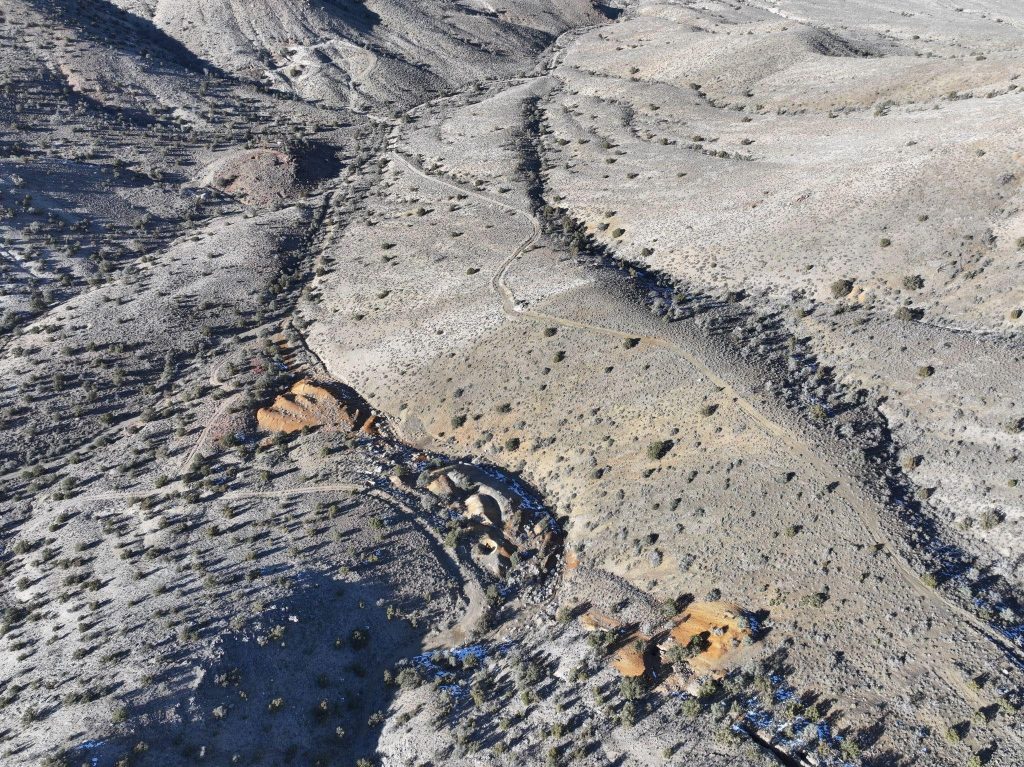
Putting grade into context
This difference in processing directly shapes how grade is interpreted. In many Australian projects, grade is the primary lens. In Nevada, it is one of several factors. Operating mines commonly run at head grades of around 0.5g/t to 0.7g/t, supported by heap leach economics.
That shifts expectations.
“If we’re getting anything over a gram, that’s considered high grade”, Poole says.
Mammoth’s results, including intercepts around 20 metres at roughly 1.5g/t, sit toward the upper end of the regional range. It is a different lens to what many investors are used to. Grades that may not stand out globally can still support viable operations when paired with favourable processing and cost conditions.
The implication is straightforward. Grade alone does not define value in Nevada. Economics does.
A broader mineral system
Excelsior Springs is not a single deposit. It is part of a wider mineralised system associated with a large intrusive structure. Within the project area, Mammoth has identified multiple zones, including the Buster Gold Trend, the Imperial Gold Mine area, and the Blue Dick target.
Exploration has focused on Buster, where drilling is most advanced, alongside work at Imperial. The mineralisation is shallow, starting from surface and continuing beyond current drilling depths of around 160 metres. That geometry aligns with oxide-style mineralisation and supports potential heap leach pathways.
“The results so far are really, really good, but they need to be viewed in a regional context”, Poole says.
The system also shows polymetallic characteristics, with elevated silver and base metals identified in surface sampling. While gold remains the primary focus, other minerals may also come into play if they prove economic.
“Of course, if it’s worthwhile getting out, then we will explore it, but gold will remain the dominant value anchor in the mix”, Poole says.
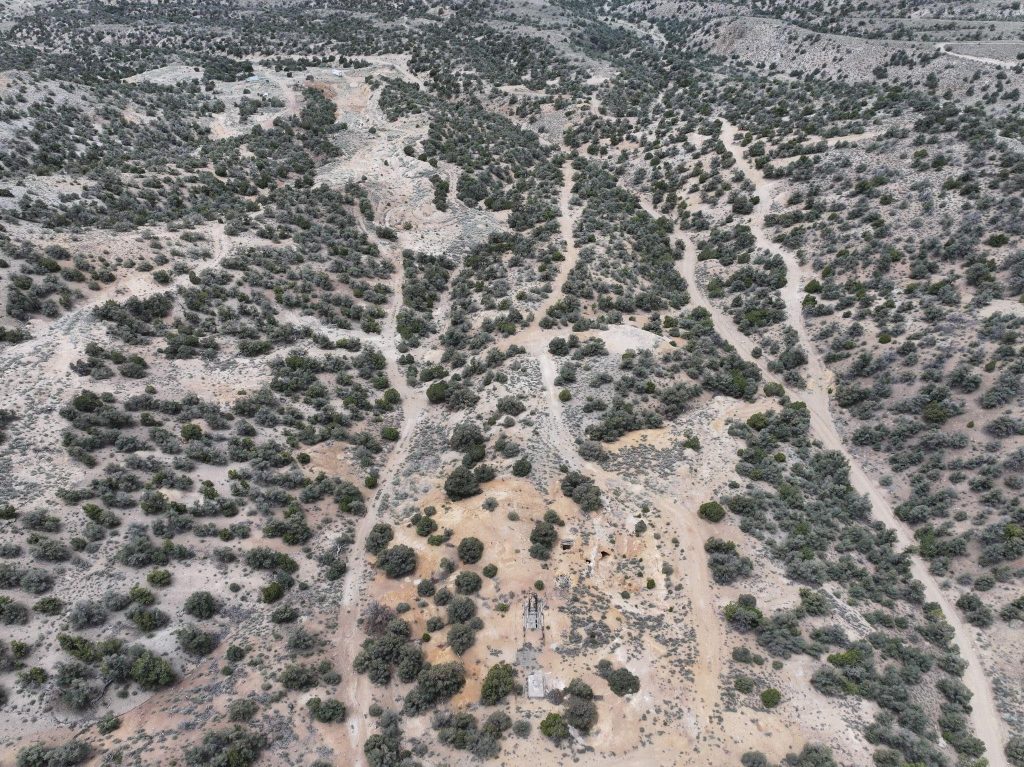
Building a pipeline, not just a project
Mammoth is not building a single-asset story. It has assembled a land position of approximately 135km² in Nevada, creating a broad exploration footprint.
That scale supports a pipeline approach. Buster is the most advanced, with close to 20,000 metres of drilling. Imperial follows, with several thousand metres completed across multiple targets. Elsewhere, the Blue Dick target remains largely untested, with early-stage geochemical work underway to refine drill locations.
At the same time, a broader regional program is helping the company understand the wider system and prioritise future targets. This creates flexibility. Rather than relying on a single outcome, Mammoth can allocate capital based on results and evolving opportunities.
“We want the choice to go with which one we think is going to work.”
Next steps
Following recent reverse-circulation drilling at Buster, the company is awaiting final assay results. A key near-term milestone is a maiden mineral resource estimate, expected to provide a clearer indication of scale.
Beyond that, exploration continues across multiple targets, with a focus on expanding known zones and advancing new areas within the broader landholding. The immediate goal is to define the scale of the system while continuing to build out the pipeline behind it.
Why this looks different in Nevada
Mammoth Minerals is advancing Excelsior Springs within a framework that reflects how projects are developed in Nevada. In this setting, shallow mineralisation, favourable geology, and heap leach processing shape how value is assessed.
Grade remains important, but it is not the only metric. Recoverability, cost structure, and scalability all play a role. That is why projects operating at grades that may appear modest elsewhere can still support viable outcomes in this region.
For Mammoth, the focus now is on defining scale and demonstrating how the project fits within that model.
It may not read like a traditional high-grade discovery story, but in Nevada, that is not necessarily the benchmark that matters. The value is often determined not just by what is in the ground, but by how efficiently it can be turned into gold.
It’s worth watching.
If Mammoth can continue to translate its exploration results into scale, while maintaining the cost advantages inherent to the Nevada model, the conversation may increasingly shift away from how the grades look and toward what the project could ultimately deliver.
Write to Kate Ryan at Mining.com.au


