


This article is a sponsored feature from Mining.com.au partner Magmatic Resources Ltd. It is not financial advice. Talk to a registered financial expert before making investment decisions.
When it comes to mineral exploration there is no such expression ever vocalised as having ‘too much of a good thing’.
Burgeoning copper and gold exploration company Magmatic Resources (ASX:MAG) is proving this. Time and again, this is evidenced by the increasingly abundant and strong drill results returned from the Corvette Prospect, situated within the Myall Project in New South Wales.
Managing Director Dr Adam McKinnon explains that within the East Lachlan Province, Magmatic is driving ahead in its pursuit of discovering a large copper porphyry system.
The Corvette prospect is situated in a location where the ‘world-class’ Northparkes Mine is its closest neighbour. Located 25km southwest of the town of Narromine, the Myall Project is 60km north along strike of Northparkes (owned by CMOC Group and Japanese trading house Sumitomo).
“We know that porphyry in New South Wales tends to appear in clusters”
While major porphyry systems occur throughout the world in regions such as in North and South America, in Australia and in particular New South Wales they tend to form in specific areas defined by clusters of deposits. McKinnon explains that this presents Magmatic with plenty of growth opportunities few juniors ever get to consider.
“We know that porphyry in New South Wales tends to appear in clusters. Currently we’re exploring one area at the Corvette prospect but it’s only a tiny portion of our 250km-square tenement. We think there’s very good potential with ongoing exploration for us to discover additional clusters, or centres, or prospects, or deposits, whatever you want to call them, within a couple of kilometres of where we are.”

Lustre of the cluster
Clusters are typically defined as collections or groups of items (or things) with similar or different characteristics. Whether it refers to an innovation cluster (often known as an industry cluster), a cluster in computing, or those forming in the natural environment such as berry-like seeds growing in a cluster at the top of the bush, the premise is somewhat the same with mining.
The identification of one porphyry system in an area tends to significantly increase the chances that the surrounding area will produce further deposits within close proximity. This in turn lends itself to an increased likelihood of commercial viability.
The MD says that the way these systems form they are typically related to intrusions, which can be considerably massive.
“In different spots in the rocks where those intrusions occur, where the conditions are right, they can break. The fluid that causes the mineralisation from these intrusions can break through, and you can get a mineralising event. And what you tend to find is that where the conditions are right in one place where you’ve got a system, where you get intrusions happening, you’ll find there’s multiple spots along a trend where you’ll actually get multiple deposits.
“I guess what’s really exciting for us is that we are only a junior, and we’ve hit some extremely large intercepts recently”
I guess what’s really exciting for us is that we are only a junior, and we’ve hit some extremely large intercepts recently.”
These aforesaid results, announced just last month, are the ‘highest grade’ copper-gold intersections to date at Corvette. Assay results returned for the upper and middle portions of diamond hole 23MYDD422 in particular produced the strongest contiguous copper-gold intersection to date.
This includes 355.2m @ 0.38% Cu, 0.09g/t Au, and 5ppm Mo from 146.8m, including 241m @ 0.45% Cu, 0.11g/t Au, and 7ppm Mo from 261m; 26m @ 0.60% Cu, 0.44g/t Au, and 2ppm Mo from 316m (high Au zone) and 95m @ 0.55% Cu, 0.07g/t Au and 10ppm Mo from 375m.
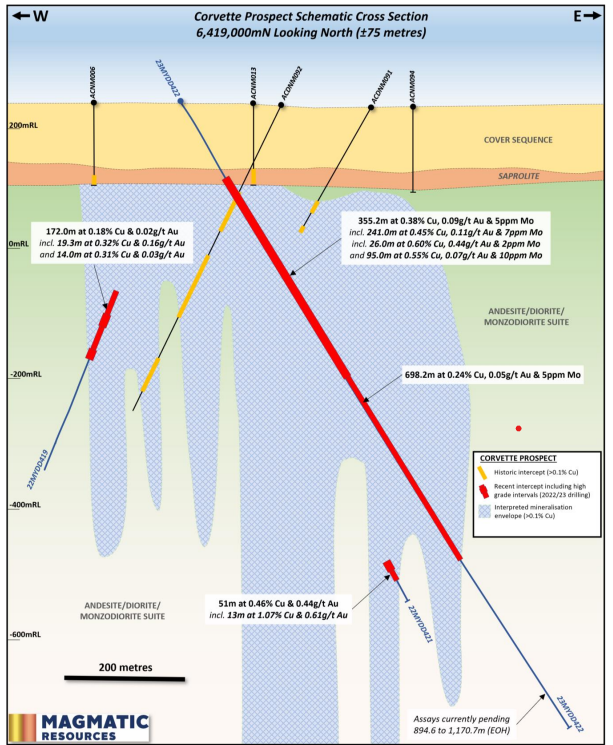
As the above image illustrates, in the 600m wide by 800m deep section the potential for significant tonnage is huge. As the schematic cross section of the Corvette prospect shows, a ‘very large-scale’ mineralised system is highlighted by the interpreted mineralisation envelope (>0.1% Cu). An interval near the top of previous hole 22MYDD421 also has the strongest individual molybdenum assays seen in Magmatic’s program so far, including 1m @ 811ppm Mo from 149m and 1m @ 1,100ppm (0.11%) Mo from 153m.
McKinnon says the 22MYDD421 results are in addition to the interval at the bottom of the hole released in January 2023. That was characterised by an ‘abundance’ of early stage quartz veins with a centre line of sulphides, also known as porphyry “B-type” or “B veins” and comprise the strongest gold zone seen at Corvette to date. Of note 22MYDD421 returned 51m @ 0.46% Cu, 0.33g/t Au and 1.1g/t Ag from 797m including 13m @ 1.07% Cu, 0.61g/t Au and 1.8g/t Ag from 816m.
Porphyry prominence
Porphyry deposits are categorised into 3 main subtypes – copper porphyry, gold porphyry, and molybdenum porphyry. The most important and lucrative sources for copper world-wide today are these deposits, as they are host to the largest-known exploitable concentrations of the soft, malleable, and ductile metal.
Globally, porphyry deposits account for more than 75% of global copper production, about half of molybdenum production, and some 20% of gold production. In terms of size, copper porphyry systems in particular range in size from 100 million tonnes to upwards of 10 billion tonnes of ore. They are associated with long mine life operations often spanning decades, which make them extremely attractive to mining companies.
Magmatic’s porphyry projects – Myall and Wellington North – are located near the 2 largest porphyry mines in Australia, the Northparkes and Cadia Valley mines, respectively.
McKinnon says this alone is a great catalyst to further pursue exploration within the area given these world-renowned mines are literally ‘on the doorstep’. And indications so far are that Magmatic’s assets are showing signs of similarities to these other major porphyry systems.
“Obviously, as a junior one of the key things for us is just the sheer size potential. When we look at the length of the mineralised intercepts that we’ve hit in multiple holes, we now think this is a very big system, given where we are and who we’re next to.”
The proof is in the pudding. Magmatic’s recent drill results show that Corvette is not only looking to be large-scale, but it is also returning very similar grades to the Northparkes resource. This is clearly suggestive of the potential size, scale, and economics of Magmatic’s discovery.
Revved for success at Corvette
The results speak for themselves.
The MD explains: “This has the potential to be Tier 1, it is very large in size so for us, we’ve really just started so there’s a lot still to happen. Another point is that we’ve drilled basically only 10 (diamond) holes for 7,994m and so far, all 10 of those holes have hit mineralisation.
We’re exploring this one prospect (Corvette), but we think there’s a very good chance we have something special here and it’s only a tiny portion of our 250km-square tenement. But we think there’s very good potential with ongoing exploration that not only can we discover a very significant deposit at Corvette, but there’s great potential for us to discover additional clusters or centres or prospects or deposits, whatever you want to call them, within that prospect.
“So, we know for example, our project is quite similar to the world-renowned Northparkes Mine”
So, we know for example, our project is quite similar to the world-renowned Northparkes Mine. And we know that Northparkes to date is host to at least 20 porphyry deposits, or pipes as they’re known, that have been discovered. These have been discovered over quite a long period of time, over 30 or 40 years, and they’re (CMOC Group and Sumitomo) still actively making discoveries.
In this sense, we’re operating in rocks that are very similar to Northparkes, the geology is very similar. We know from recent work that our ages, the age of the rocks that is, are exactly the same as Northparkes, and the mineralisation is also the same age as the massive Cadia system.”
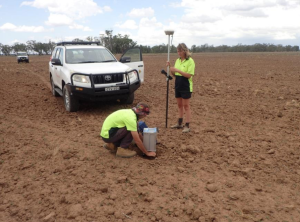
For reference of the opportunity that exists for Magmatic, Northparkes’ porphyry copper-gold deposits have a current combined resource and reserve base of 607Mt @ 0.55% Cu and 0.21g/t Au.
McKinnon says that Magmatic understands the Corvette prospect is located in a well-known region for producing globally significant porphyry deposits that often form in clusters. However, he says Magmatic will remain measured in how it investigates the assets in order to capitalise on the potential already unlocked.
“We’ve maintained that our focus will be on the Corvette area, but we’ve also talked quite prolifically about the prospectivity of the larger area as well. Looking forward, one of the key things for us is understanding the broader region.
“We’ve maintained that our focus will be on the Corvette area, but we’ve also talked quite prolifically about the prospectivity of the larger area as well”
We’ve started a detailed gravity survey of the broader Corvette-Kingswood corridor. This gravity survey is not for direct detection of mineralisation, but to try and understand the geology a bit better, to understand whether there’s potentially more of these kicking around and to give us some vectors towards exploring the larger system.”
Magmatic expects to have results from the detailed gravity survey imminently, which represents the first major recent work at Myall that is not ‘straight out drilling’. However, equally as important, this gravity survey work will provide a better understanding of the broader system and essentially generate a roadmap to explore more effectively into the future.
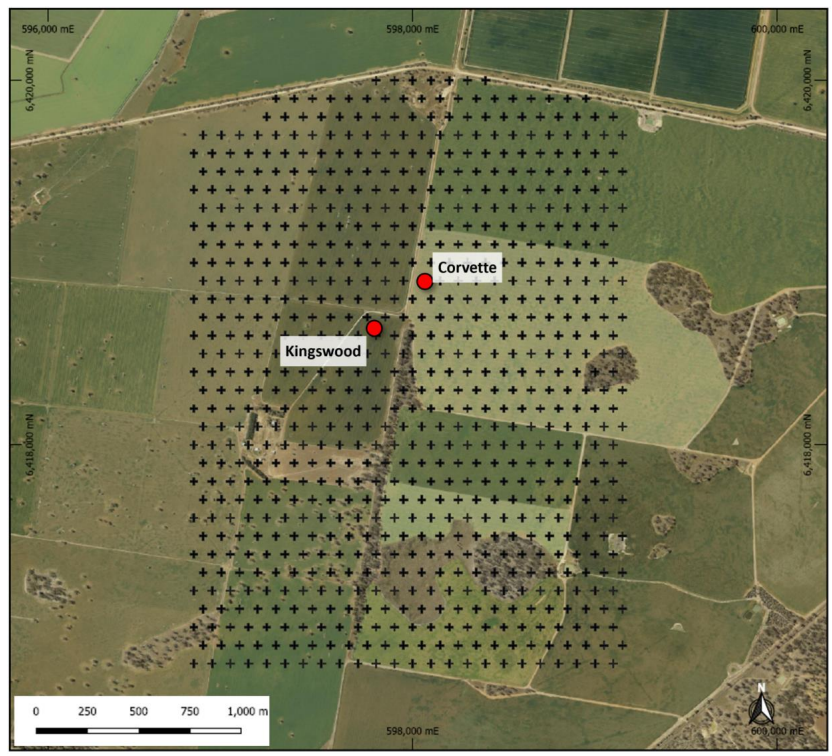
The MD adds, along with levelling and merging of the new high resolution gravity dataset, Magmatic will reprocess the ‘high quality’ aeromagnetic data available for the region, incorporating additional magnetic readings taken from the aforementioned 10 diamond holes already completed.
In terms of future work, Magmatic wants to understand aspects of the broader region such as rock composition, geochemistry, geophysics and age of the rocks, as well as continuing to define areas of strong mineralisation. Basically, it will assess criteria any miner wants to find in a large porphyry system on the east coast of Australia.
“As we said in our recent release to the market, we are committed to following up our latest strong intercepts, so we’re targeting that northern area. We expect to continue in mid-March, so from next week on, following the gravity survey, our first target will be that northern area to continue pushing the Corvette system larger and larger.
In prestigious company
As global copper demand continues to soar amid decarbonisation and the green energy transition, there is a race to find the next major copper-producing mine.
A United States Geological Survey report suggests the output from copper porphyry deposits totals billions of kilograms each year, and grades typically range from 0.2% to more than 1% Cu. To put that into context, as mentioned, Magmatic’s latest drill results returned grades as high as 0.60% Cu and much more work is yet to be undertaken.
output from copper porphyry deposits totals billions of kilograms each year
GeoScienceWorld notes porphyry systems are initiated by injection of oxidised magma saturated with sulfur and metal-rich, aqueous fluids from cupolas on the tops of the subjacent parental plutons. The sequence of alteration-mineralisation events is principally a consequence of progressive rock and fluid cooling (from 700C-plus to about 250C) caused by solidification of the underlying parental plutons and downward propagation of the lithostatic-hydrostatic transition.
Porphyry copper systems also host some of the most widely distributed mineralisation types. From convergent plate boundaries, including porphyry deposits centred on intrusions, to skarn, and sediment-hosted gold deposits in increasingly peripheral locations, they are as varied as they are consistently large. The systems commonly define linear belts with some many hundreds of kilometres long.
As noted, Magmatic is currently exploring only a tiny portion of its 250km-square square tenement.
For miners, many features of porphyry copper systems at all scales need to be considered during planning and execution of base and precious metal exploration programs in magmatic arc settings. At the regional and district scales, the occurrence of many deposits in belts, within which clusters or alignment are prominent, is a powerful exploration concept once one or more systems are known.
Write to Adam Orlando at Mining.com.au
Images: Magmatic Resources Ltd