

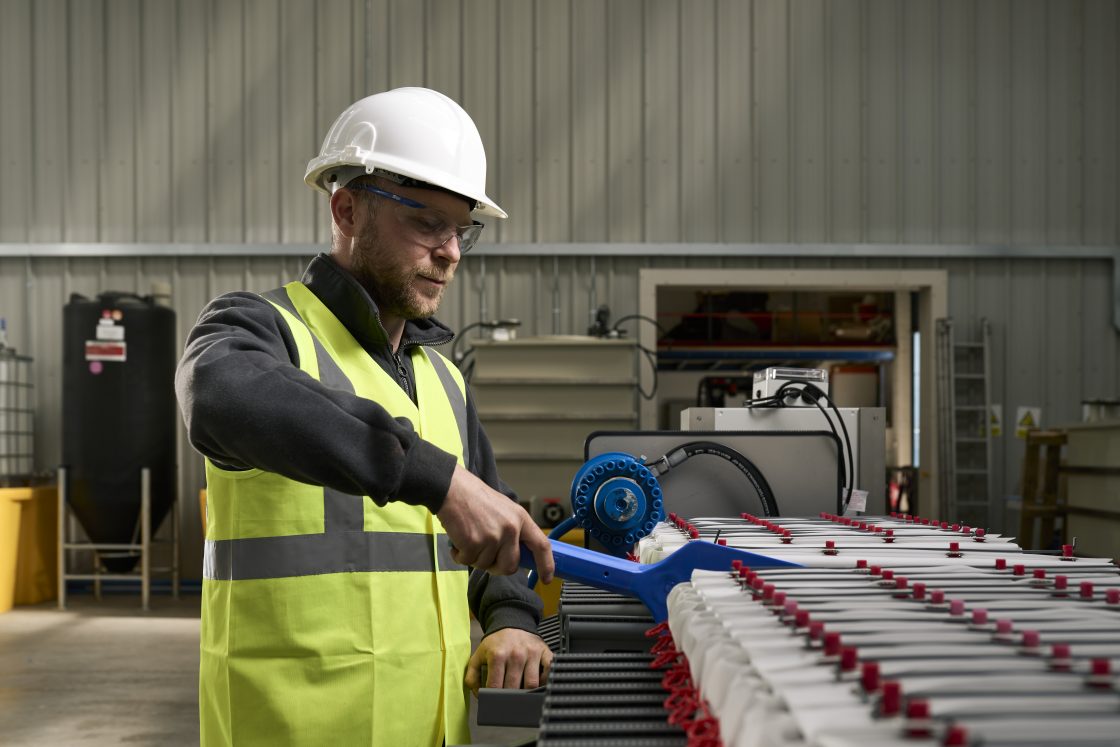
Ionic Rare Earths (ASX:IXR) is advancing discussions with several US-based parties regarding multiple potential magnet recycling plants in the US.
The company says these discussions are leveraging its rare earth separation and refining intellectual property developed by its UK-subsidiary Ionic Technologies, as well as an expansion of the Viridion joint venture with Viridis Mining and Minerals (ASX:VMM), to potentially develop a US-based rare earth refinery.
Ionic, which has a market capitalisation of $57.94 million, is currently evaluating several opportunities to establish rare earth permanent magnet recycling plants in various states of the US, including working closely with US-based partners and supporting Trump administration policy.
Samples of separated, high-purity magnet rare earth oxides from the magnet recycling demonstration plant in Belfast have been dispatched to potential US partners, along with engineering deliverables to help with infrastructure and site early works planning.
The company has also hosted visits to the Belfast plant to progress technical, construction and investment due diligence.
As part of these discussions, Ionic is evaluating use of its technology beyond neodymium-iron-boron recycling.
The company aims to scale out additional US capability for domestic production through recycling across other rare earths listed in China’s April 2025 rare earth export restriction. These minerals include samarium, gadolinium, terbium, dysprosium, lutetium, scandium, and yttrium.
Samarium is used in high-performance magnets, nuclear reactors and specific applications in lasers and medical treatments. Gadolinium is used as a contrast agent for MRI scans, nuclear reactors, alloys, and medical imaging.
Terbium is a key component in fluorescent lighting, display technologies, and certain types of magnets. Dysprosium is particularly used in electric vehicles and wind turbines. Scandium is primarily used as an alloy for aerospace and sporting goods. Yttrium is used in phosphors for displays and lighting, as well as in metallurgy, ceramics and electronics.
Meanwhile, lutetium is not widely used due to its scarcity and cost, but it has applications in several fields including petroleum refining.
Managing Director Tim Harrison says the company is focused on addressing near-term shortages in access to these critical elements for advanced manufacturing and defence.
“During this window, we can envisage several recycling facilities providing supply chain relief for key applications in the US and other closely aligned markets, adding to our existing partnerships in the UK, Europe, South Korea and Brazil,” Harrison says.
Ionic Rare Earths is an emerging miner, refiner, and recycler of sustainable and traceable magnet and heavy rare earths needed to develop net-zero carbon technologies.
Write to Aaliyah Rogan at Mining.com.au
Images: Ionic Rare Earths